Introduction
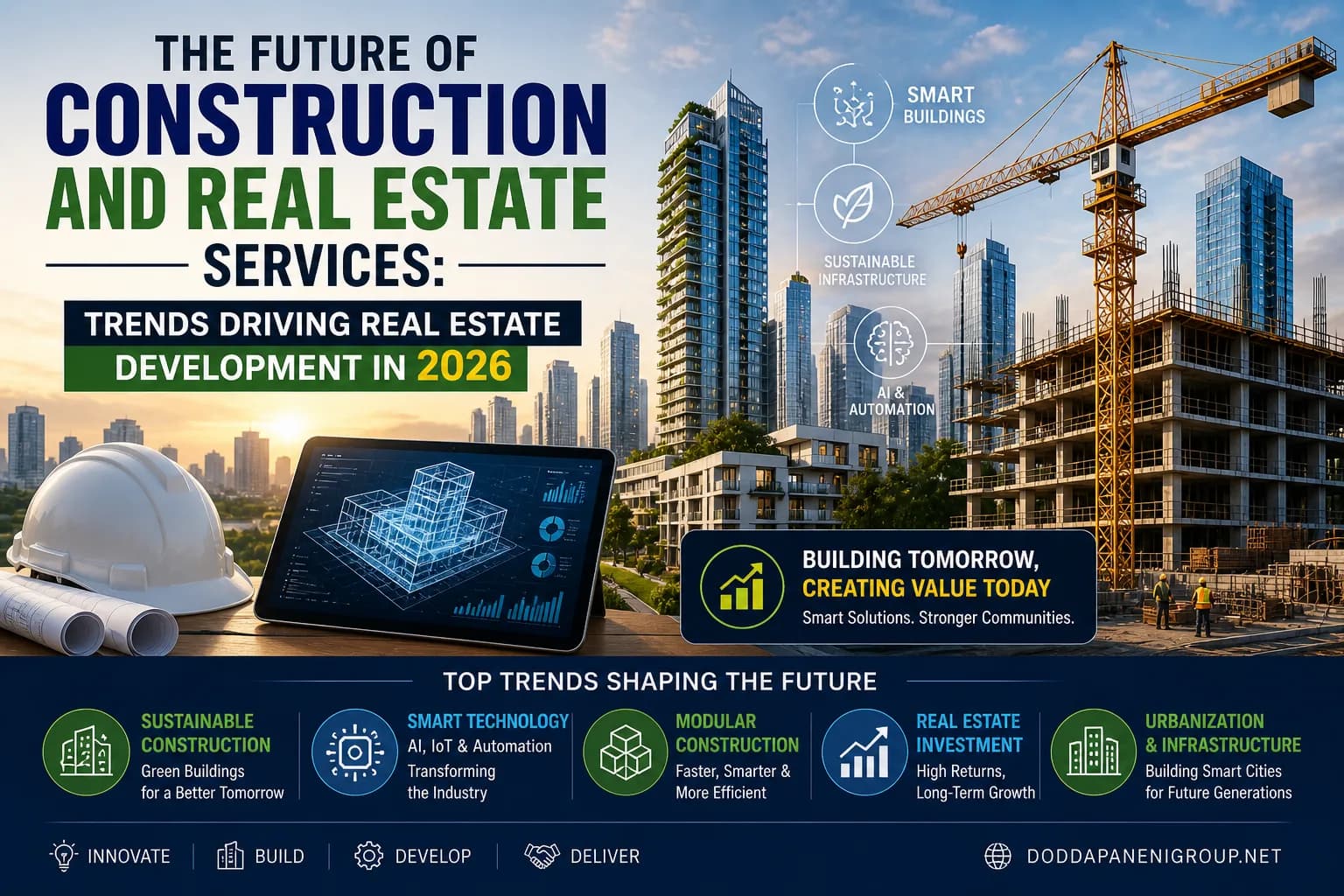
The global construction and real estate industry is undergoing a major transformation. In 2026, innovation, sustainability, and technology are no longer optional—they are essential drivers of success. The future of Construction and Real Estate Services is being shaped by evolving customer expectations, smart infrastructure development, and data-driven decision-making.
At the center of this transformation is real estate development, which is becoming more strategic, efficient, and technology-driven. From smart cities to green buildings, the industry is redefining how properties are designed, built, and managed.
Understanding Construction and Real Estate Services
Construction and Real Estate Services cover the entire lifecycle of property creation and management. This includes:
Land acquisition
Planning and architectural design
Construction execution
Real estate development
Property management and leasing
These services ensure that infrastructure projects are completed efficiently while delivering long-term value to investors and users.
Why the Industry Is Rapidly Evolving
Several key factors are driving growth and transformation in construction and real estate:
Urbanization
Cities are expanding rapidly, increasing the demand for housing, commercial spaces, and infrastructure.
Digital Transformation
Technology is enabling faster, smarter, and more efficient project execution.
Sustainability Goals
Environmental concerns are pushing developers toward eco-friendly practices.
Investment Opportunities
Real estate remains one of the most reliable long-term investment options.
Top Trends Driving Real Estate Development in 2026
1. Smart Infrastructure and Smart Cities
One of the biggest trends shaping the future is the rise of smart cities. These cities integrate advanced technologies to improve efficiency, sustainability, and quality of life.
Key Features:
IoT-enabled buildings
Smart traffic and energy systems
Automated infrastructure management
Smart infrastructure enhances convenience while reducing operational costs.
2. Sustainable and Green Construction
Sustainability is now a top priority in real estate development. Developers are adopting eco-friendly practices to reduce environmental impact.
Examples:
Energy-efficient buildings
Solar power integration
Use of recycled materials
Water conservation systems
Green buildings not only benefit the environment but also reduce long-term costs and increase property value.
3. Modular and Prefabricated Construction
Modern construction methods are replacing traditional approaches.
Benefits:
Faster project completion
Reduced labor costs
Improved quality control
Minimal waste
Prefabrication allows components to be built off-site and assembled on-site, improving efficiency.
4. Data-Driven Decision Making
Data analytics is becoming a critical tool in both construction and real estate.
Applications:
Market analysis
Risk assessment
Investment planning
Project optimization
Data-driven insights help developers make smarter decisions and reduce risks.
5. Artificial Intelligence in Construction
AI is transforming how projects are planned and executed.
AI Use Cases:
Predictive maintenance
Resource allocation
Project scheduling
Risk detection
AI improves efficiency and reduces delays in construction projects.
6. Smart Buildings and Automation
Modern buildings are becoming more intelligent with integrated technologies.
Features:
Automated lighting and climate control
Smart security systems
Energy management solutions
Smart buildings enhance comfort, efficiency, and sustainability.
7. Digital Real Estate Platforms
Technology is revolutionizing how properties are bought, sold, and managed.
Innovations:
Virtual property tours
Online property listings
AI-based valuation tools
Digital transaction platforms
These tools make real estate more accessible and transparent.
8. Redevelopment and Urban Renewal
Instead of new construction, many developers are focusing on upgrading existing properties.
Benefits:
Cost efficiency
Improved sustainability
Faster project timelines
Urban renewal projects help maximize the value of existing infrastructure.
Real Estate Investment Trends in 2026
Investors are adopting new strategies to maximize returns in a competitive market.
Residential Investment
High demand for housing due to population growth.
Commercial Real Estate
Office spaces, co-working hubs, and retail outlets offer strong returns.
Emerging Markets
Investing in developing areas provides higher appreciation potential.
Infrastructure-Based Investment
Properties near infrastructure projects tend to increase in value faster.
Real Estate Development Lifecycle
Successful real estate development involves multiple stages:
1. Land Acquisition
Selecting a strategic location is crucial.
2. Planning and Design
Architectural and engineering planning ensure feasibility.
3. Legal Approvals
Compliance with regulations is essential.
4. Construction
Execution using modern techniques and materials.
5. Marketing and Sales
Promoting the property to attract buyers and investors.
6. Property Management
Maintaining and managing the property post-construction.
Challenges in Construction and Real Estate
Despite growth, the industry faces several challenges:
Rising material costs
Labor shortages
Regulatory complexities
Market fluctuations
To overcome these challenges, companies must adopt innovative strategies and technologies.
How to Choose the Right Construction & Real Estate Partner
Choosing the right partner is essential for project success.
Key Factors:
Experience and expertise
Use of modern technology
Quality assurance
Timely delivery
Transparent communication
A reliable partner ensures smooth project execution and long-term value.
Future Outlook
The future of Construction and Real Estate Services will be driven by:
Smart cities and connected infrastructure
Sustainable and green construction
AI-driven project management
Digital real estate ecosystems
Companies that embrace these trends will lead the industry.
Expert Tips for Investors & Developers
Invest in high-growth locations
Focus on sustainable projects
Use technology for better decision-making
Diversify your investment portfolio
Monitor market trends regularly
FAQs
Q1: What are Construction and Real Estate Services?
They include planning, building, and managing infrastructure and property projects.
Q2: What is real estate development?
It is the process of transforming land into residential or commercial properties.
Q3: Is real estate a good investment in 2026?
Yes, it offers stable returns and long-term growth potential.
Q4: What are smart buildings?
Buildings that use technology to improve efficiency, security, and comfort.
Conclusion
The future of Construction and Real Estate Services lies in innovation, sustainability, and strategic planning. As real estate development continues to evolve, businesses and investors must adapt to new technologies and trends to remain competitive.
DoddapaneniGroup.net provides reliable and future-ready construction and real estate solutions designed to meet modern infrastructure demands and deliver long-term value.
Disclaimer
This content is provided for informational purposes only and does not constitute financial, legal, or professional investment advice.