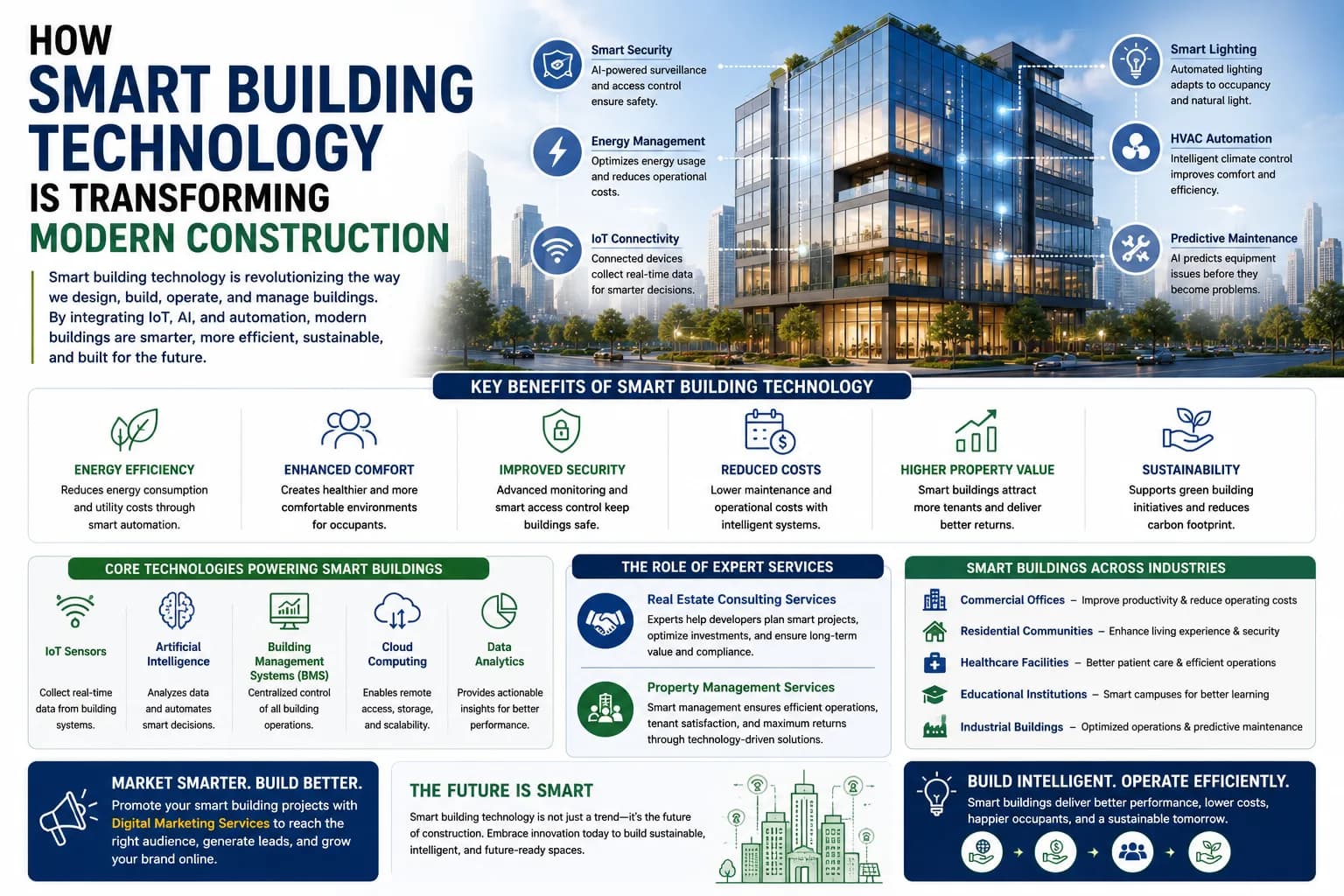
The construction and real estate industries are rapidly evolving with the adoption of smart building technology. Modern buildings are no longer just physical structures—they are intelligent environments designed to improve efficiency, sustainability, security, and occupant comfort. In 2026, businesses and property developers are increasingly investing in real estate consulting services and professional property management services to integrate smart technologies into residential, commercial, and industrial projects.
From automated lighting and energy management to AI-powered security systems and IoT-enabled devices, smart buildings are redefining the future of construction. These innovations not only reduce operational costs but also enhance property value and deliver better experiences for occupants.
What Is Smart Building Technology?
Smart building technology refers to the integration of digital systems, sensors, Internet of Things (IoT) devices, automation, and artificial intelligence into buildings to improve performance and efficiency.
A smart building can automatically monitor and control various systems, including:
Lighting
Heating and cooling (HVAC)
Security systems
Energy consumption
Water management
Fire safety
Occupancy monitoring
These technologies enable buildings to respond intelligently to changing conditions while optimizing resources.
Why Smart Buildings Are Becoming Essential
Modern property owners and developers are looking for buildings that are sustainable, cost-effective, and technologically advanced.
Smart building technology helps businesses:
Reduce operational expenses
Improve energy efficiency
Enhance occupant comfort
Increase property value
Strengthen security
Support environmental sustainability
As urban development accelerates, intelligent buildings are becoming a key differentiator in the real estate market.
Key Technologies Powering Smart Buildings
1. Internet of Things (IoT)
IoT devices collect real-time data from building systems.
Connected sensors monitor:
Temperature
Air quality
Occupancy
Energy usage
Water consumption
These insights help optimize building performance and reduce waste.
2. Artificial Intelligence (AI)
AI analyzes building data to automate decision-making and improve efficiency.
AI-powered systems support:
Predictive maintenance
Energy optimization
Security monitoring
Climate control
Space utilization
Artificial intelligence allows buildings to continuously improve their operations.
3. Building Management Systems (BMS)
A centralized Building Management System integrates multiple building functions into a single platform.
A BMS controls:
HVAC systems
Lighting
Elevators
Security
Fire alarms
Utility management
Centralized monitoring simplifies facility management and improves operational efficiency.
4. Smart Security Systems
Advanced security technologies improve building safety through:
Facial recognition
Smart surveillance cameras
Biometric access control
Motion sensors
Remote monitoring
Smart security enhances protection while providing greater convenience for occupants.
5. Energy Management Systems
Energy efficiency remains one of the primary goals of smart buildings.
Automated systems help reduce:
Electricity consumption
Heating costs
Cooling expenses
Carbon emissions
Lower energy usage contributes to both environmental sustainability and financial savings.
Benefits of Smart Building Technology
Improved Energy Efficiency
Smart systems automatically adjust lighting, heating, and cooling based on occupancy and environmental conditions.
Benefits include:
Lower utility bills
Reduced energy waste
Improved sustainability
Better environmental performance
Enhanced Occupant Comfort
Smart buildings create healthier and more comfortable indoor environments through:
Automated climate control
Improved air quality
Personalized lighting
Noise management
Satisfied occupants contribute to higher property value and tenant retention.
Reduced Maintenance Costs
Predictive maintenance identifies equipment issues before failures occur.
This helps property owners:
Prevent breakdowns
Extend equipment lifespan
Reduce repair costs
Minimize downtime
Better Security
Integrated security systems provide:
Real-time alerts
Remote access
Visitor management
Continuous surveillance
Enhanced safety increases confidence among residents, employees, and visitors.
Increased Property Value
Smart buildings are highly attractive to investors, tenants, and buyers due to their efficiency and modern features.
Properties with advanced technology often command higher rental income and resale value.
The Role of Real Estate Consulting Services
Successful smart building projects begin with expert planning and strategic guidance.
Professional real estate consulting services help developers:
Evaluate project feasibility
Identify technology requirements
Optimize investment strategies
Ensure regulatory compliance
Improve project profitability
Consultants provide valuable insights that maximize the long-term value of smart building investments.
Why Property Management Services Matter
Once construction is complete, ongoing management becomes essential.
Modern property management services support smart buildings through:
Facility monitoring
Maintenance scheduling
Tenant communication
Energy management
Security oversight
Performance reporting
Technology-driven property management improves operational efficiency while enhancing tenant satisfaction.
Smart Buildings Across Different Industries
Residential Communities
Homeowners benefit from:
Smart home automation
Energy savings
Remote security monitoring
Intelligent climate control
Commercial Buildings
Businesses use smart technology to improve:
Employee productivity
Energy efficiency
Workspace management
Security systems
Healthcare Facilities
Hospitals leverage smart building technologies to:
Improve patient comfort
Monitor environmental conditions
Reduce operational costs
Enhance facility management
Educational Institutions
Schools and universities implement smart systems for:
Energy conservation
Classroom automation
Campus security
Facility maintenance
Industrial Facilities
Manufacturing plants use intelligent systems to optimize production environments and improve safety.
The Role of Digital Marketing Services in Real Estate
Technology alone is not enough to maximize property success.
Professional Digital Marketing Services help developers and property managers:
Promote smart building projects
Generate qualified leads
Increase online visibility
Showcase innovative property features
Build brand credibility
Digital marketing through SEO, social media, virtual tours, and paid advertising enables developers to attract buyers and investors more effectively.
Challenges of Smart Building Adoption
Despite numerous benefits, organizations may face challenges such as:
High initial investment
Technology integration complexity
Cybersecurity concerns
Staff training requirements
Ongoing system maintenance
Working with experienced consultants and technology providers helps overcome these obstacles.
Future Trends in Smart Construction
The future of smart buildings includes:
AI-powered building automation
Digital twins
Smart city integration
Renewable energy systems
Autonomous facility management
Predictive maintenance
Cloud-based building analytics
These innovations will continue transforming construction and real estate over the coming years.
Conclusion
Smart building technology is revolutionizing modern construction by improving efficiency, sustainability, security, and occupant experiences. Businesses investing in real estate consulting services and professional property management services can maximize property performance while increasing long-term value.
As technology continues to evolve, integrating intelligent building systems with effective Digital Marketing Services enables developers to attract more buyers, improve market visibility, and remain competitive in the rapidly changing real estate industry.
If you're looking for innovative technology, real estate, and digital transformation solutions, Doddapaneni Group (Doddapanenigroup.net) provides comprehensive business services designed to support modern construction and property development.