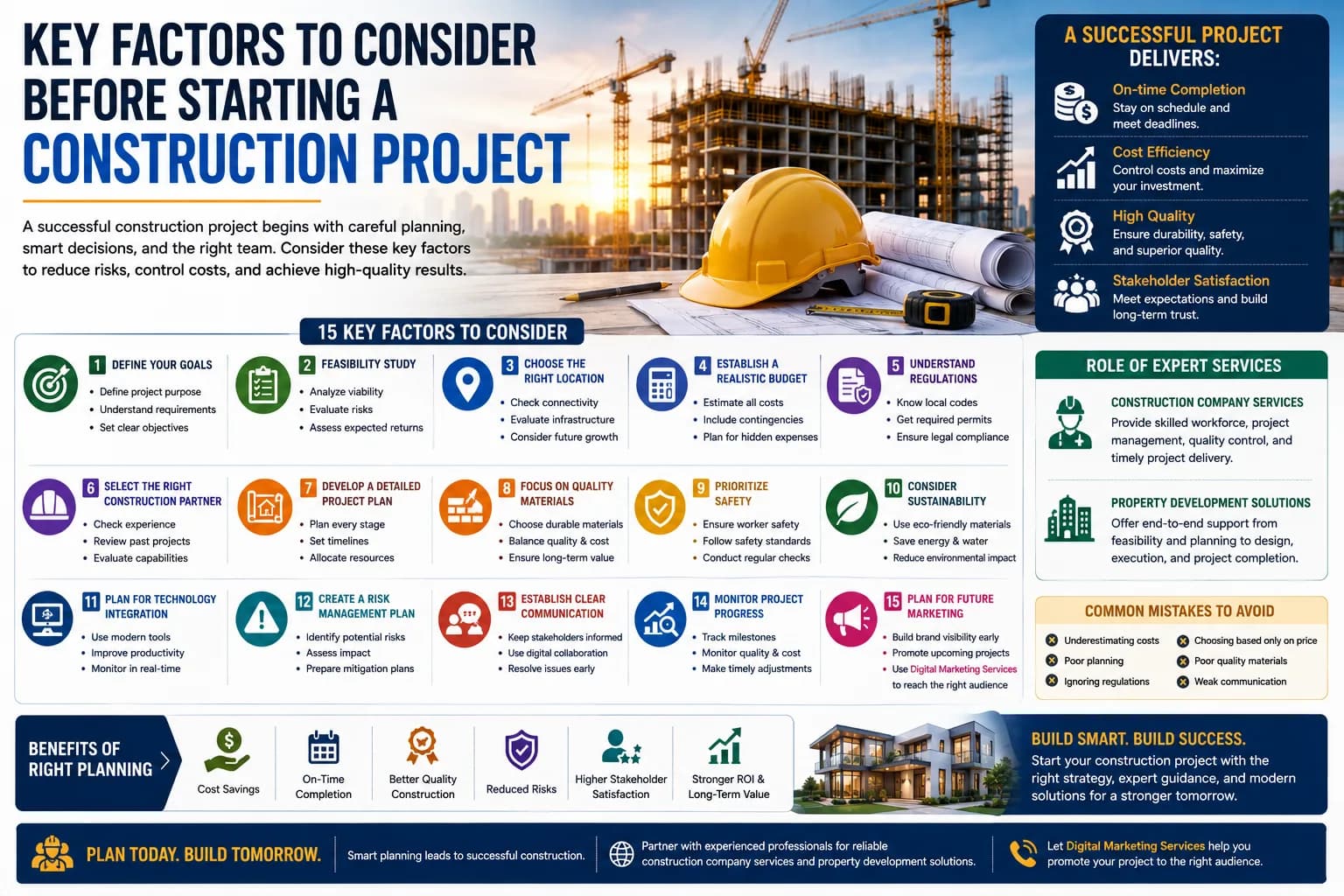
Starting a construction project is a major investment that requires careful planning, financial preparation, and professional execution. Whether you are planning a residential building, commercial development, industrial facility, or property renovation, making the right decisions before construction begins can significantly influence the project's cost, timeline, quality, and overall success.
Working with experienced construction company services can help property owners and developers manage complex planning requirements, identify potential risks, and ensure that projects move forward efficiently. At the same time, professional property development solutions can provide valuable support with feasibility studies, site evaluation, planning, budgeting, and project coordination.
Before breaking ground, there are several important factors every property owner and developer should consider.
1. Define Your Construction Goals
The first step is to clearly define what you want to achieve with the project.
Ask important questions such as:
What type of property are you developing?
What is the intended purpose of the building?
Who will use or occupy the property?
What size and features are required?
What is the expected completion date?
What return on investment do you expect?
Clearly defined objectives provide a foundation for every later decision, from design and budgeting to material selection and construction.
2. Conduct a Feasibility Study
A feasibility study helps determine whether a construction project is practical and financially viable.
A professional feasibility assessment may evaluate:
Land suitability
Construction costs
Market demand
Project timeline
Regulatory requirements
Potential risks
Expected returns
This step can help identify challenges before significant capital is committed.
Professional property development solutions can support developers in evaluating the financial, technical, and commercial feasibility of a project.
3. Choose the Right Location
Location is one of the most important factors influencing construction and property value.
Consider:
Accessibility
Road connectivity
Nearby infrastructure
Public transportation
Schools and healthcare facilities
Commercial areas
Future development
Local property demand
For commercial properties, proximity to customers, employees, suppliers, and transportation networks can be especially important.
A well-selected location can contribute to stronger occupancy, market demand, and long-term property appreciation.
4. Establish a Realistic Budget
Construction projects can become expensive when budgets are not carefully planned.
Your budget should account for:
Land costs
Design fees
Construction materials
Labor
Equipment
Permits
Professional services
Utility connections
Insurance
Taxes and applicable fees
Contingency reserves
It is also important to maintain a contingency budget for unexpected expenses.
Experienced construction company services can help prepare realistic cost estimates and identify areas where unnecessary expenses can be avoided.
5. Understand Local Regulations and Permits
Construction projects must comply with applicable building codes, zoning regulations, environmental requirements, safety standards, and approval processes.
Depending on the project and location, approvals may be required for:
Building plans
Land use
Environmental considerations
Fire safety
Structural design
Utilities
Occupancy
Failing to obtain the necessary approvals can lead to delays, penalties, or costly modifications.
Professional construction and development teams can help identify applicable requirements and coordinate the approval process.
6. Select an Experienced Construction Partner
Choosing the right construction company can significantly influence project quality and delivery.
Before selecting a contractor, evaluate:
Industry experience
Previous projects
Technical capabilities
Workforce
Project management systems
Safety practices
Quality standards
Communication processes
Reputation
Ask potential contractors for examples of similar projects they have completed.
A reliable construction partner should understand your objectives, communicate clearly, and provide realistic expectations regarding cost and timelines.
7. Develop a Detailed Project Plan
A construction project needs a structured plan covering every major stage.
A project plan may include:
Site preparation
Architectural design
Engineering
Permits and approvals
Procurement
Foundation work
Structural construction
Electrical and plumbing installation
Interior work
Quality inspections
Final approvals
Handover
A detailed schedule helps project teams coordinate activities and identify potential delays early.
8. Focus on Quality Materials
The quality of construction materials directly affects the durability, safety, appearance, and maintenance requirements of a building.
Material selection should consider:
Quality
Durability
Cost
Availability
Energy efficiency
Environmental impact
Maintenance requirements
Choosing the cheapest material is not always the most economical option. High-quality materials can reduce repair and replacement costs over the property's lifespan.
9. Prioritize Safety
Construction sites involve numerous risks, including heavy machinery, elevated work, electrical systems, and material handling.
A strong safety program should include:
Worker training
Protective equipment
Site inspections
Equipment maintenance
Emergency procedures
Safety documentation
Regulatory compliance
Safety should be considered from the planning stage rather than treated as an afterthought.
10. Consider Sustainable Construction
Sustainability is becoming increasingly important in modern property development.
Developers can incorporate:
Energy-efficient lighting
Solar energy
Water-saving systems
Sustainable materials
Natural ventilation
Efficient insulation
Smart building technology
Waste management systems
Sustainable buildings can reduce operating costs while supporting environmental goals and increasing long-term property appeal.
11. Plan for Technology Integration
Modern construction projects increasingly use technology to improve planning, monitoring, and management.
Construction technology can include:
Building Information Modeling (BIM)
Project management software
Drones
Digital site monitoring
Cloud collaboration
Smart building systems
Automated reporting
Technology helps project teams improve communication, monitor progress, and make better decisions.
12. Create a Risk Management Strategy
Every construction project involves potential risks.
Common risks include:
Material price increases
Labor shortages
Weather disruptions
Design changes
Permit delays
Supply chain problems
Unexpected site conditions
A risk management strategy should identify potential problems, estimate their impact, and establish contingency plans.
Regular risk reviews can help project teams respond quickly when unexpected issues arise.
13. Establish Clear Communication
Communication is essential when multiple stakeholders are involved.
A construction project may involve:
Property owners
Developers
Architects
Engineers
Contractors
Suppliers
Consultants
Government authorities
Clear communication ensures everyone understands project requirements, responsibilities, deadlines, and changes.
Regular meetings and digital project management tools can improve coordination.
14. Monitor Project Progress
Once construction begins, project performance should be monitored regularly.
Track:
Budget
Timeline
Materials
Labor
Quality
Safety
Milestones
Changes
Regular progress reports can help identify problems before they become major issues.
15. Plan for Future Property Marketing
Construction is only one part of a successful property development strategy. If the property will be sold, leased, or promoted after completion, marketing should be considered early.
Professional Digital Marketing Services can help developers and property businesses:
Build online visibility
Promote upcoming projects
Generate buyer leads
Reach investors
Showcase completed properties
Improve search visibility
Manage social media campaigns
Starting marketing preparation early can create awareness before the project is completed.
How Digital Marketing Supports Construction and Property Development
The real estate and construction industries are highly competitive. Potential buyers and investors increasingly research projects online before making decisions.
A comprehensive digital marketing strategy can include:
Search Engine Optimization
Social media marketing
Content marketing
Paid advertising
Email marketing
Local SEO
Property listing optimization
High-quality project photography, videos, virtual tours, informative content, and targeted advertising can help properties attract greater attention.
Common Mistakes to Avoid
Before starting a construction project, avoid these common mistakes:
Underestimating Costs
Unexpected expenses can create financial pressure if no contingency budget is available.
Poor Planning
Starting construction without detailed plans can lead to delays and expensive changes.
Choosing Contractors Based Only on Price
The lowest quote does not always represent the best value.
Ignoring Regulations
Failure to understand approval requirements can cause significant delays.
Neglecting Quality Control
Poor-quality construction can result in repairs, safety concerns, and reduced property value.
Changing Designs Frequently
Late design changes can increase costs and extend project timelines.
How Professional Property Development Solutions Help
Experienced property development solutions can provide support throughout the project lifecycle.
Services may include:
Feasibility analysis
Development planning
Site evaluation
Project coordination
Budget planning
Construction management
Market analysis
Risk assessment
Professional guidance can help developers make informed decisions and improve the overall efficiency of the project.
Future Construction Trends
Construction is rapidly evolving through technology, sustainability, and changing customer expectations.
Important trends include:
Smart buildings
Sustainable construction
Modular construction
AI-assisted project management
Digital twins
Building automation
Energy-efficient designs
Advanced construction materials
Developers who understand these trends can create properties that are more efficient, attractive, and future-ready.
Conclusion
Starting a construction project requires much more than simply hiring a contractor and beginning work. Successful projects depend on careful planning, realistic budgeting, appropriate site selection, regulatory compliance, quality materials, effective communication, safety management, and ongoing monitoring.
Professional construction company services can provide the expertise needed to manage complex construction activities, while property development solutions can help developers evaluate opportunities and make strategic decisions throughout the development process.
Marketing should also be considered as part of the overall property strategy. Effective Digital Marketing Services can help generate awareness, attract buyers and investors, and increase the visibility of completed and upcoming projects.
If you are planning a construction or property development project and need reliable technology, business, marketing, and development support, Doddapaneni Group (Doddapanenigroup.net) offers comprehensive solutions designed to help businesses and property professionals achieve sustainable growth and long-term success.