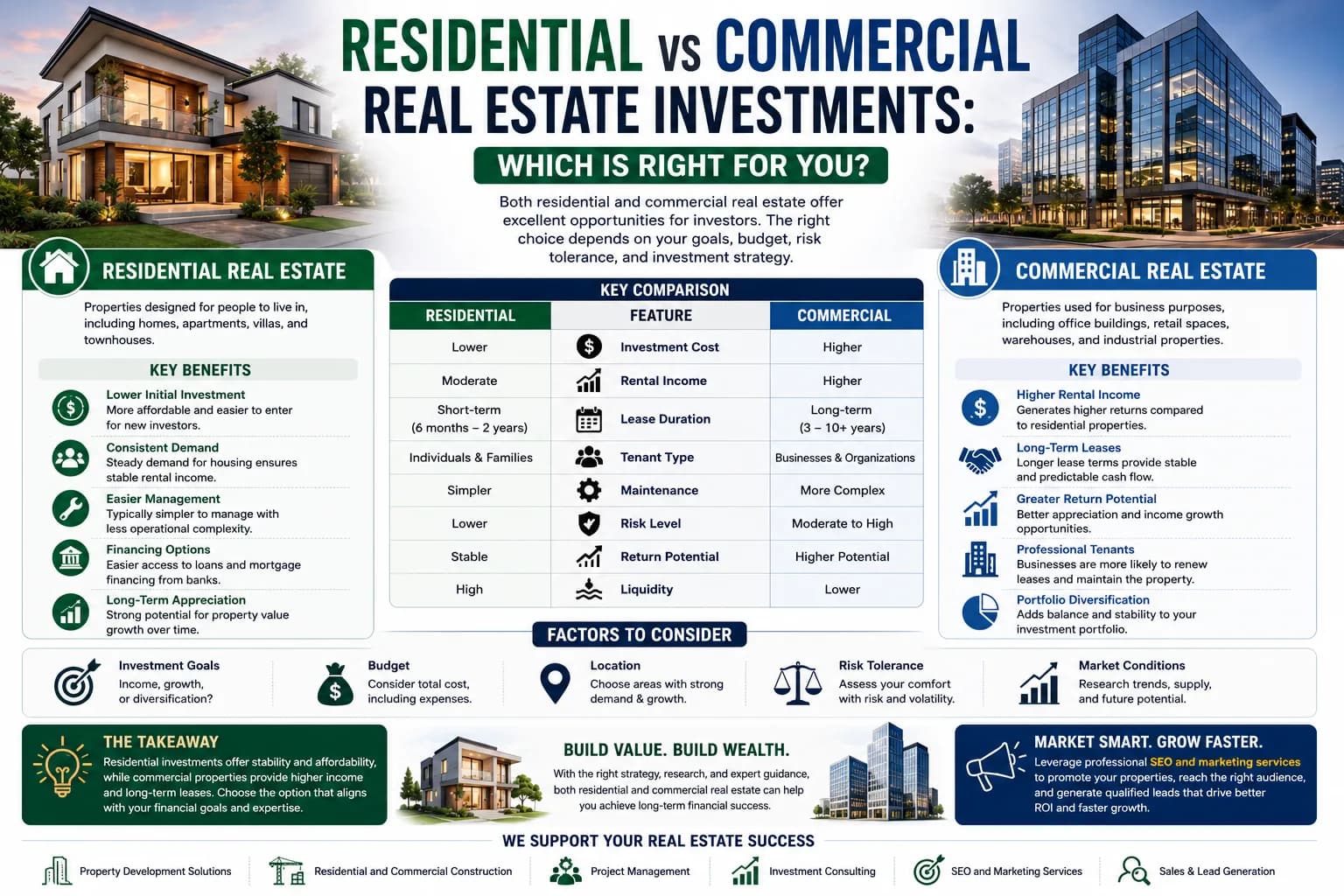
Real estate has long been one of the most reliable ways to build wealth, generate passive income, and diversify investment portfolios. However, one of the biggest decisions investors face is choosing between residential and commercial real estate. Both offer unique opportunities, risks, and returns. Understanding their differences can help you select the investment strategy that best aligns with your financial goals.
In 2026, growing urbanization, smart infrastructure, and changing market demands have increased interest in both property development solutions and residential and commercial construction projects. Whether you're a first-time investor or an experienced developer, making an informed choice is essential for maximizing long-term returns.
What Is Residential Real Estate?
Residential real estate includes properties designed for people to live in. These properties are typically purchased for personal use, rental income, or long-term appreciation.
Examples include:
Single-family homes
Apartments
Villas
Townhouses
Duplexes
Residential plots
Residential investments are often considered more accessible for new investors due to lower entry costs and steady demand.
What Is Commercial Real Estate?
Commercial real estate refers to properties used for business purposes. These properties are leased to companies or organizations that operate from the premises.
Examples include:
Office buildings
Shopping malls
Retail stores
Warehouses
Hotels
Industrial facilities
Mixed-use developments
Commercial properties generally require higher investments but often provide greater rental income and longer lease terms.
Residential vs Commercial Real Estate: Key Differences
Feature
Residential Real Estate
Commercial Real Estate
Investment Cost
Lower
Higher
Rental Income
Moderate
Higher
Lease Duration
Short-term
Long-term
Tenant Type
Individuals & families
Businesses
Maintenance
Simpler
More complex
Risk Level
Lower
Moderate to high
Return Potential
Stable
Higher potential
Both options can be profitable depending on your investment strategy and market conditions.
Benefits of Residential Real Estate Investments
1. Lower Initial Investment
Residential properties generally require less capital, making them suitable for first-time investors.
Benefits include:
Affordable entry
Easier financing
Lower maintenance costs
Wider buyer market
2. Consistent Demand
People will always need housing, ensuring steady demand for residential properties.
Strong demand helps maintain:
Stable rental income
Property appreciation
Lower vacancy rates
3. Easier Property Management
Residential properties typically involve fewer operational complexities than commercial buildings.
Management tasks include:
Tenant communication
Basic maintenance
Rent collection
Property inspections
4. Financing Opportunities
Banks often provide favorable mortgage options for residential properties, making financing more accessible.
Benefits of Commercial Real Estate Investments
1. Higher Rental Income
Commercial properties generally generate higher rental yields than residential properties.
Long-term business leases provide:
Predictable cash flow
Stable income
Lower tenant turnover
2. Long-Term Lease Agreements
Commercial leases often range from 3 to 10 years or more, reducing vacancy risks and improving income stability.
3. Greater Return Potential
Commercial investments can deliver higher returns due to:
Premium rental rates
Business demand
Strategic locations
Value-added improvements
4. Professional Tenants
Business tenants typically maintain leased properties responsibly, reducing maintenance issues for owners.
The Importance of Property Development Solutions
Successful real estate investments rely on effective property development solutions that maximize land value and project profitability.
Professional development services include:
Site selection
Feasibility studies
Land acquisition
Project planning
Design coordination
Investment analysis
Regulatory approvals
Expert planning helps investors reduce risks while increasing long-term returns.
The Role of Residential and Commercial Construction
High-quality residential and commercial construction directly impacts property value, durability, and market appeal.
Modern construction practices focus on:
Sustainable building materials
Smart building technologies
Energy efficiency
Safety standards
Quality workmanship
Well-constructed properties attract more buyers, tenants, and investors while reducing maintenance costs over time.
Factors to Consider Before Investing
Budget
Determine how much capital you can invest, including purchase costs, maintenance, taxes, and financing.
Investment Goals
Ask yourself:
Are you seeking passive income?
Long-term appreciation?
Portfolio diversification?
Short-term profits?
Your objectives will influence the right investment choice.
Market Conditions
Research:
Property demand
Local economic growth
Infrastructure development
Employment trends
Population growth
Strong markets generally offer better investment opportunities.
Risk Tolerance
Residential investments are often considered less risky, while commercial properties may offer higher returns with increased complexity.
Residential Real Estate Is Ideal For
Residential investments may be suitable if you:
Are a first-time investor
Prefer lower investment costs
Want steady rental income
Seek long-term appreciation
Prefer easier property management
Commercial Real Estate Is Ideal For
Commercial investments may be appropriate if you:
Have higher investment capital
Want stronger cash flow
Are comfortable managing larger projects
Seek higher long-term returns
Understand commercial leasing
The Importance of SEO and Marketing Services
Regardless of the type of property you invest in, effective marketing is essential for attracting buyers, tenants, and investors.
Professional SEO and marketing services help real estate businesses:
Improve online visibility
Generate qualified leads
Showcase property listings
Build brand credibility
Increase website traffic
Reach local and global audiences
Digital marketing strategies such as SEO, content marketing, social media campaigns, and paid advertising significantly improve property sales and occupancy rates.
Future Trends in Real Estate Investment
The real estate industry continues to evolve through innovation and changing consumer preferences.
Emerging trends include:
Smart buildings
Sustainable construction
Mixed-use developments
AI-powered property management
Virtual property tours
Green building certifications
Data-driven investment decisions
Investors adopting these trends will be better positioned for long-term success.
Common Mistakes to Avoid
Avoid these common investment mistakes:
Skipping market research
Underestimating maintenance costs
Ignoring location factors
Overleveraging finances
Neglecting legal due diligence
Failing to develop a long-term investment strategy
Careful planning helps minimize risks and maximize returns.
Conclusion
Both residential and commercial real estate offer excellent investment opportunities, but the right choice depends on your financial goals, investment experience, and risk tolerance. Residential properties provide affordability, steady demand, and easier management, while commercial properties offer higher income potential and long-term lease stability.
By leveraging professional property development solutions and investing in quality residential and commercial construction, investors can create valuable assets that generate sustainable returns. Additionally, effective SEO and marketing services help real estate businesses attract buyers, tenants, and investors in an increasingly competitive market.
If you're looking for expert guidance in real estate development, construction, digital marketing, or technology-driven business solutions, Doddapaneni Group (Doddapanenigroup.net) offers comprehensive services designed to help businesses and investors achieve long-term growth and success.