Introduction
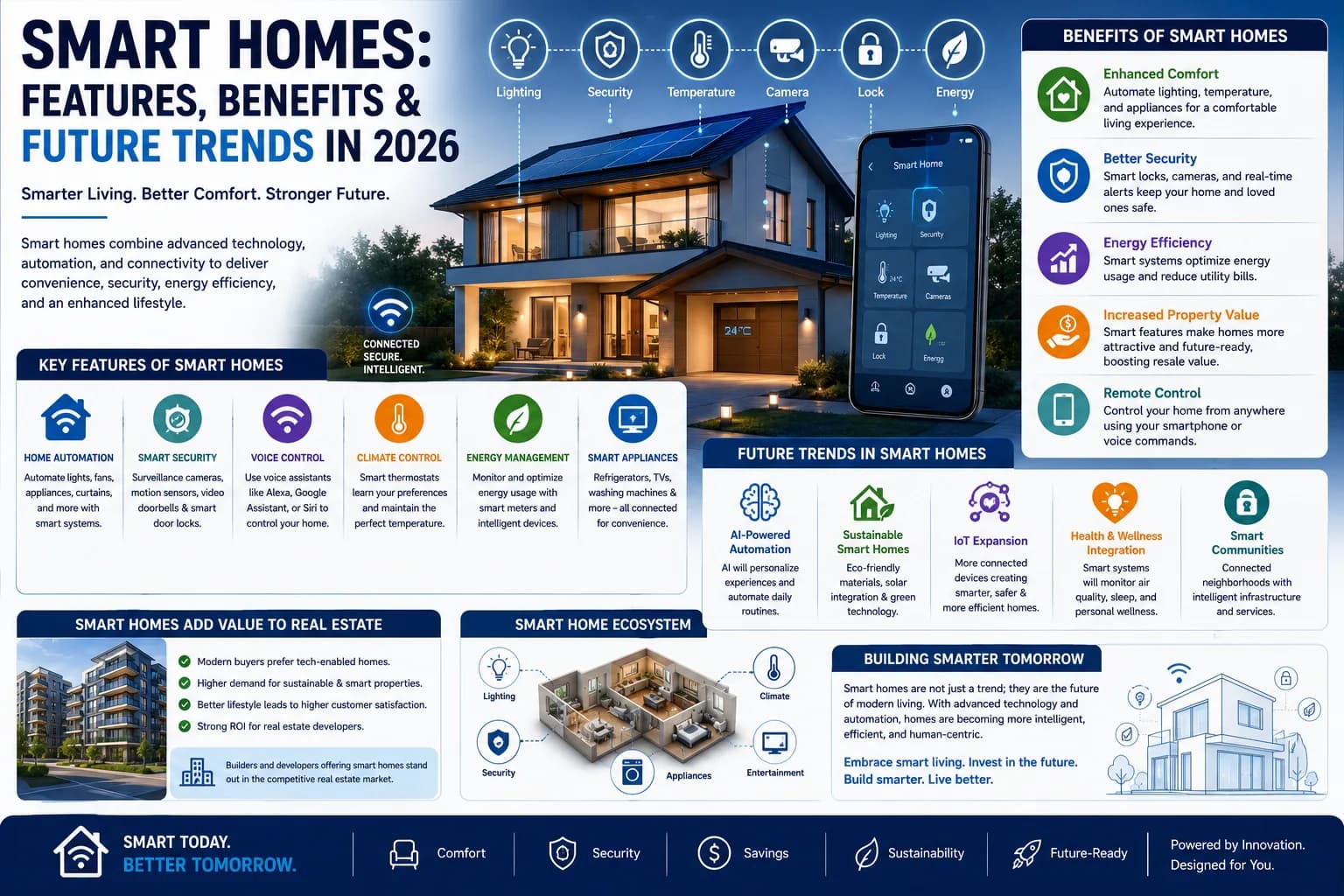
Smart homes are rapidly transforming modern living in 2026. With the rise of artificial intelligence, IoT devices, automation systems, and energy-efficient technologies, homeowners are seeking more connected, secure, and intelligent living environments.
Today’s buyers are no longer focused only on property size and location. They also expect homes to provide convenience, security, sustainability, and advanced digital experiences. This growing demand is driving innovation across the Construction and Real Estate Services industry.
Modern developers offering real estate development services are increasingly integrating smart technologies into residential projects to improve property value, energy efficiency, and customer satisfaction.
Additionally, businesses in the real estate industry are using advanced Digital Marketing Services to showcase smart property features, generate qualified leads, and attract modern buyers through online platforms.
This guide explores smart home technologies, benefits, challenges, and future trends shaping the real estate market in 2026.
What Is a Smart Home?
A smart home uses internet-connected devices and automation systems to control household functions remotely and intelligently.
Common Smart Home Technologies Include:
Smart lighting systems
Voice-controlled assistants
Smart security cameras
Automated climate control
Smart appliances
IoT-enabled devices
These technologies improve convenience, safety, and energy efficiency.
Why Smart Homes Are Growing in 2026
The demand for smart homes is increasing due to:
Rising adoption of IoT technology
Growing focus on energy efficiency
Increased security concerns
Expansion of AI-powered automation
Demand for modern digital lifestyles
Smart homes are becoming a key part of modern residential infrastructure.
Key Features of Smart Homes
Smart Security Systems
Modern smart homes use advanced security technologies such as:
Smart door locks
AI-powered surveillance cameras
Motion detection systems
Video doorbells
These systems improve home safety and remote monitoring.
Voice-Controlled Automation
Voice assistants allow homeowners to control:
Lights
Fans
Appliances
Entertainment systems
Thermostats
Voice automation improves convenience and accessibility.
Smart Energy Management
Energy-efficient technologies help reduce electricity consumption.
Smart Energy Features Include:
Automated lighting
Smart thermostats
Solar energy integration
Energy usage tracking
These systems reduce utility costs and environmental impact.
Connected Smart Appliances
Modern appliances now connect to mobile apps and home networks.
Examples:
Smart refrigerators
Washing machines
Air conditioning systems
Smart TVs
Connected appliances improve operational efficiency and convenience.
Home Automation Systems
Automation platforms integrate multiple smart devices into one centralized control system.
Homeowners can manage systems remotely through smartphones or voice commands.
Benefits of Smart Homes
Improved Convenience
Smart automation simplifies daily household activities.
Homeowners can control devices remotely and automate repetitive tasks.
Enhanced Security
Advanced monitoring systems improve:
Real-time alerts
Remote surveillance
Emergency response capabilities
Smart security provides greater peace of mind.
Energy Efficiency and Sustainability
Smart homes reduce energy waste through:
Automated energy management
Smart climate control
Efficient lighting systems
This supports environmentally responsible living.
Increased Property Value
Properties equipped with smart technologies often attract:
Higher buyer interest
Better resale value
Premium market positioning
Smart features are becoming important real estate differentiators.
Better Lifestyle Experience
Smart technologies improve:
Comfort
Accessibility
Entertainment experiences
Personalized living environments
Technology-driven homes enhance overall quality of life.
Role of Construction and Real Estate Services in Smart Home Development
Modern Construction and Real Estate Services are evolving rapidly to support smart infrastructure development.
Smart Construction Services Include:
Smart building integration
Sustainable architecture
IoT infrastructure planning
Energy-efficient construction
AI-powered property systems
Construction companies are increasingly focusing on future-ready residential projects.
Importance of Real Estate Development Services
Professional real estate development services help developers design intelligent, sustainable, and high-value residential communities.
Development Services Include:
Smart city planning
Residential infrastructure development
Sustainable housing projects
Smart technology integration
Property investment consulting
Innovative development strategies improve long-term property growth and buyer demand.
AI and IoT in Smart Homes
Artificial intelligence and IoT technologies are major drivers of smart home innovation.
AI-Powered Home Systems
AI systems help:
Learn homeowner preferences
Automate routines
Improve energy management
Enhance security monitoring
AI improves personalization and efficiency.
Internet of Things (IoT)
IoT devices communicate and share data in real time.
IoT Applications Include:
Smart lighting
Health monitoring devices
Automated appliances
Environmental sensors
IoT creates highly connected living environments.
Smart Home Trends in 2026
Sustainable Smart Homes
Eco-friendly homes combine:
Renewable energy systems
Smart water management
Sustainable construction materials
Green smart homes are becoming highly desirable.
AI-Powered Personalization
AI systems customize:
Lighting preferences
Climate settings
Entertainment experiences
Personalized automation improves comfort and convenience.
Smart Health Monitoring
Smart homes increasingly include health-focused technologies such as:
Air quality monitoring
Sleep tracking systems
Remote healthcare integration
Health technology integration supports wellness-focused living.
Advanced Home Cybersecurity
As smart homes become more connected, cybersecurity systems are becoming essential.
Smart Communities and Cities
Entire residential communities are adopting:
Smart infrastructure
Intelligent transportation systems
Connected public utilities
Smart cities represent the future of urban living.
Challenges of Smart Home Adoption
Despite rapid growth, smart homes still face several challenges.
Common Challenges Include:
High installation costs
Cybersecurity concerns
Technology compatibility issues
Internet dependency
Data privacy risks
Proper planning and secure infrastructure are critical for successful smart home implementation.
Role of Digital Marketing Services in Smart Real Estate
Modern real estate businesses rely heavily on Digital Marketing Services to promote smart home projects and attract buyers.
Digital Marketing Strategies Include:
Virtual property tours
Social media campaigns
SEO-optimized property listings
Video marketing
Online lead generation campaigns
Digital marketing improves visibility and customer engagement in competitive real estate markets.
Future of Smart Homes
The future of smart homes will focus on:
AI-driven automation
Sustainable living systems
Voice-enabled environments
Smart energy grids
Fully connected ecosystems
Technology will continue reshaping modern residential living experiences.
Expert Tips for Investing in Smart Homes
Prioritize Energy Efficiency
Energy-saving systems improve long-term operational savings.
Invest in Scalable Technologies
Choose smart systems that can adapt to future upgrades.
Focus on Security Features
Cybersecurity is essential for protecting connected home systems.
Work with Experienced Developers
Professional developers ensure proper technology integration.
Use Digital Marketing Strategically
Online promotion helps smart property developers reach modern buyers effectively.
FAQs
Q1: What is a smart home?
A smart home uses connected technologies and automation systems to improve convenience, security, and energy efficiency.
Q2: Why are smart homes becoming popular?
They provide improved security, convenience, sustainability, and modern living experiences.
Q3: What are real estate development services?
They involve planning, designing, and developing residential and commercial infrastructure projects.
Q4: How do Digital Marketing Services help smart home businesses?
They improve online visibility, customer engagement, and lead generation for smart property projects.
Conclusion
Smart homes are shaping the future of residential living in 2026 through intelligent automation, sustainability, and connected technologies. Businesses providing Construction and Real Estate Services and advanced real estate development services are driving innovation in modern housing infrastructure.
At the same time, strategic Digital Marketing Services are helping real estate brands attract modern buyers and showcase smart property experiences effectively.
DoddapaneniGroup.net provides innovative construction, real estate, digital marketing, AI, and technology solutions designed to support smart infrastructure growth and future-ready residential development.
Disclaimer: This content is for informational purposes only.