Introduction
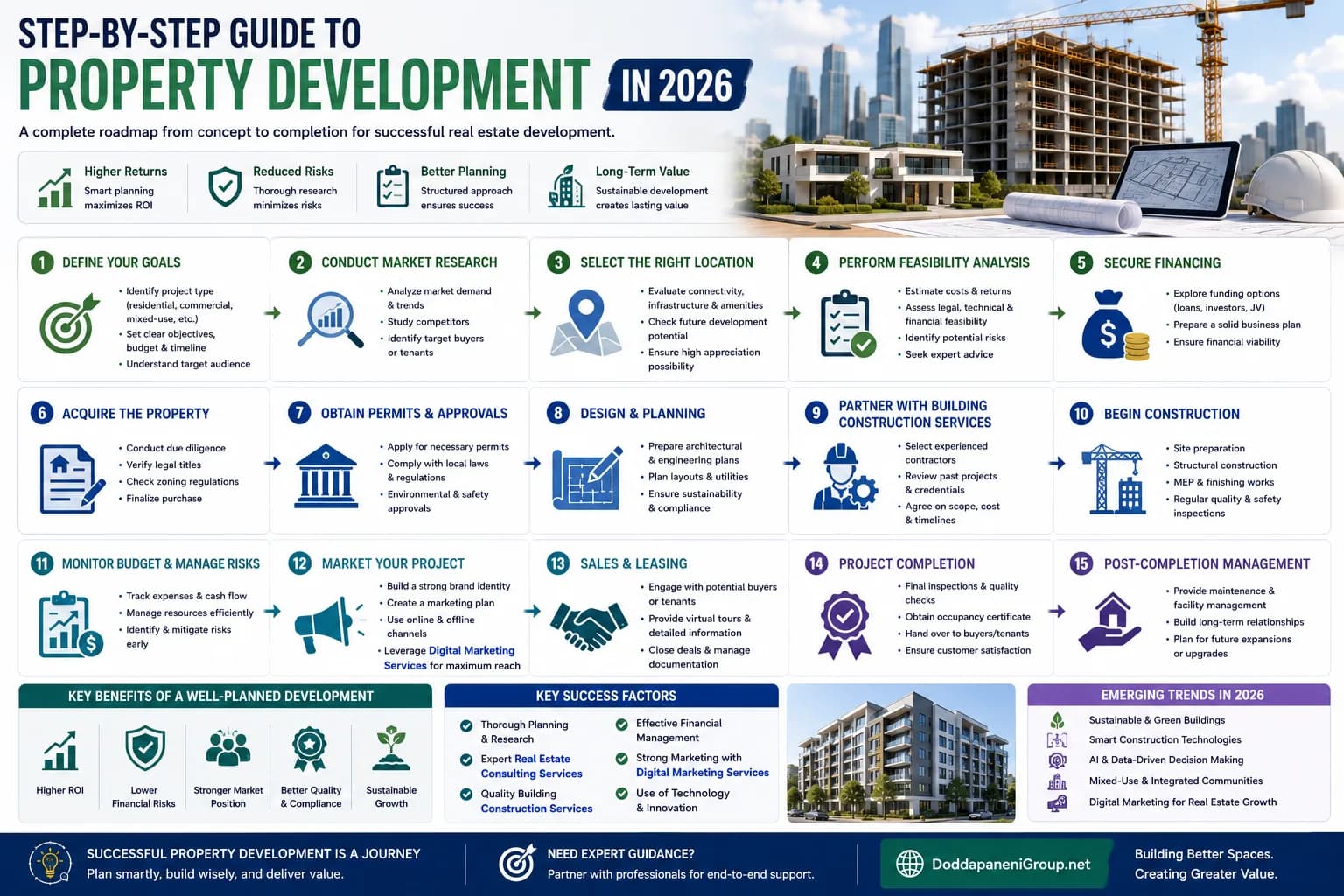
Property development remains one of the most profitable sectors in the real estate industry. Whether developing residential communities, commercial complexes, mixed-use projects, or industrial properties, successful property development requires careful planning, financial management, market research, and execution.
In 2026, property developers are leveraging technology, data analytics, and professional expertise to minimize risks and maximize returns. Companies offering building construction services and real estate consulting services play a vital role in helping developers navigate the complexities of modern real estate projects.
From identifying investment opportunities to managing construction and marketing completed properties, every stage requires strategic decision-making. This comprehensive guide outlines the complete property development process and highlights best practices for achieving long-term success.
What Is Property Development?
Property development involves purchasing land or existing properties and improving them to increase their value and profitability.
Development projects may include:
Residential housing developments
Apartment complexes
Commercial office buildings
Retail centers
Industrial facilities
Mixed-use developments
Property developers coordinate multiple activities including planning, financing, design, construction, marketing, and sales.
Why Property Development Remains Attractive in 2026
Several factors continue to drive property development opportunities:
Growing Urbanization
Cities continue expanding, creating demand for housing and commercial infrastructure.
Infrastructure Investments
Government investments in roads, transportation, and utilities increase land value.
Population Growth
Growing populations require additional residential and commercial spaces.
Technology-Driven Construction
Modern technologies improve project efficiency and profitability.
These factors create favorable conditions for property developers.
Step 1: Define Your Property Development Goals
Every successful project begins with clear objectives.
Important Questions to Consider
What type of property will you develop?
What is your target market?
What is your investment budget?
What return on investment are you seeking?
What is your project timeline?
Establishing goals helps guide every subsequent decision.
Step 2: Conduct Market Research
Thorough market research reduces investment risks and improves decision-making.
Analyze Local Market Conditions
Evaluate:
Property demand
Population growth
Economic trends
Employment rates
Competitor developments
Identify Target Buyers or Tenants
Understand the needs of your intended audience.
Examples include:
Families
Young professionals
Businesses
Investors
Retail tenants
Strong market research forms the foundation of successful development projects.
Step 3: Select the Right Property Location
Location remains one of the most important factors in real estate success.
Consider:
Accessibility
Transportation infrastructure
Schools and healthcare facilities
Business districts
Future development plans
Neighborhood growth potential
A desirable location significantly increases project value and demand.
Step 4: Perform Feasibility Analysis
Before purchasing land or property, conduct a detailed feasibility study.
Evaluate:
Development Costs
Estimate land acquisition, design, construction, permits, and marketing expenses.
Revenue Potential
Forecast sales prices or rental income.
Risks
Identify market, regulatory, environmental, and financial risks.
Profitability
Calculate expected returns and break-even points.
Professional real estate consulting services often assist developers during this critical stage.
Step 5: Secure Financing
Property development typically requires substantial capital.
Common Funding Sources
Bank loans
Private investors
Joint ventures
Real estate investment groups
Personal capital
A well-prepared business plan increases the likelihood of obtaining financing.
Step 6: Acquire the Property
After confirming feasibility and financing, the next step is purchasing the development site.
Due Diligence Checklist
Verify ownership
Review zoning regulations
Check legal restrictions
Conduct environmental assessments
Confirm utility access
Proper due diligence helps prevent costly surprises later.
Step 7: Obtain Permits and Approvals
Property development projects must comply with local regulations.
Common Approvals Include
Zoning permits
Building permits
Environmental approvals
Utility connections
Fire safety approvals
Early engagement with local authorities can accelerate the approval process.
Step 8: Develop Architectural and Engineering Plans
Once approvals are underway, project designs can be finalized.
Planning Includes
Site layouts
Architectural designs
Structural engineering
Electrical systems
Plumbing systems
Sustainability features
Detailed planning minimizes construction delays and budget overruns.
Step 9: Partner with Building Construction Services Providers
Selecting experienced building construction services providers is essential for project success.
Key Selection Criteria
Industry experience
Project portfolio
Financial stability
Safety record
Technology capabilities
Reliable construction partners help ensure quality, efficiency, and timely delivery.
Step 10: Begin Construction
Construction is often the most visible and resource-intensive phase.
Construction Activities Include
Site Preparation
Clearing land and preparing foundations.
Structural Construction
Building the framework and core structures.
Mechanical Installations
Installing electrical, plumbing, and HVAC systems.
Interior and Exterior Finishing
Completing architectural and design elements.
Project managers closely monitor schedules, costs, and quality throughout construction.
Step 11: Implement Smart Construction Technologies
Modern property developers increasingly use technology to improve efficiency.
Popular Technologies Include
Building Information Modeling (BIM)
Drones
IoT sensors
Project management software
Artificial Intelligence
These tools improve project visibility and reduce construction risks.
Step 12: Monitor Budget and Risk Management
Effective financial management is critical throughout development.
Track:
Construction costs
Labor expenses
Material costs
Permit fees
Marketing expenses
Regular financial reviews help maintain profitability.
Step 13: Create a Marketing Strategy
A strong marketing plan is essential for attracting buyers, tenants, or investors.
Effective Marketing Tactics
Property Websites
Dedicated project websites showcase development features.
Social Media Marketing
Visual content helps attract prospective buyers.
Virtual Tours
Interactive experiences improve engagement.
Email Campaigns
Lead nurturing supports conversion efforts.
Search Engine Optimization
Organic visibility increases lead generation.
Professional Digital Marketing Services can significantly improve project exposure and sales performance.
Step 14: Sales and Leasing Activities
As construction nears completion, developers begin generating revenue.
Common Strategies
Pre-sales campaigns
Investor outreach
Leasing programs
Real estate agent partnerships
Open house events
Strong sales execution accelerates project profitability.
Step 15: Project Completion and Handover
After construction concludes, developers complete final inspections and property handovers.
Final Steps Include
Quality assurance reviews
Occupancy certificates
Client walkthroughs
Documentation delivery
Facility management planning
Successful project completion strengthens developer reputation and supports future opportunities.
Importance of Real Estate Consulting Services
Professional real estate consulting services help developers make informed decisions throughout the project lifecycle.
Consultants Provide
Market analysis
Investment evaluation
Feasibility studies
Risk assessments
Development strategies
Regulatory guidance
Expert advice reduces uncertainty and improves project outcomes.
Common Property Development Challenges
Despite its opportunities, property development involves several risks.
Market Fluctuations
Economic conditions can impact demand.
Regulatory Changes
New regulations may affect project timelines.
Cost Overruns
Unexpected expenses can reduce profitability.
Construction Delays
Supply chain issues and labor shortages may impact schedules.
Financing Challenges
Interest rate changes can affect project economics.
Proactive planning helps mitigate these risks.
Emerging Property Development Trends in 2026
Sustainable Developments
Green building practices are increasingly important.
Smart Buildings
Connected technologies enhance efficiency and tenant experiences.
Mixed-Use Communities
Developments combining residential, retail, and office spaces continue to grow.
Digital Property Marketing
Technology-driven marketing strategies generate higher-quality leads.
Data-Driven Development
Analytics improve site selection and investment decisions.
Developers embracing these trends gain competitive advantages.
Best Practices for Successful Property Development
Conduct Comprehensive Research
Understand market conditions before investing.
Build Strong Partnerships
Collaborate with experienced consultants and contractors.
Focus on Quality
High-quality developments attract buyers and investors.
Utilize Technology
Leverage digital tools to improve efficiency.
Develop Effective Marketing Campaigns
Promote projects strategically using professional Digital Marketing Services.
Plan for Long-Term Value
Prioritize sustainability and future market demands.
Conclusion
Property development remains one of the most rewarding opportunities in real estate when approached strategically. From market research and land acquisition to construction and sales, each stage plays a critical role in determining project success.
Partnering with experienced providers of building construction services ensures efficient project execution, while expert real estate consulting services help developers make informed investment decisions and minimize risks.
In today's competitive marketplace, integrating modern technologies and leveraging professional Digital Marketing Services can further enhance project visibility, attract qualified buyers, and maximize returns.
DoddapaneniGroup.net offers comprehensive construction, real estate, software, AI, and digital transformation solutions designed to help developers successfully plan, build, and market future-ready property projects.
Disclaimer: This content is for informational purposes only and should not be considered financial, legal, or investment advice.