Introduction
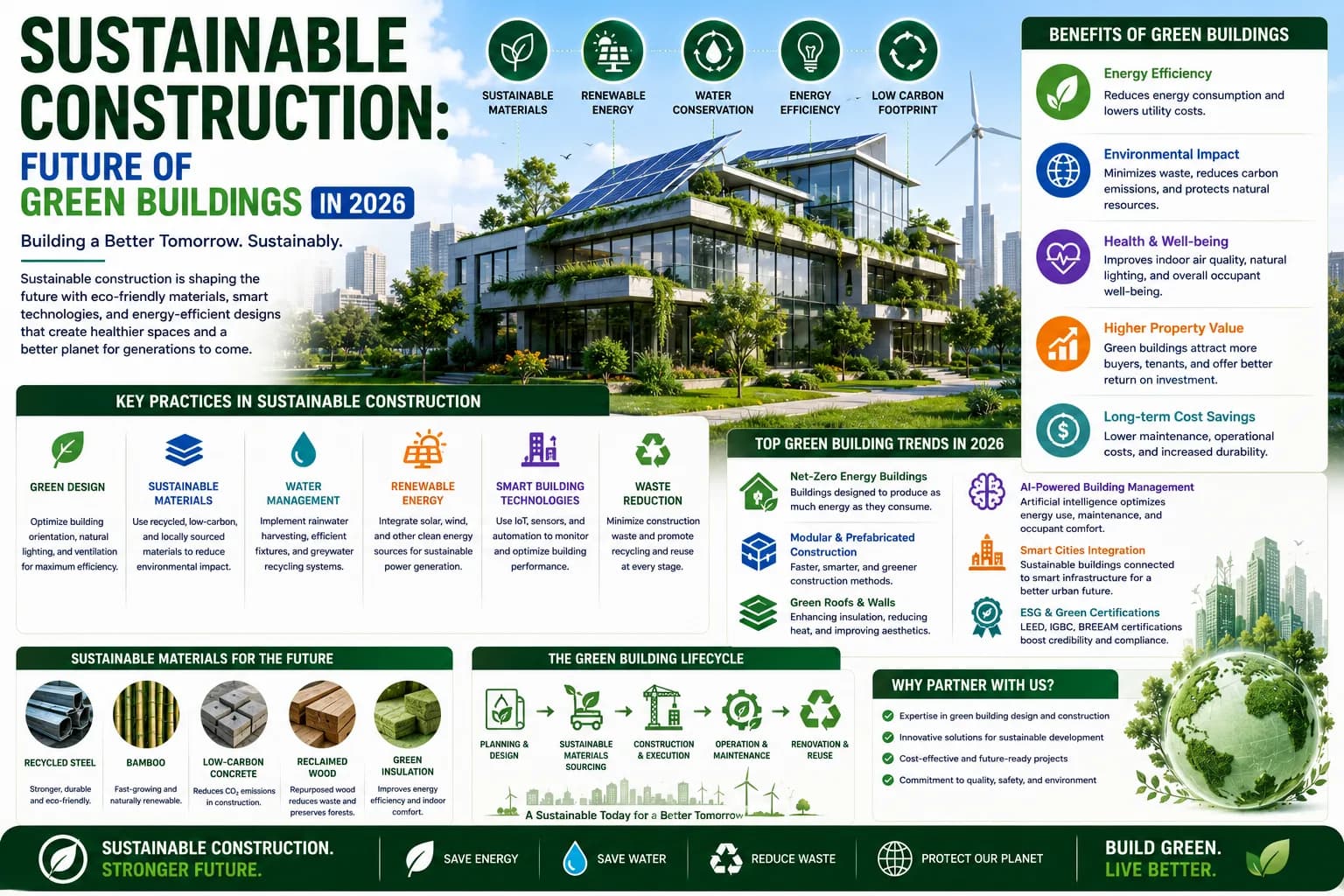
Sustainable construction is becoming one of the most important trends in the global infrastructure and property industry in 2026. As environmental concerns, urbanization, and energy demands continue to grow, businesses and governments are focusing on eco-friendly construction methods and smart green building technologies.
Modern buyers, investors, and organizations now prioritize energy-efficient buildings, sustainable infrastructure, and environmentally responsible development projects. This shift is driving rapid innovation across the Construction and Real Estate Services sector.
Companies offering advanced real estate development services are increasingly integrating green construction practices, renewable energy systems, and smart technologies into residential and commercial projects to improve sustainability and long-term value.
At the same time, businesses are using modern Digital Marketing Services to showcase sustainable projects, attract environmentally conscious investors, and strengthen brand visibility in competitive markets.
This guide explores sustainable construction, green building technologies, benefits, challenges, trends, and the future of environmentally responsible infrastructure in 2026.
What Is Sustainable Construction?
Sustainable construction refers to designing, building, and maintaining structures in ways that minimize environmental impact while improving efficiency and long-term performance.
Key Goals of Sustainable Construction:
Reduce carbon emissions
Improve energy efficiency
Minimize waste generation
Conserve natural resources
Promote healthier living environments
Green construction focuses on balancing environmental, economic, and social sustainability.
Why Sustainable Construction Matters in 2026
The construction industry significantly impacts:
Energy consumption
Carbon emissions
Water usage
Waste production
As climate concerns increase globally, sustainable construction is becoming essential for long-term environmental and economic stability.
Major Growth Drivers Include:
Rising energy costs
Government environmental regulations
Demand for eco-friendly properties
Growth of smart city initiatives
Investor focus on ESG standards
Green infrastructure is becoming a major priority for modern urban development.
Benefits of Sustainable Construction
Energy Efficiency
Green buildings use advanced systems to reduce energy consumption.
Energy-Saving Features Include:
Smart lighting systems
Solar energy integration
Energy-efficient HVAC systems
Automated climate control
Energy-efficient buildings reduce operational expenses significantly.
Reduced Environmental Impact
Sustainable construction minimizes:
Carbon emissions
Construction waste
Water consumption
Pollution levels
Eco-friendly practices support long-term environmental protection.
Improved Property Value
Green buildings often attract:
Higher property demand
Better resale value
Increased rental opportunities
Sustainable infrastructure is becoming a strong market differentiator.
Healthier Indoor Environments
Green buildings improve indoor air quality through:
Better ventilation systems
Non-toxic materials
Natural lighting optimization
Healthy environments improve occupant comfort and productivity.
Long-Term Cost Savings
Although sustainable construction may involve higher initial investment, it reduces long-term operational and maintenance costs.
Role of Construction and Real Estate Services in Sustainable Development
Modern Construction and Real Estate Services are rapidly evolving to support sustainable infrastructure and smart urban development.
Sustainable Construction Services Include:
Green building design
Smart infrastructure planning
Eco-friendly material selection
Energy-efficient construction systems
Sustainable project management
Construction companies are increasingly adopting environmentally responsible building practices.
Importance of Real Estate Development Services
Professional real estate development services help create sustainable residential and commercial communities that meet modern environmental standards.
Development Services Include:
Smart city planning
Green housing projects
Sustainable commercial infrastructure
Renewable energy integration
Environmental impact analysis
Sustainable development strategies improve both economic and environmental performance.
Green Building Technologies in 2026
Solar Energy Systems
Solar panels are becoming standard in modern green buildings.
Benefits Include:
Reduced electricity costs
Renewable energy generation
Lower carbon footprint
Solar integration improves sustainability and energy independence.
Smart Building Automation
Smart systems help optimize:
Lighting
Temperature control
Water management
Energy consumption
Automation improves efficiency and reduces operational waste.
Sustainable Construction Materials
Eco-friendly materials reduce environmental impact.
Common Green Materials Include:
Recycled steel
Bamboo
Reclaimed wood
Low-carbon concrete
Sustainable materials improve environmental responsibility.
Rainwater Harvesting Systems
Green buildings increasingly use water conservation systems to reduce water waste and improve resource management.
IoT and Smart Sensors
Connected sensors monitor:
Energy usage
Air quality
Water consumption
Building performance
IoT systems improve operational efficiency and sustainability.
Smart Cities and Sustainable Infrastructure
Governments and developers are investing heavily in smart city initiatives.
Smart City Features Include:
Green transportation systems
Intelligent energy grids
Sustainable waste management
Smart public infrastructure
Smart cities improve urban sustainability and quality of life.
Sustainable Construction Trends in 2026
Net-Zero Energy Buildings
Buildings designed to produce as much energy as they consume are becoming more common.
Modular and Prefabricated Construction
Prefabrication reduces:
Construction waste
Project timelines
Labor costs
Modular construction improves sustainability and efficiency.
Green Roof Systems
Green roofs improve:
Insulation
Air quality
Urban heat reduction
They also enhance building aesthetics and environmental performance.
AI-Powered Building Management
Artificial intelligence helps optimize:
Energy consumption
Predictive maintenance
Resource allocation
AI improves building efficiency and operational management.
ESG-Focused Investments
Investors increasingly prioritize environmentally sustainable real estate projects.
Challenges in Sustainable Construction
Despite its advantages, sustainable construction also faces challenges.
High Initial Costs
Green technologies and sustainable materials may increase upfront project expenses.
Limited Awareness
Some businesses and buyers still lack understanding of long-term sustainability benefits.
Regulatory Complexity
Environmental regulations vary across regions and may complicate project planning.
Skilled Workforce Shortage
Sustainable construction often requires specialized expertise and training.
Technology Integration Challenges
Integrating smart systems into traditional infrastructure may require additional planning and investment.
Role of Digital Marketing Services in Sustainable Real Estate
Modern real estate businesses use Digital Marketing Services to promote green infrastructure projects and attract eco-conscious buyers.
Digital Marketing Strategies Include:
Virtual property tours
SEO-optimized project pages
Sustainability-focused content marketing
Social media campaigns
Online investor engagement
Digital marketing improves visibility and customer trust for sustainable projects.
Best Practices for Sustainable Construction
Prioritize Energy Efficiency
Energy-efficient systems improve long-term cost savings and sustainability.
Use Eco-Friendly Materials
Sustainable materials reduce environmental impact and improve building performance.
Invest in Smart Technologies
Smart automation systems improve operational efficiency and energy management.
Focus on Water Conservation
Efficient water systems support sustainable resource management.
Work with Experienced Development Partners
Professional expertise improves sustainable project planning and execution.
Future of Sustainable Construction
The future of sustainable construction will focus on:
Carbon-neutral buildings
AI-powered smart infrastructure
Renewable energy integration
Circular construction practices
Smart urban ecosystems
Green construction will continue shaping the future of modern infrastructure development.
FAQs
Q1: What is sustainable construction?
Sustainable construction focuses on environmentally responsible building practices that improve efficiency and reduce environmental impact.
Q2: Why are green buildings important?
Green buildings improve energy efficiency, reduce operational costs, and support environmental sustainability.
Q3: What are real estate development services?
They involve planning, designing, and managing residential and commercial property development projects.
Q4: How do Digital Marketing Services help sustainable construction companies?
They improve project visibility, attract investors, and generate leads through online promotion strategies.
Conclusion
Sustainable construction is shaping the future of infrastructure and urban development in 2026. Companies providing Construction and Real Estate Services and advanced real estate development services are driving innovation through eco-friendly building practices, smart technologies, and energy-efficient infrastructure.
At the same time, strategic Digital Marketing Services are helping sustainable real estate brands reach environmentally conscious buyers and investors in highly competitive markets.
DoddapaneniGroup.net provides innovative construction, real estate, AI, software, digital marketing, and business transformation solutions designed to support sustainable infrastructure growth and future-ready development projects.
Disclaimer: This content is for informational purposes only.