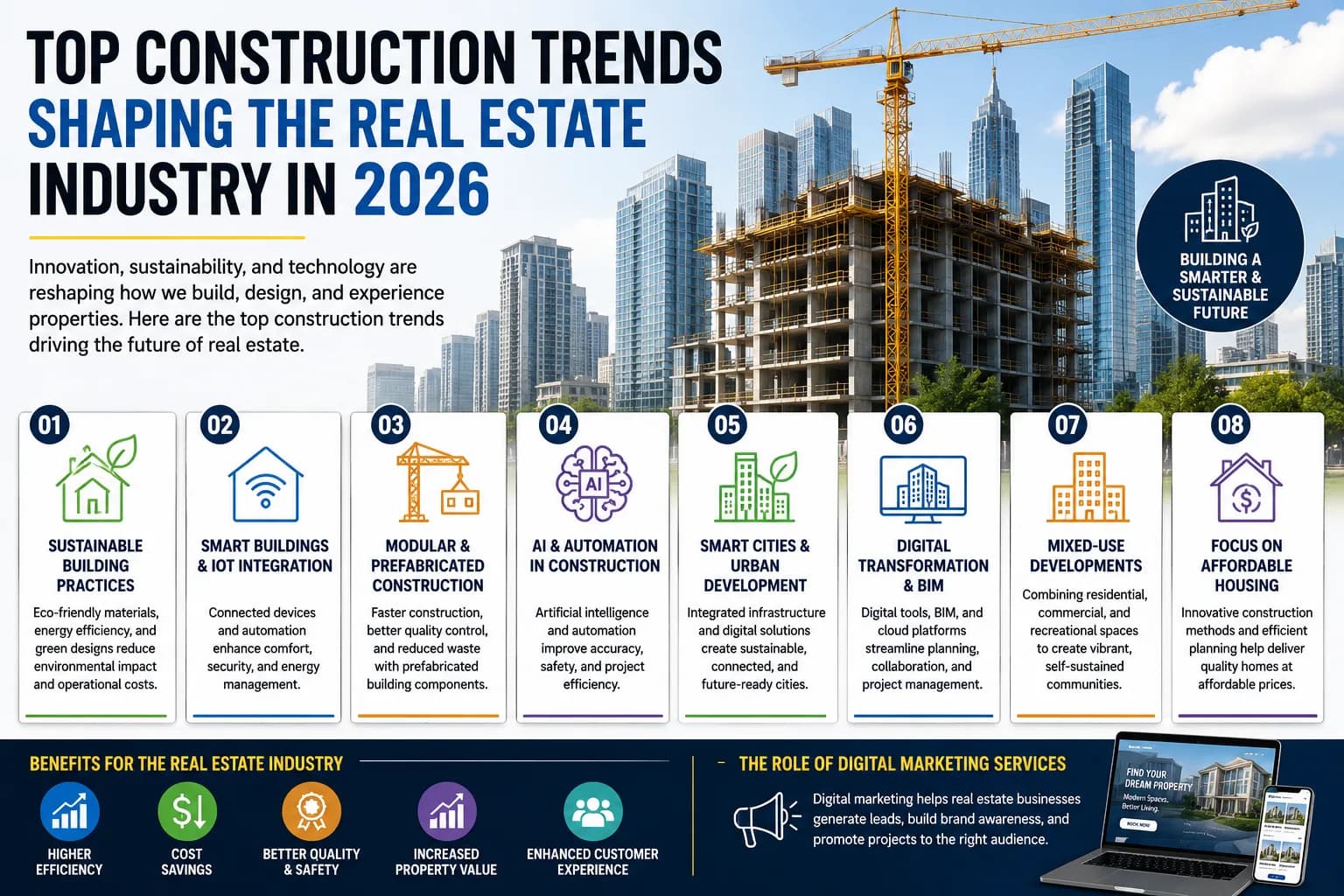
The real estate and construction sectors are evolving rapidly in 2026. Advancements in technology, changing consumer preferences, sustainability initiatives, and smart infrastructure are transforming how properties are designed, developed, and marketed. Businesses involved in Construction and Real Estate Services are adopting innovative strategies to remain competitive and meet growing market demands.
From smart buildings to eco-friendly construction practices, modern real estate development services are helping developers create projects that offer long-term value, efficiency, and enhanced customer experiences. As the industry embraces digital transformation, several emerging trends are shaping the future of real estate development.
The Evolution of Construction and Real Estate in 2026
The demand for sustainable, technologically advanced, and customer-focused properties has increased significantly. Buyers and investors are seeking modern spaces that prioritize convenience, energy efficiency, and connectivity.
Today's Construction and Real Estate Services focus on:
Sustainable development.
Smart infrastructure.
Efficient project management.
Enhanced customer experiences.
Technology-driven operations.
Long-term investment value.
These factors are driving innovation throughout the construction and property development ecosystem.
Why Real Estate Development Services Are More Important Than Ever
Professional real estate development services play a vital role in planning, designing, and delivering successful projects.
These services help developers:
Optimize project timelines.
Improve construction efficiency.
Manage costs effectively.
Ensure regulatory compliance.
Enhance property quality.
Increase return on investment.
As market expectations continue to rise, experienced development teams are becoming essential for project success.
Top Construction Trends Transforming the Industry
1. Sustainable and Green Building Practices
Sustainability remains one of the biggest priorities in 2026. Developers are focusing on environmentally responsible construction methods to reduce carbon footprints and improve energy efficiency.
Popular green building features include:
Solar energy systems.
Energy-efficient lighting.
Smart water management.
Eco-friendly building materials.
Waste reduction strategies.
Sustainable properties attract environmentally conscious buyers and provide long-term operational savings.
2. Smart Buildings and IoT Integration
Modern buildings are becoming more intelligent through Internet of Things (IoT) technologies.
Smart features include:
Automated lighting systems.
Intelligent climate control.
Security monitoring.
Smart access management.
Energy consumption tracking.
These innovations improve convenience while increasing property value.
3. Modular and Prefabricated Construction
Prefabrication is helping developers complete projects faster and more efficiently.
Benefits include:
Reduced construction time.
Lower labor costs.
Improved quality control.
Less material waste.
Faster project delivery.
Modular construction is becoming increasingly popular for residential and commercial developments.
4. Artificial Intelligence and Automation
AI and automation are improving every stage of construction and project management.
Technology helps with:
Project planning.
Risk analysis.
Resource allocation.
Predictive maintenance.
Construction monitoring.
These advancements increase productivity and reduce delays.
5. Smart Cities and Urban Development
Governments and developers are investing in smart city initiatives that integrate technology with infrastructure.
Smart urban developments focus on:
Efficient transportation systems.
Digital connectivity.
Sustainable communities.
Energy optimization.
Improved public services.
These projects create more livable and future-ready environments.
Digital Transformation in Construction
Digital technologies are reshaping how projects are managed and executed.
Modern Construction and Real Estate Services use:
Cloud-based collaboration tools.
Building Information Modeling (BIM).
Project management software.
Drone inspections.
Virtual property tours.
Digital transformation helps developers improve efficiency and enhance decision-making.
Rising Demand for Mixed-Use Developments
Consumers increasingly prefer communities that combine:
Residential spaces.
Commercial establishments.
Recreational facilities.
Workspaces.
Lifestyle amenities.
Mixed-use developments provide convenience and create vibrant communities that attract buyers and investors.
Focus on Affordable Housing
Affordable housing initiatives are gaining momentum as urban populations continue to grow.
Developers are exploring innovative approaches to:
Reduce construction costs.
Increase housing accessibility.
Deliver quality living spaces.
Meet rising market demand.
Affordable housing projects contribute to long-term economic development and community growth.
Technology's Impact on Real Estate Sales
Technology is transforming property marketing and customer engagement.
Developers are leveraging:
Virtual reality tours.
3D property visualization.
Online booking systems.
AI-powered customer support.
Data analytics.
These technologies improve the buyer experience and accelerate sales processes.
The Role of Digital Marketing Services in Real Estate Growth
An increasingly competitive market has made Digital Marketing Services essential for real estate companies.
Digital marketing helps businesses:
Generate quality leads.
Increase brand visibility.
Promote new projects.
Reach targeted audiences.
Build trust with potential buyers.
Through SEO, content marketing, social media, and paid advertising, developers can effectively showcase properties and attract investors.
Benefits of Modern Real Estate Development Services
Improved Project Efficiency
Technology and automation streamline operations and reduce delays.
Enhanced Property Value
Smart features and sustainable designs increase market appeal.
Better Customer Experiences
Digital tools make property searches and transactions easier.
Greater Investment Opportunities
Innovative developments attract investors seeking long-term returns.
Stronger Market Competitiveness
Businesses that adopt emerging trends remain ahead of industry changes.
Challenges Facing the Industry
Despite positive growth, the industry faces several challenges:
Rising material costs.
Labor shortages.
Regulatory compliance requirements.
Economic uncertainties.
Supply chain disruptions.
Successful organizations overcome these challenges through strategic planning and innovation.
Future Outlook for Construction and Real Estate
The future of real estate lies in technology, sustainability, and customer-centric development. Developers who embrace innovation will be better equipped to meet changing market demands and create properties that deliver lasting value.
As urbanization continues and digital transformation accelerates, demand for professional real estate development services will continue to grow.
Conclusion
The construction and real estate industries are entering a new era defined by innovation, sustainability, and digital transformation. Modern Construction and Real Estate Services are helping businesses deliver smarter, more efficient, and future-ready developments.
From green buildings and smart technologies to digital property marketing, these trends are shaping the future of the industry. Additionally, leveraging professional Digital Marketing Services can help developers expand their reach and drive project success.
For organizations seeking comprehensive business solutions and technology-driven growth, Doddapaneni Group (Doddapanenigroup.net) offers expert services tailored to modern industry needs.