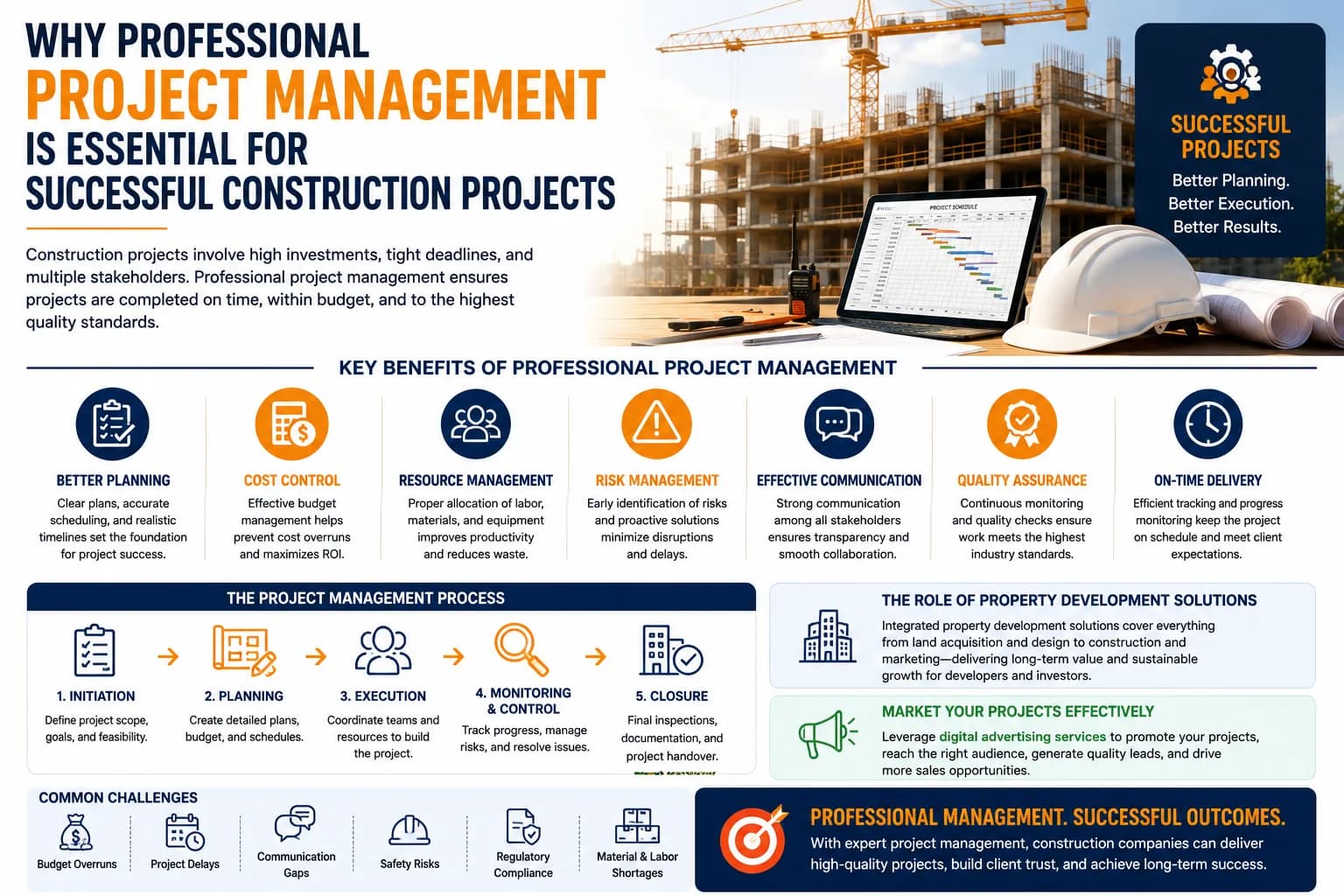
The construction industry is one of the most complex and demanding sectors, requiring careful planning, coordination, and execution. From residential developments to large commercial projects, every stage must be managed efficiently to ensure projects are completed on time, within budget, and according to quality standards. In 2026, professional project management has become a vital component of successful construction company services and effective property development solutions.
Construction projects involve multiple stakeholders, strict regulations, resource management, and evolving client expectations. Without experienced project management, delays, budget overruns, and quality issues can significantly impact project success. By implementing structured project management practices, construction companies can improve productivity, reduce risks, and deliver exceptional results.
What Is Construction Project Management?
Construction project management is the process of planning, organizing, coordinating, and supervising every phase of a construction project from initial planning to final completion.
It includes:
Project planning
Budget management
Resource allocation
Scheduling
Quality assurance
Risk management
Contractor coordination
Client communication
Professional project management ensures every aspect of a project aligns with business objectives and client expectations.
Why Project Management Matters in Construction
Modern construction company services rely on professional project management to maintain efficiency and profitability.
Effective project management helps businesses:
Complete projects on schedule.
Control construction costs.
Improve communication.
Reduce project risks.
Ensure regulatory compliance.
Deliver high-quality work.
Well-managed projects lead to higher customer satisfaction and stronger business reputations.
Top Benefits of Professional Project Management
1. Better Project Planning
Every successful construction project begins with a detailed plan.
Professional planning includes:
Project scope definition
Timeline development
Budget estimation
Resource planning
Risk assessment
Proper planning minimizes unexpected delays and improves project execution.
2. Efficient Budget Management
Cost overruns remain one of the biggest challenges in construction.
Project managers monitor:
Material expenses
Labor costs
Equipment usage
Vendor payments
Contingency budgets
Accurate financial oversight helps maximize profitability while preventing unnecessary expenditures.
3. Improved Resource Allocation
Construction projects require careful coordination of people, equipment, and materials.
Professional managers ensure:
Skilled labor availability
Equipment utilization
Material procurement
Efficient scheduling
Proper resource management improves productivity and reduces downtime.
4. Risk Identification and Management
Every construction project faces potential risks, including:
Weather delays
Material shortages
Safety concerns
Regulatory issues
Design modifications
Experienced project managers identify risks early and develop mitigation strategies that minimize project disruptions.
5. Strong Communication Between Stakeholders
Construction projects involve architects, engineers, contractors, suppliers, investors, and clients.
Effective communication ensures:
Clear expectations
Faster decision-making
Fewer misunderstandings
Better collaboration
Transparent communication contributes to smoother project execution.
6. Quality Assurance
Professional project management maintains high construction standards throughout the project lifecycle.
Quality management includes:
Site inspections
Material quality verification
Compliance monitoring
Performance reviews
Final project evaluations
Consistent quality control protects both clients and construction companies.
7. Timely Project Delivery
Meeting project deadlines is essential for customer satisfaction and profitability.
Project managers use:
Scheduling software
Progress tracking
Milestone monitoring
Daily reporting
These tools help ensure projects remain on schedule despite changing conditions.
The Role of Property Development Solutions
Modern property development solutions extend beyond construction to include strategic planning, design, marketing, and long-term asset management.
Professional development services support:
Land acquisition
Feasibility studies
Project financing
Construction coordination
Property marketing
Investment analysis
Integrated development strategies improve project value and maximize returns.
Technology Is Transforming Construction Project Management
Digital technologies have significantly improved construction management in recent years.
Today's project managers use:
Building Information Modeling (BIM)
Cloud-based collaboration platforms
Drone site inspections
Mobile project management apps
Digital documentation
Real-time reporting systems
These technologies improve accuracy, transparency, and operational efficiency.
The Importance of Digital Advertising Services for Construction Companies
Beyond project execution, successful construction firms also need effective marketing strategies.
Professional digital advertising services help construction businesses:
Promote completed projects
Generate qualified leads
Build brand credibility
Showcase property developments
Reach investors and buyers
Digital advertising through search engines, social media, and content marketing enables construction companies to expand their market presence and attract new business opportunities.
Common Challenges in Construction Projects
Construction companies frequently encounter:
Budget Overruns
Unexpected expenses can affect project profitability.
Delayed Timelines
Poor scheduling and resource shortages often lead to project delays.
Communication Gaps
Miscommunication among stakeholders may result in costly mistakes.
Regulatory Compliance
Construction companies must comply with evolving building codes and safety regulations.
Resource Shortages
Labor and material availability can impact project schedules.
Professional project management minimizes these challenges through proactive planning and continuous monitoring.
Best Practices for Successful Construction Project Management
Construction organizations should follow several proven strategies:
Develop Detailed Project Plans
Clearly define objectives, responsibilities, and timelines before work begins.
Use Modern Technology
Digital tools improve collaboration, reporting, and project visibility.
Monitor Project Performance
Track budgets, timelines, quality standards, and resource utilization regularly.
Prioritize Safety
Maintain strict workplace safety protocols to protect workers and reduce project risks.
Maintain Strong Client Communication
Regular updates improve trust and ensure alignment throughout the project.
Future Trends in Construction Project Management
The construction industry continues embracing innovation.
Emerging trends include:
AI-powered project scheduling
Predictive analytics
Smart construction sites
Sustainable building practices
Modular construction
Digital twins
Cloud-based collaboration
Companies adopting these technologies will improve efficiency and remain competitive in the evolving construction market.
Conclusion
Professional project management is the foundation of successful construction company services and high-quality property development solutions. Effective planning, budget control, communication, and technology integration enable construction businesses to deliver projects on time, within budget, and to the highest standards.
In addition to operational excellence, leveraging digital advertising services helps construction companies showcase their expertise, generate qualified leads, and grow their market presence.
If your construction business is looking for innovative technology and business solutions, Doddapaneni Group (Doddapanenigroup.net) offers comprehensive services designed to support construction companies, developers, and growing enterprises.