Introduction
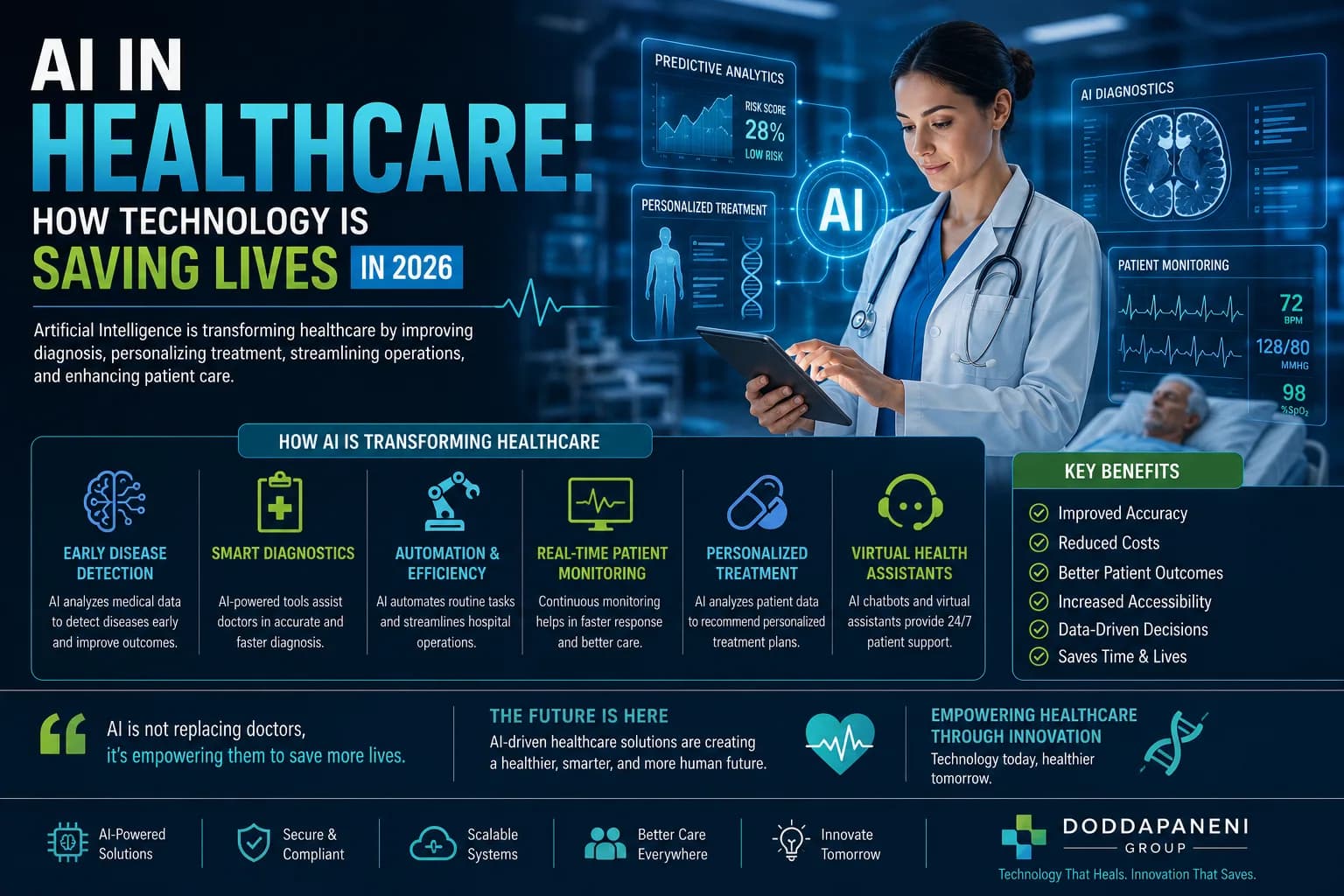
Artificial Intelligence (AI) is revolutionizing industries worldwide, but its impact on healthcare is truly life-changing. In 2026, AI-powered technologies are improving diagnostics, enhancing patient care, streamlining hospital operations, and helping medical professionals make faster and more accurate decisions.
Modern are becoming smarter through automation, predictive analytics, and intelligent systems. Advanced medical healthcare solutions powered by AI are not only improving operational efficiency but also saving lives by enabling early detection and personalized treatment plans.
As healthcare becomes increasingly digital, organizations are also leveraging Digital Marketing Services to improve patient engagement, promote telehealth services, and build stronger healthcare brands online.
What Is AI in Healthcare?
AI in healthcare refers to the use of machine learning, automation, and intelligent systems to improve medical services and healthcare operations.
AI Technologies Used in Healthcare:
Machine Learning (ML)
Natural Language Processing (NLP)
Predictive Analytics
Computer Vision
Robotics and Automation
These technologies help hospitals and healthcare providers improve efficiency, reduce costs, and deliver better patient outcomes.
Why AI Is Transforming Healthcare and Medical Services
The healthcare industry faces several challenges:
Increasing patient demand
Rising operational costs
Staff shortages
Complex medical data management
AI-powered medical healthcare solutions help address these issues by automating repetitive tasks and improving decision-making.
Key Ways AI Is Saving Lives in 2026
1. Early Disease Detection
One of the biggest advantages of AI is its ability to detect diseases early.
AI Applications:
Cancer detection
Heart disease prediction
Diabetes risk analysis
Brain scan interpretation
AI systems can analyze medical images and patient data faster than traditional methods, enabling early diagnosis and improving survival rates.
2. AI-Powered Diagnostics
AI tools assist doctors in diagnosing medical conditions with greater accuracy.
Benefits:
Faster diagnosis
Reduced human error
Better treatment recommendations
AI-driven diagnostics are becoming essential in modern Healthcare and Medical Services.
3. Smart Hospitals and Automation
Hospitals are using AI to automate operations and improve efficiency.
Examples:
Automated patient scheduling
Smart inventory management
AI-based patient monitoring
Virtual healthcare assistants
Automation reduces administrative workload and allows healthcare professionals to focus more on patient care.
4. Telemedicine and Remote Healthcare
Telehealth services are rapidly growing due to digital transformation.
AI in Telehealth:
Virtual consultations
Remote patient monitoring
AI chatbots for patient support
These medical healthcare solutions improve accessibility for patients in remote areas.
5. Personalized Treatment Plans
AI analyzes patient data to create customized treatment plans.
Benefits:
Improved treatment effectiveness
Reduced side effects
Better patient outcomes
Personalized medicine is becoming a major trend in healthcare innovation.
Role of Data Analytics in Healthcare
Healthcare organizations generate massive amounts of data every day.
AI-Powered Analytics Helps:
Predict disease outbreaks
Improve operational efficiency
Analyze patient trends
Optimize hospital resources
Data-driven insights improve decision-making and healthcare quality.
AI and Healthcare Security
As healthcare systems become digital, cybersecurity becomes critical.
Security Measures Include:
Data encryption
Access control systems
AI-powered threat detection
Protecting patient data is essential for maintaining trust and compliance.
How AI Improves Patient Experience
Modern healthcare focuses not only on treatment but also on patient satisfaction.
AI Enhancements:
Faster appointment scheduling
24/7 virtual assistance
Personalized health recommendations
Reduced waiting times
These improvements enhance overall patient experience and engagement.
Importance of Digital Marketing Services in Healthcare
Digital transformation in healthcare is also increasing the need for strong online visibility.
Healthcare providers use Digital Marketing Services to:
Promote healthcare services
Improve patient communication
Build trust and credibility
Increase online appointments
Effective Healthcare Marketing Strategies:
SEO for healthcare websites
Social media campaigns
Content marketing
Online reputation management
Digital marketing helps healthcare brands reach more patients effectively.
Top AI Trends in Healthcare for 2026
Predictive Healthcare
AI predicts patient risks before conditions become severe.
Robotic Surgery
Robotic systems improve precision and reduce recovery time.
AI-Powered Wearables
Smart devices monitor patient health in real time.
Big Data Integration
Hospitals use data analytics for smarter decision-making.
Virtual Health Assistants
AI chatbots provide instant healthcare support.
Challenges of AI in Healthcare
Despite its benefits, AI adoption comes with challenges:
Data privacy concerns
High implementation costs
Regulatory compliance
Need for skilled professionals
Healthcare organizations must balance innovation with ethical and security considerations.
Benefits of AI-Based Medical Healthcare Solutions
Faster Diagnosis
AI speeds up medical analysis and decision-making.
Improved Patient Care
Automation allows doctors to focus more on patients.
Reduced Costs
AI improves operational efficiency and resource management.
Better Accessibility
Telehealth and remote care improve healthcare access globally.
Predictive Healthcare
AI enables proactive treatment and prevention strategies.
Expert Tips for Healthcare Providers
Invest in secure AI technologies
Focus on patient-centric solutions
Use analytics for decision-making
Strengthen digital presence with marketing
Continuously train healthcare staff
FAQs
Q1: What is AI in healthcare?
AI in healthcare uses intelligent systems to improve diagnostics, treatment, and patient care.
Q2: How does AI help Healthcare and Medical Services?
It improves efficiency, accuracy, and patient outcomes through automation and analytics.
Q3: What are medical healthcare solutions?
They are technology-driven systems designed to improve healthcare operations and patient care.
Q4: Why are Digital Marketing Services important for healthcare?
They help healthcare providers increase visibility, attract patients, and improve communication.
Conclusion
AI is transforming the future of Healthcare and Medical Services by enabling smarter diagnostics, personalized treatments, and efficient hospital operations. Advanced medical healthcare solutions are improving patient outcomes while reducing operational challenges.
At the same time, healthcare organizations are leveraging Digital Marketing Services to build trust, improve patient engagement, and expand their digital presence.
DoddapaneniGroup.net provides innovative healthcare, IT, AI, and digital transformation solutions designed to support modern healthcare growth and patient-centric services.
⚠️ Disclaimer
This content is for informational purposes only.