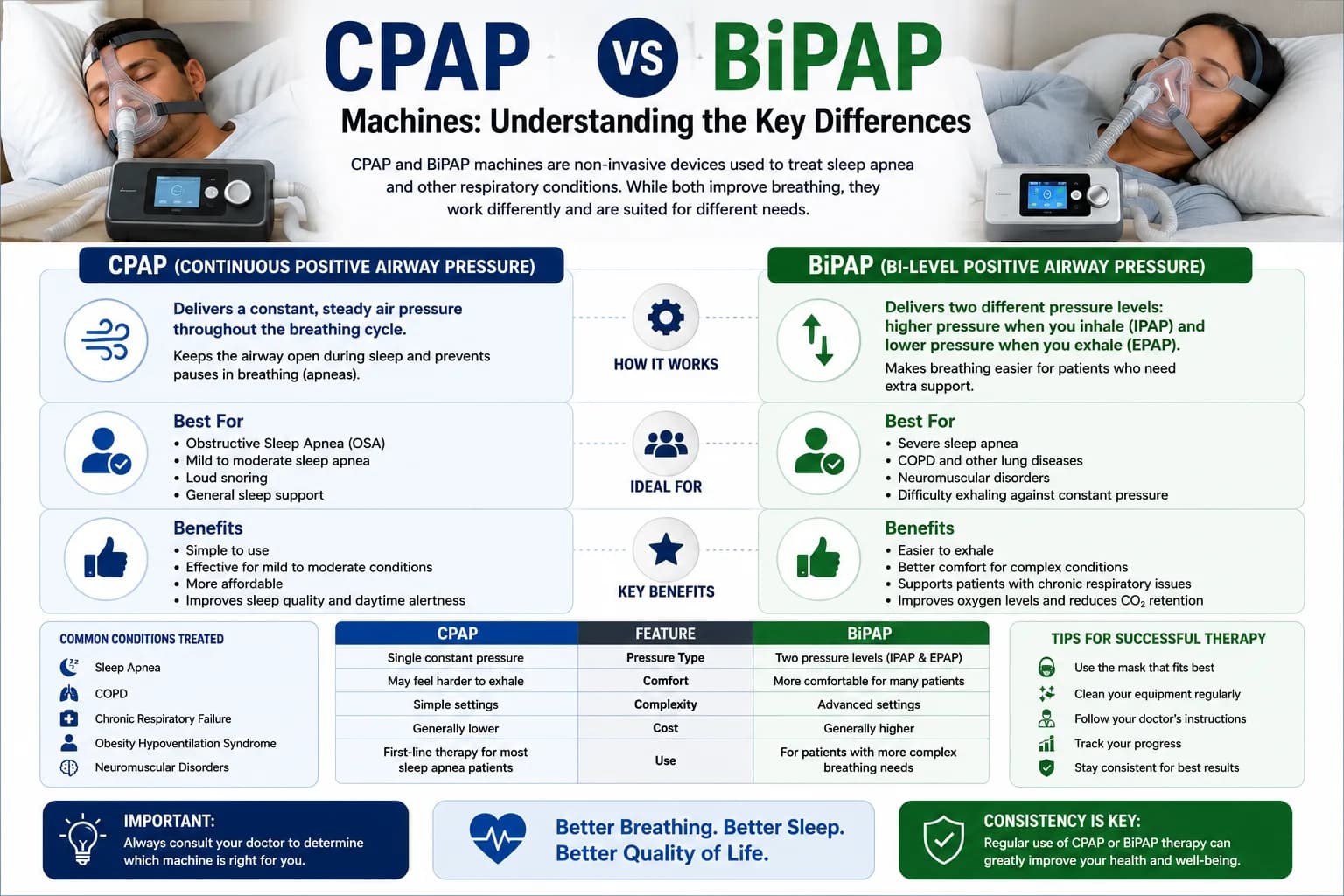
Sleep-related breathing disorders affect millions of people worldwide, impacting their overall health, energy levels, and quality of life. Continuous Positive Airway Pressure (CPAP) and Bi-Level Positive Airway Pressure (BiPAP) machines are among the most effective treatments for conditions such as sleep apnea and respiratory disorders. Choosing the right device is essential for improving patient outcomes, making patient care services and advanced medical equipment solutions more important than ever.
Understanding the differences between CPAP and BiPAP machines helps patients, caregivers, and healthcare providers make informed decisions based on individual medical needs. In 2026, advancements in respiratory care technology have made these devices smarter, quieter, and more comfortable, improving treatment compliance and overall patient care.
What Is a CPAP Machine?
A CPAP (Continuous Positive Airway Pressure) machine delivers a constant level of air pressure throughout the breathing cycle to keep the airway open during sleep.
CPAP therapy is primarily prescribed for:
Obstructive Sleep Apnea (OSA)
Mild to moderate sleep apnea
Snoring caused by airway obstruction
Some respiratory conditions
The machine consists of:
Air pressure generator
Tubing
Humidifier (optional)
Face or nasal mask
CPAP therapy helps prevent airway collapse, allowing patients to breathe normally throughout the night.
What Is a BiPAP Machine?
A BiPAP (Bi-Level Positive Airway Pressure) machine delivers two different pressure levels:
Higher pressure during inhalation (IPAP)
Lower pressure during exhalation (EPAP)
This dual-pressure system makes breathing easier for patients who require additional respiratory support.
BiPAP machines are commonly recommended for:
Severe sleep apnea
Chronic Obstructive Pulmonary Disease (COPD)
Neuromuscular disorders
Congestive heart failure
Respiratory muscle weakness
BiPAP therapy improves comfort by reducing resistance during exhalation.
CPAP vs BiPAP: Key Differences
Feature
CPAP
BiPAP
Air Pressure
Constant pressure
Two pressure levels
Comfort
Simple therapy
More comfortable for difficult breathing
Best For
Mild to moderate sleep apnea
Severe sleep apnea and respiratory diseases
Cost
Lower
Higher
Complexity
Easier to use
Advanced settings
Prescription
Common
Typically for complex respiratory conditions
Both devices play an important role in modern medical equipment solutions, but the appropriate choice depends on the patient's diagnosis and physician's recommendation.
Benefits of CPAP Therapy
1. Effective Sleep Apnea Treatment
CPAP therapy keeps the airway open, reducing interruptions in breathing during sleep.
Benefits include:
Improved sleep quality
Reduced snoring
Better oxygen levels
Increased daytime alertness
2. Simple Operation
CPAP machines are easy to use and require minimal adjustments.
Most devices include:
Automatic pressure adjustment
Humidification options
Quiet operation
Data tracking features
3. Lower Cost
Compared to BiPAP machines, CPAP devices are generally more affordable, making them a popular first-line treatment.
4. Improved Long-Term Health
Consistent CPAP use may reduce the risk of complications associated with untreated sleep apnea, including cardiovascular strain and daytime fatigue.
Benefits of BiPAP Therapy
1. Greater Breathing Comfort
The lower exhalation pressure makes breathing more natural, particularly for patients who struggle with continuous pressure.
2. Supports Complex Respiratory Conditions
BiPAP therapy is commonly used for patients with:
COPD
Central Sleep Apnea
Obesity Hypoventilation Syndrome
Neuromuscular disorders
3. Reduced Breathing Effort
The dual-pressure system decreases the work required for breathing, improving comfort and treatment adherence.
4. Better Ventilation
BiPAP machines provide enhanced respiratory support for patients with chronic breathing difficulties.
Who Should Use a CPAP Machine?
Healthcare providers typically recommend CPAP for patients who:
Have mild to moderate obstructive sleep apnea
Experience loud snoring
Need consistent airway support
Can tolerate continuous pressure
CPAP remains the most commonly prescribed therapy for obstructive sleep apnea.
Who Should Use a BiPAP Machine?
BiPAP is generally recommended for patients who:
Have severe sleep apnea
Cannot tolerate CPAP pressure
Have chronic respiratory illnesses
Require ventilatory support
Experience elevated carbon dioxide levels
A sleep specialist or pulmonologist determines whether BiPAP therapy is appropriate.
The Importance of Medical Equipment Solutions
Reliable medical equipment solutions play a critical role in improving respiratory care and enhancing treatment outcomes.
Modern respiratory equipment offers:
Quiet operation
Automatic pressure adjustments
Smart monitoring
Wireless connectivity
Mobile app integration
Enhanced patient comfort
High-quality equipment helps improve treatment adherence and overall quality of life.
Patient Care Services and Respiratory Therapy
Comprehensive patient care services extend beyond providing medical equipment.
Healthcare providers support patients through:
Sleep studies
Device setup and education
Mask fitting
Therapy monitoring
Follow-up consultations
Ongoing technical support
Patient education and regular follow-ups significantly improve therapy success.
How AI Development Services Are Improving Respiratory Care
Advancements in AI development services are transforming respiratory healthcare by making CPAP and BiPAP devices smarter and more efficient.
Artificial intelligence enables:
Automatic pressure optimization
Sleep pattern analysis
Predictive maintenance
Remote patient monitoring
Personalized therapy adjustments
Compliance tracking
AI-powered respiratory devices help healthcare professionals monitor treatment effectiveness and improve patient outcomes through data-driven insights.
Tips for Choosing the Right Machine
When selecting between CPAP and BiPAP, consider:
Medical Diagnosis
Your healthcare provider will recommend the appropriate device based on your condition.
Comfort Level
Patients who struggle with continuous pressure may benefit from BiPAP.
Budget
CPAP machines are generally more affordable, while BiPAP devices offer advanced respiratory support.
Long-Term Treatment Needs
Consider future respiratory requirements and physician recommendations before making a decision.
Future Trends in Respiratory Care Technology
Respiratory therapy continues evolving with advanced technology.
Emerging innovations include:
AI-assisted sleep monitoring
Cloud-connected respiratory devices
Smart wearable integration
Mobile therapy management apps
Automatic treatment adjustments
Remote healthcare monitoring
Predictive respiratory analytics
These innovations are making sleep therapy more personalized, efficient, and accessible.
Conclusion
Both CPAP and BiPAP machines provide effective treatment for sleep apnea and respiratory disorders, but each serves different patient needs. CPAP is ideal for most cases of obstructive sleep apnea, while BiPAP offers additional support for individuals with complex respiratory conditions.
Choosing the right device requires professional medical evaluation, reliable patient care services, and access to advanced medical equipment solutions that improve comfort, compliance, and treatment outcomes. Additionally, innovations powered by AI development services are making respiratory care smarter and more personalized than ever before.
If you're looking for innovative healthcare technology solutions, AI-powered applications, and digital transformation services, Doddapaneni Group (Doddapanenigroup.net) provides customized technology solutions that help healthcare organizations deliver exceptional patient care.