Introduction
Sleep-related breathing disorders are becoming increasingly common in today’s fast-paced world. Conditions such as sleep apnea, respiratory insufficiency, and chronic breathing disorders can seriously affect overall health, energy levels, and quality of life. Fortunately, modern respiratory therapy devices like CPAP and BiPAP machines are helping millions of patients breathe better and sleep comfortably.
For patients and caregivers, choosing between a CPAP and BiPAP machine can be confusing. Both devices support breathing during sleep, but they work differently and are recommended for different medical conditions.
Modern healthcare services providers now combine advanced respiratory care technologies with intelligent monitoring systems and digital health platforms to improve patient outcomes. Additionally, many healthcare organizations integrate Software IT and AI Solutions to support remote patient monitoring, sleep analysis, and predictive healthcare management.
This guide explains the differences, benefits, and ideal use cases of CPAP and BiPAP machines to help patients make informed decisions in 2026.
What Is a CPAP Machine?
CPAP stands for Continuous Positive Airway Pressure.
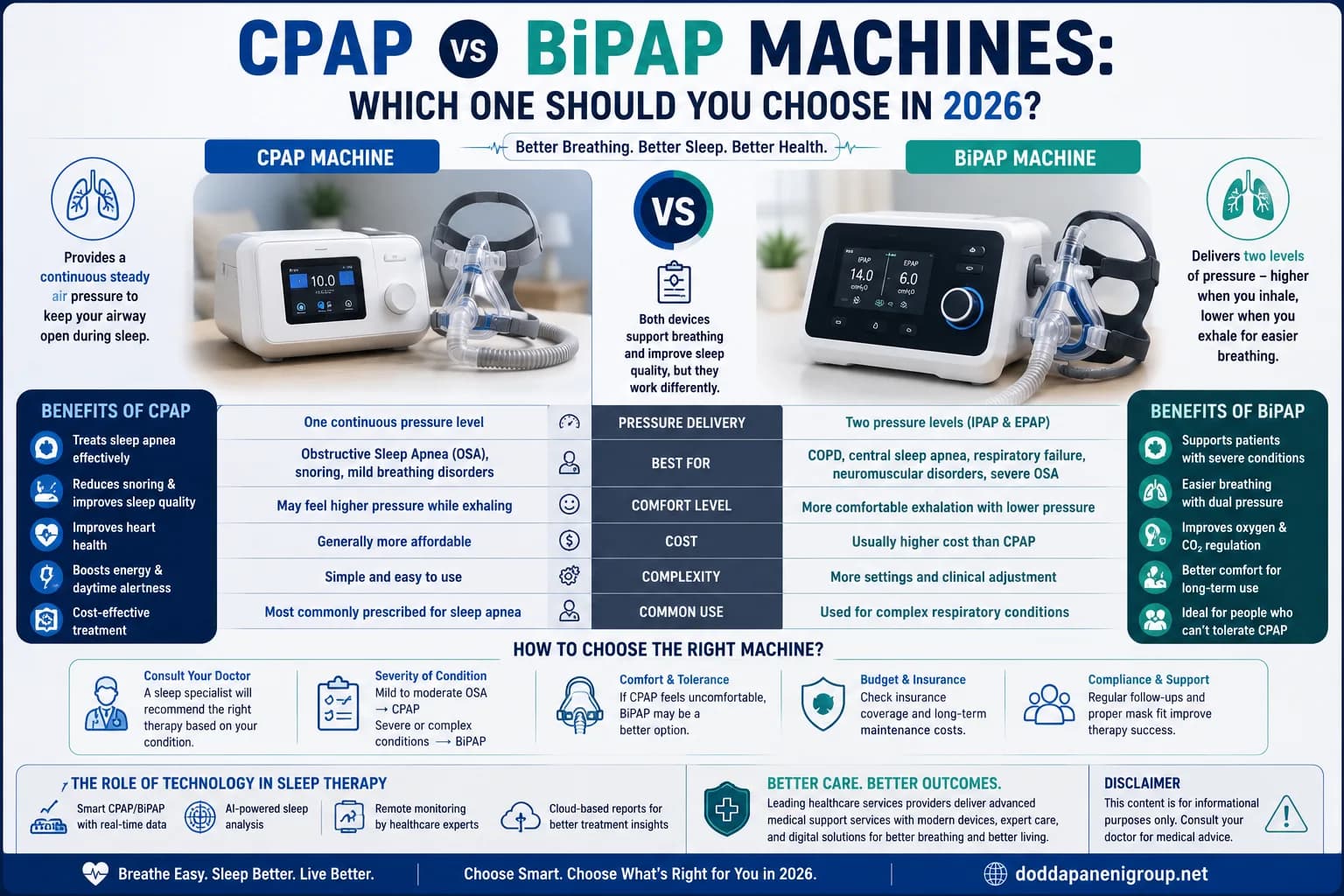
A CPAP machine delivers a continuous and steady stream of air pressure through a mask to keep airways open during sleep.
CPAP Machine Components:
Air pressure generator
Tube and mask
Humidifier (optional)
Filters and sensors
CPAP therapy is one of the most common treatments for obstructive sleep apnea (OSA).
What Is a BiPAP Machine?
BiPAP stands for Bilevel Positive Airway Pressure.
Unlike CPAP, a BiPAP machine provides two different pressure levels:
Higher pressure during inhalation
Lower pressure during exhalation
This makes breathing more comfortable for patients with more complex respiratory conditions.
Key Difference Between CPAP and BiPAP
The main difference lies in air pressure delivery.
CPAP:
Delivers one continuous pressure level
BiPAP:
Delivers two pressure levels (inhale/exhale)
BiPAP machines are often recommended for patients who struggle with CPAP therapy or have advanced respiratory disorders.
Benefits of CPAP Machines
1. Effective Sleep Apnea Treatment
CPAP is highly effective for treating obstructive sleep apnea.
Benefits:
Reduces snoring
Improves sleep quality
Prevents breathing interruptions
2. Better Heart Health
Untreated sleep apnea increases cardiovascular risks.
CPAP therapy helps:
Reduce blood pressure
Improve oxygen flow
Lower heart strain
3. Improved Energy Levels
Better sleep leads to:
Reduced daytime fatigue
Increased productivity
Improved mental focus
4. Cost-Effective Treatment
CPAP machines are generally more affordable than BiPAP devices.
Benefits of BiPAP Machines
1. Easier Breathing Support
BiPAP machines reduce breathing effort by lowering pressure during exhalation.
This is especially helpful for patients with:
COPD
Neuromuscular disorders
Severe sleep apnea
2. Advanced Respiratory Care
BiPAP therapy supports patients with complex breathing conditions.
Common Uses:
Respiratory failure
Chronic lung diseases
Central sleep apnea
3. Greater Comfort for Some Patients
Patients who find CPAP pressure uncomfortable often prefer BiPAP systems.
4. Better Oxygen and Carbon Dioxide Regulation
BiPAP improves ventilation and gas exchange more effectively in advanced respiratory conditions.
Conditions Treated by CPAP and BiPAP Machines
CPAP Is Commonly Used For:
Obstructive sleep apnea
Mild breathing disorders
Snoring-related sleep disruption
BiPAP Is Commonly Used For:
Severe sleep apnea
COPD
Neurological breathing disorders
Respiratory insufficiency
How to Choose the Right Machine
Selecting the right therapy depends on several factors.
Severity of Condition
Patients with mild to moderate sleep apnea usually benefit from CPAP.
More severe respiratory conditions may require BiPAP therapy.
Comfort Level
Some users find continuous pressure difficult to tolerate.
BiPAP offers more comfortable exhalation support.
Medical Recommendations
Sleep specialists and respiratory therapists determine the best option based on sleep studies and oxygen levels.
Budget and Insurance Coverage
CPAP machines are generally less expensive, while BiPAP systems provide advanced support.
Role of Technology in Modern Respiratory Care
Healthcare technology is rapidly improving sleep therapy and respiratory treatment.
Innovations Include:
AI-powered sleep monitoring
Smart CPAP/BiPAP devices
Cloud-connected health tracking
Remote patient monitoring
Modern medical support services increasingly rely on digital health systems for real-time patient management.
Importance of Healthcare Services Providers
A trusted healthcare services provider helps patients:
Diagnose sleep disorders
Select appropriate devices
Monitor therapy progress
Improve treatment compliance
Professional support ensures safer and more effective respiratory care.
Role of Software IT and AI Solutions in Healthcare
Digital transformation is revolutionizing respiratory care.
Software IT and AI Solutions Help:
Analyze sleep data
Monitor patient compliance remotely
Predict respiratory risks
Improve therapy personalization
AI-powered healthcare systems improve patient outcomes and operational efficiency.
Latest Sleep Therapy Trends in 2026
AI-Based Sleep Analysis
AI identifies sleep patterns and therapy effectiveness automatically.
Cloud-Connected Devices
Doctors can monitor therapy remotely in real time.
Mobile Health Apps
Patients can track sleep quality and treatment progress through mobile apps.
Telehealth Sleep Consultations
Remote consultations improve accessibility for patients worldwide.
Common Mistakes Patients Make
Ignoring sleep apnea symptoms
Using incorrect mask sizes
Inconsistent machine usage
Skipping regular device maintenance
Proper therapy adherence is essential for effective results.
Expert Tips for Better Sleep Therapy
Use the Machine Consistently
Regular use improves long-term health outcomes.
Maintain Device Hygiene
Clean masks and filters regularly.
Follow Medical Guidance
Regular follow-ups improve therapy effectiveness.
Monitor Sleep Data
Use connected apps and tracking tools for better insights.
FAQs
Q1: What is the main difference between CPAP and BiPAP?
CPAP delivers one continuous air pressure, while BiPAP uses two pressure levels for inhalation and exhalation.
Q2: Which machine is better for sleep apnea?
CPAP is commonly used for obstructive sleep apnea, while BiPAP is preferred for more severe conditions.
Q3: Is BiPAP more comfortable than CPAP?
Some patients find BiPAP more comfortable because it lowers pressure during exhalation.
Q4: Can AI improve sleep therapy?
Yes, AI-powered systems improve monitoring, personalization, and patient care.
Conclusion
Both CPAP and BiPAP machines provide effective respiratory therapy, but the right choice depends on individual medical needs, comfort levels, and breathing conditions.
Modern healthcare services providers now combine advanced respiratory devices with intelligent medical support services and digital monitoring systems to improve sleep therapy outcomes.
Additionally, integrated Software IT and AI Solutions are helping healthcare organizations deliver smarter, data-driven, and patient-centric respiratory care in 2026.
DoddapaneniGroup.net provides innovative healthcare, IT, AI, and digital transformation solutions designed to support modern healthcare operations and advanced patient care systems.
Disclaimer
This content is for informational purposes only and should not replace professional medical advice.