Introduction
The healthcare industry is undergoing one of the most significant transformations in history. With rapid advancements in technology, patient expectations are evolving, and healthcare providers are being pushed to innovate like never before.
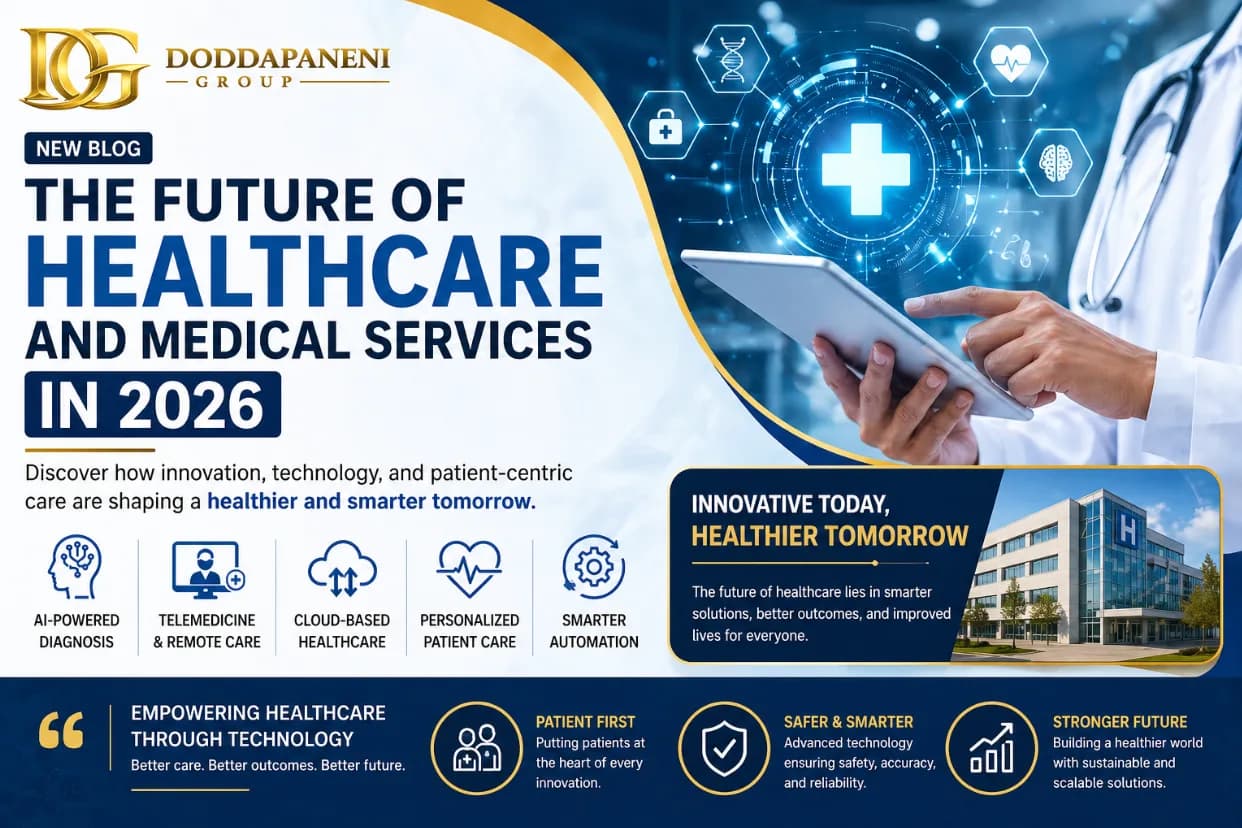
The future of Healthcare and Medical Services in 2026 is defined by digital transformation, artificial intelligence, automation, and patient-centric care. These changes are not only improving treatment outcomes but also making healthcare more accessible, efficient, and affordable.
The Shift Toward Digital Healthcare
Digital transformation is at the core of modern Healthcare and Medical Services. Hospitals and clinics are moving away from traditional systems and adopting digital platforms.
Key Developments:
Electronic Health Records (EHR)
Digital patient portals
Mobile health applications
These tools enhance efficiency and improve communication between patients and providers.
Role of AI in Healthcare
Artificial intelligence is revolutionizing healthcare systems. From diagnosis to treatment planning, AI is playing a crucial role.
Benefits of AI:
Faster diagnosis
Predictive analytics
Personalized treatment plans
Using artificial intelligence solutions, healthcare providers can deliver more accurate and timely care.
Telemedicine and Remote Care
Telemedicine is becoming a standard part of Healthcare and Medical Services. Patients can now consult doctors from the comfort of their homes.
Advantages:
Convenience
Reduced hospital visits
Access to specialists
Telehealth platforms powered by digital transformation services are making healthcare more accessible globally.
Cloud Computing in Healthcare
Cloud technology is transforming how healthcare data is stored and accessed.
Benefits:
Secure data storage
Easy access to patient records
Scalability
With cloud computing solutions, healthcare providers can manage large amounts of data efficiently.
Personalized Medicine
Personalized healthcare is becoming more common. Treatments are now tailored to individual patients based on their genetics and medical history.
Using machine learning services, doctors can analyze data and create customized treatment plans.
Automation in Healthcare
Automation is reducing manual tasks and improving efficiency in hospitals.
Examples:
Automated billing systems
AI chatbots for patient support
Smart scheduling systems
With intelligent automation solutions, healthcare providers can focus more on patient care.
Improved Patient Experience
Modern Healthcare and Medical Services focus on patient satisfaction.
Enhancements:
Faster service
Better communication
Personalized care
Digital tools are improving the overall patient experience significantly.
Challenges in Future Healthcare
Despite advancements, challenges remain:
Data security concerns
High implementation costs
Resistance to change
Healthcare providers must address these issues to fully benefit from innovation.
Integration with IT Solutions
Healthcare is increasingly dependent on advanced IT systems.
Integrating Software IT and AI Solutions helps healthcare organizations:
Improve efficiency
Enhance security
Streamline operations
Conclusion
The future of Healthcare and Medical Services in 2026 is driven by innovation and technology. Organizations that embrace digital transformation, AI, and automation will lead the industry.
Investing in modern solutions is essential to deliver better patient care and achieve long-term success.