Introduction
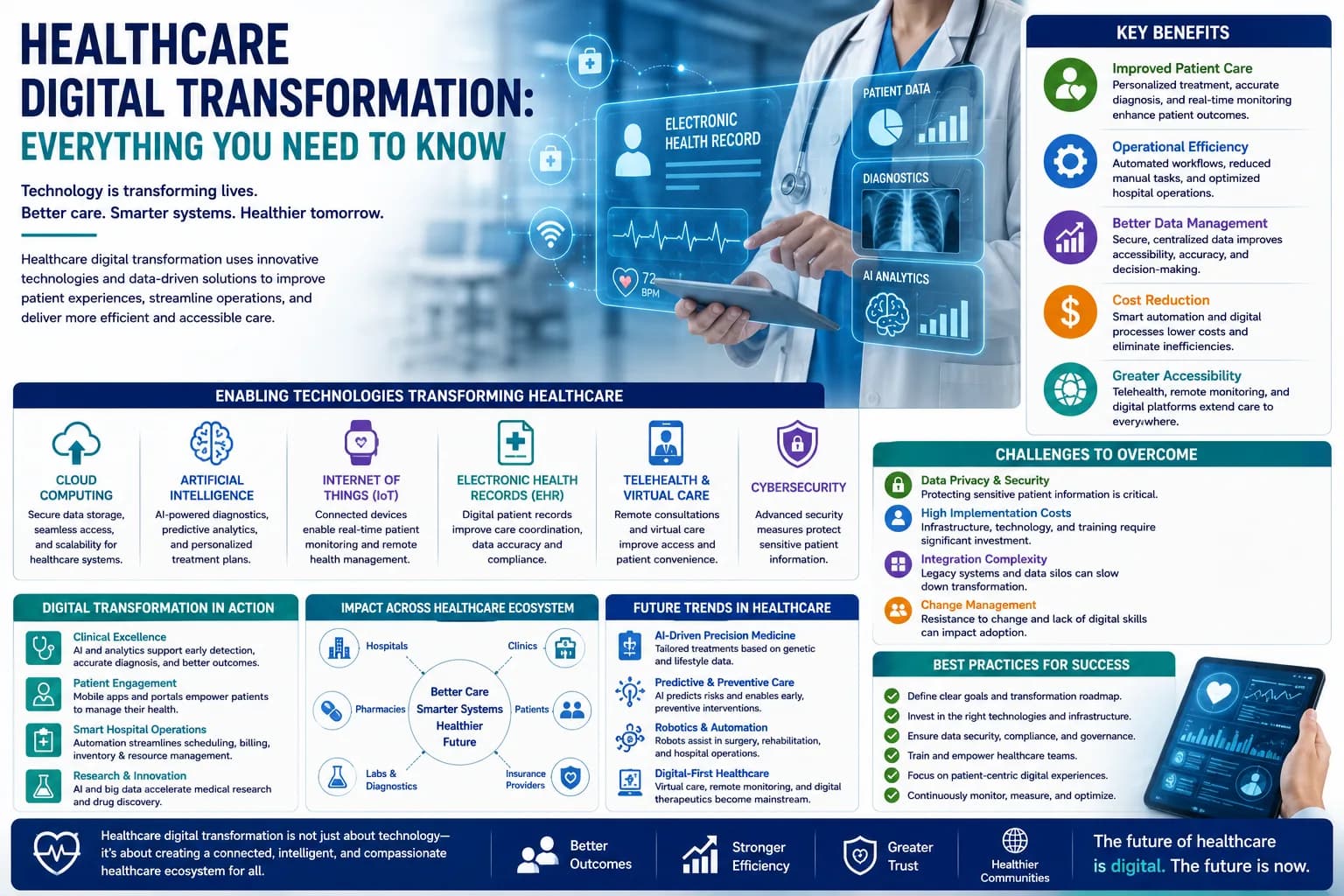
Healthcare digital transformation is reshaping the global medical industry in 2026. Hospitals, clinics, diagnostic centers, and healthcare organizations are rapidly adopting advanced technologies to improve patient care, operational efficiency, and medical accessibility.
Traditional healthcare systems often struggle with rising patient demands, administrative inefficiencies, fragmented medical records, and increasing operational costs. To overcome these challenges, organizations offering Healthcare and Medical Services are investing heavily in innovative digital technologies and advanced medical healthcare solutions.
Technologies such as artificial intelligence, cloud computing, telemedicine, electronic health records (EHR), IoT-enabled medical devices, and predictive analytics are transforming how healthcare services are delivered and managed.
At the same time, modern Software IT and AI Solutions are helping healthcare organizations automate workflows, improve diagnostics, strengthen cybersecurity, and create patient-centered healthcare ecosystems.
This guide explains healthcare digital transformation, its benefits, technologies, challenges, trends, and the future of smart healthcare systems in 2026.
What Is Healthcare Digital Transformation?
Healthcare digital transformation refers to integrating advanced digital technologies into healthcare operations, patient care systems, and medical workflows to improve efficiency and outcomes.
Common Digital Healthcare Technologies Include:
Electronic Health Records (EHR)
Telehealth platforms
Artificial intelligence systems
Cloud-based healthcare software
Wearable health devices
Healthcare analytics platforms
Digital transformation improves healthcare accessibility, communication, and operational performance.
Why Digital Transformation Is Important in Healthcare
Healthcare organizations face increasing challenges such as:
Growing patient populations
Rising healthcare costs
Administrative inefficiencies
Data management complexity
Demand for personalized care
Digital technologies help healthcare providers improve operational efficiency and patient experiences while reducing manual processes.
Benefits of Healthcare Digital Transformation
Improved Patient Care
Digital healthcare systems help doctors and medical staff deliver faster and more accurate treatments.
Benefits Include:
Faster diagnostics
Better treatment planning
Real-time patient monitoring
Improved medical collaboration
Technology improves both healthcare quality and patient outcomes.
Better Access to Healthcare Services
Digital platforms allow patients to:
Book appointments online
Access virtual consultations
Review medical records remotely
Communicate with healthcare providers easily
This improves healthcare accessibility for patients in remote and underserved areas.
Enhanced Operational Efficiency
Healthcare automation reduces repetitive administrative tasks such as:
Billing processes
Patient registration
Appointment scheduling
Medical documentation
Automation improves productivity and reduces operational costs.
Improved Data Management
Electronic Health Records centralize patient information securely.
Advantages Include:
Faster data retrieval
Better collaboration between healthcare providers
Reduced paperwork
Improved medical accuracy
Centralized systems improve healthcare coordination significantly.
Stronger Healthcare Security
Modern healthcare systems use:
Data encryption
Multi-factor authentication
Cloud security systems
AI-powered cybersecurity monitoring
Strong security protects sensitive patient information and supports regulatory compliance.
Role of Healthcare and Medical Services in Digital Innovation
Organizations providing Healthcare and Medical Services are rapidly modernizing infrastructure through digital transformation strategies.
Key Areas of Innovation Include:
AI-powered diagnostics
Smart hospital systems
Telehealth platforms
Healthcare automation
Digital patient engagement systems
Healthcare providers are focusing on delivering faster, safer, and more personalized care experiences.
Importance of Medical Healthcare Solutions
Modern medical healthcare solutions support healthcare organizations through intelligent technologies that improve:
Clinical efficiency
Patient engagement
Remote healthcare delivery
Data analytics
Predictive diagnostics
Technology-driven healthcare systems are becoming essential for modern medical operations.
Telehealth and Virtual Healthcare
Telehealth services have become a major component of healthcare digital transformation.
Benefits of Telehealth:
Remote consultations
Reduced patient travel
Faster medical support
Improved healthcare accessibility
Virtual healthcare solutions improve convenience for both patients and providers.
Artificial Intelligence in Healthcare
Artificial intelligence is transforming medical services through advanced automation and predictive analytics.
AI Applications in Healthcare
AI Supports:
Medical image analysis
Disease prediction
Automated administrative tasks
Personalized treatment planning
Patient risk assessment
AI improves diagnostic accuracy and operational efficiency.
Cloud Computing in Healthcare
Cloud-based healthcare platforms improve:
Data storage scalability
Remote accessibility
Healthcare collaboration
System integration
Cloud infrastructure supports flexible and secure healthcare environments.
Internet of Things (IoT) in Healthcare
Connected medical devices enable real-time patient monitoring.
Common IoT Healthcare Devices:
Heart monitors
Glucose monitoring systems
Wearable fitness trackers
Remote patient monitoring devices
IoT improves preventive healthcare and chronic disease management.
Big Data and Healthcare Analytics
Healthcare analytics systems process large volumes of patient data to improve:
Treatment effectiveness
Operational efficiency
Population health management
Predictive healthcare planning
Data-driven healthcare improves medical decision-making.
Role of Software IT and AI Solutions in Healthcare
Modern Software IT and AI Solutions are helping healthcare providers build intelligent and scalable healthcare ecosystems.
Technology Solutions Include:
Healthcare management software
AI-powered patient analytics
Workflow automation systems
Secure cloud healthcare platforms
Digital patient engagement tools
Integrated technologies improve both patient experiences and operational performance.
Digital Transformation Challenges in Healthcare
Despite its benefits, healthcare digital transformation also presents challenges.
Data Privacy and Cybersecurity Risks
Healthcare organizations handle highly sensitive patient information.
Strong security systems are essential to prevent:
Data breaches
Cyberattacks
Unauthorized access
High Implementation Costs
Advanced healthcare systems often require:
Infrastructure investment
Software deployment
Employee training
Ongoing maintenance
Strategic planning helps manage costs effectively.
Resistance to Technology Adoption
Some healthcare professionals may face challenges adapting to new digital systems.
Proper training improves adoption success.
System Integration Complexity
Healthcare providers often use multiple legacy systems that may be difficult to integrate.
Modern cloud-based solutions help simplify integration.
Emerging Healthcare Technology Trends in 2026
AI-Powered Personalized Medicine
AI systems analyze patient data to create customized treatment plans.
Smart Hospitals
Hospitals are integrating:
Automated workflows
IoT-enabled devices
AI-powered monitoring systems
Smart hospitals improve operational efficiency and patient care.
Predictive Healthcare Analytics
Predictive systems help identify health risks before serious conditions develop.
Blockchain in Healthcare
Blockchain improves:
Data security
Medical record transparency
Secure information sharing
Robotics in Healthcare
Healthcare robotics support:
Surgical procedures
Patient assistance
Hospital logistics
Rehabilitation therapy
Best Practices for Successful Healthcare Digital Transformation
Prioritize Patient-Centered Solutions
Technology should improve patient experiences and accessibility.
Invest in Cybersecurity Infrastructure
Protecting patient data is critical for trust and compliance.
Train Healthcare Staff Effectively
Employees should understand how to use digital tools efficiently.
Use Scalable Technologies
Flexible systems support long-term healthcare growth.
Continuously Monitor and Optimize Systems
Ongoing evaluation improves performance and operational efficiency.
Future of Healthcare Digital Transformation
The future of healthcare will focus on:
AI-driven diagnostics
Real-time patient monitoring
Predictive healthcare systems
Intelligent automation
Connected healthcare ecosystems
Digital transformation will continue improving global healthcare accessibility and quality.
FAQs
Q1: What is healthcare digital transformation?
It involves integrating digital technologies into healthcare systems to improve patient care and operational efficiency.
Q2: How do medical healthcare solutions improve healthcare services?
They improve diagnostics, patient management, healthcare accessibility, and operational workflows.
Q3: Why are Software IT and AI Solutions important in healthcare?
They support automation, data analytics, cybersecurity, and healthcare system optimization.
Q4: What is telehealth?
Telehealth allows patients and healthcare providers to communicate remotely through digital platforms.
Conclusion
Healthcare digital transformation is revolutionizing patient care and medical operations in 2026. Organizations offering Healthcare and Medical Services are leveraging advanced technologies and innovative medical healthcare solutions to improve healthcare accessibility, operational efficiency, and patient outcomes.
At the same time, modern Software IT and AI Solutions are helping healthcare providers automate processes, improve diagnostics, strengthen cybersecurity, and build future-ready healthcare ecosystems.
DoddapaneniGroup.net provides advanced healthcare technology, AI, software development, cloud computing, and digital transformation solutions designed to support modern healthcare innovation and long-term operational success.
Disclaimer: This content is for informational purposes only and should not replace professional medical advice.