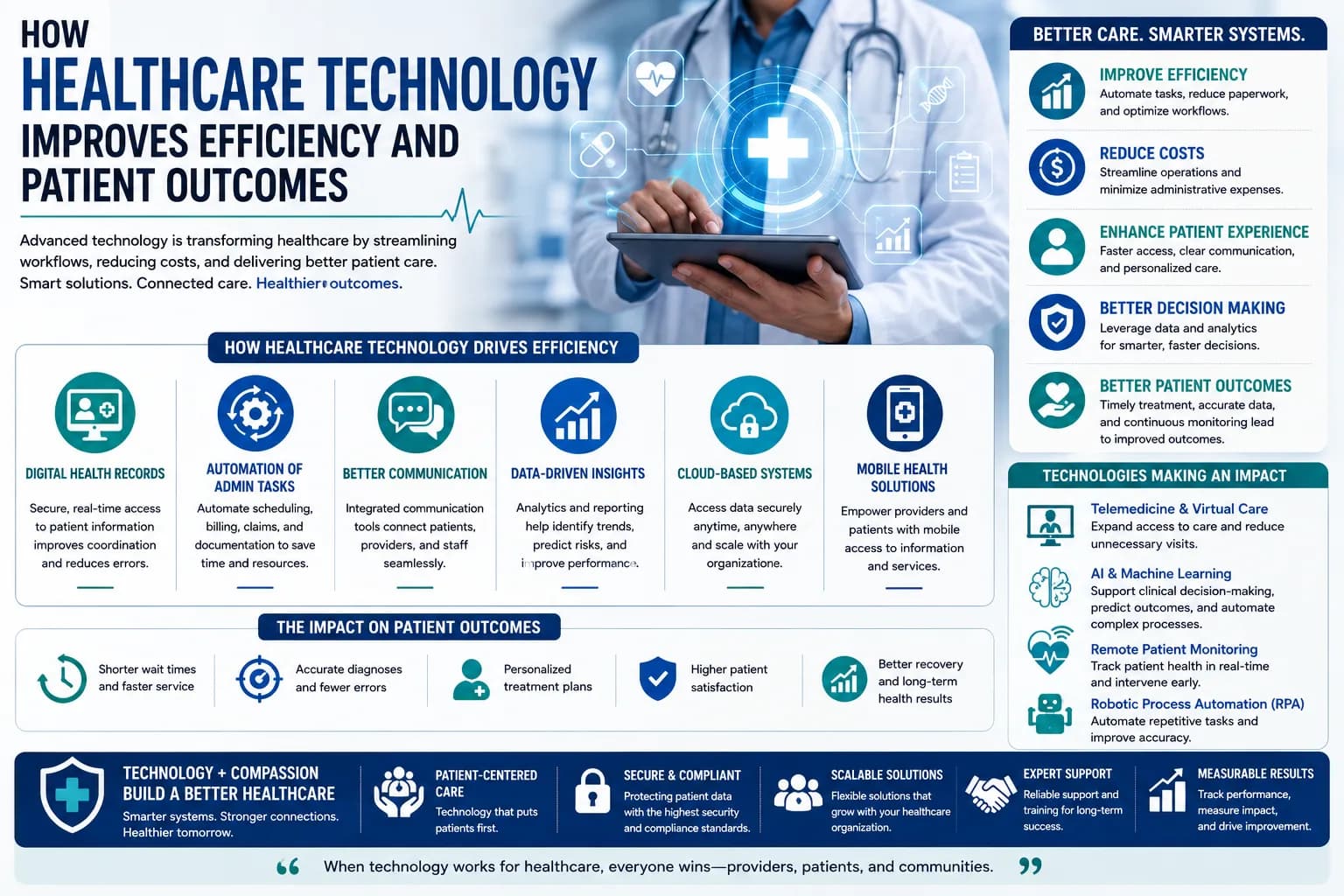
Healthcare is rapidly evolving as technology becomes an increasingly important part of modern medical services. Hospitals, clinics, diagnostic centers, and other healthcare organizations are adopting digital tools to improve operational efficiency, reduce administrative workloads, and deliver better patient experiences.
From electronic health records and telemedicine to artificial intelligence and automated workflows, modern technology is helping healthcare providers make faster, more informed decisions. Professional medical support services combined with advanced healthcare technology solutions can improve the way healthcare organizations manage patients, staff, data, and daily operations.
In 2026, healthcare technology is not simply about adopting new software. It is about creating connected, efficient, and patient-focused healthcare environments.
What Is Healthcare Technology?
Healthcare technology includes digital platforms, software, devices, applications, and systems designed to support healthcare delivery and administration.
Examples include:
Electronic Health Records (EHRs)
Telemedicine platforms
Digital appointment systems
Patient portals
Medical billing software
Remote patient monitoring
AI-powered analytics
Healthcare management systems
Digital diagnostic tools
Automated communication systems
When these technologies are properly integrated, healthcare organizations can streamline processes while improving the overall quality of patient care.
How Healthcare Technology Improves Efficiency
1. Reduces Administrative Work
Healthcare professionals often spend significant time handling administrative activities such as scheduling appointments, managing records, processing documentation, and communicating with patients.
Automation can simplify many of these tasks.
Digital systems can help with:
Appointment scheduling
Patient registration
Document management
Billing workflows
Insurance verification
Automated reminders
Reducing manual work allows healthcare staff to spend more time supporting patients.
2. Improves Access to Patient Information
Healthcare providers need accurate and timely information to make informed decisions.
Electronic health records allow authorized professionals to access relevant patient information more efficiently.
Digital records can help organize:
Medical histories
Medication information
Test results
Treatment records
Appointment information
Clinical documentation
Better access to information can improve communication between different departments and healthcare professionals.
3. Enhances Communication
Effective communication is essential for quality healthcare.
Healthcare technology enables communication between:
Doctors and patients
Nurses and physicians
Hospitals and laboratories
Healthcare organizations and insurers
Patients and administrative teams
Patient portals, secure messaging, automated notifications, and telehealth platforms can make communication faster and more convenient.
The Role of Medical Support Services
Professional medical support services help healthcare organizations manage essential administrative and operational activities.
These services may include:
Medical billing
Medical coding
Appointment support
Patient communication
Documentation assistance
Claims processing
Revenue cycle support
Combining these services with technology can significantly improve operational efficiency.
For example, automated billing systems can reduce manual data entry, while digital claim management tools can help organizations track claims and identify potential issues.
How Healthcare Technology Improves Patient Outcomes
Technology can support better patient outcomes by helping healthcare providers deliver more timely, coordinated, and personalized care.
Faster Access to Care
Telemedicine allows patients to communicate with healthcare professionals remotely.
This can be especially useful for:
Follow-up consultations
Routine appointments
Chronic condition management
Remote areas
Patients with mobility challenges
Virtual healthcare can reduce unnecessary travel and make healthcare services more accessible.
Better Monitoring
Remote patient monitoring technologies allow healthcare providers to collect health information outside traditional clinical settings.
Depending on the system and clinical use case, monitoring technologies can track information such as:
Heart rate
Blood pressure
Blood glucose
Oxygen saturation
Activity levels
Healthcare teams can use this information to identify changes that may require attention.
Personalized Care
Healthcare technology can help providers analyze patient information and identify patterns that support personalized treatment planning.
Data-driven tools can help clinicians consider:
Medical history
Treatment response
Risk factors
Patient preferences
Relevant clinical information
Technology should support—not replace—professional clinical judgment.
The Role of Artificial Intelligence in Healthcare
Artificial intelligence is becoming an important component of modern healthcare technology solutions.
AI can support healthcare organizations through:
Data analysis
Predictive analytics
Medical documentation assistance
Administrative automation
Patient communication
Workflow optimization
Image analysis in appropriate clinical applications
AI can process large amounts of information quickly, helping organizations identify patterns and improve operational decision-making.
However, healthcare AI requires appropriate human oversight, privacy protections, validation, and regulatory compliance.
How Software IT and AI Solutions Support Healthcare
Modern Software IT and AI Solutions can connect different healthcare processes through integrated digital platforms.
For example, an organization could connect:
Patient Registration → EHR → Appointment Management → Billing → Reporting
An integrated technology environment can reduce duplicated data entry and improve information flow across departments.
AI can further enhance these systems by identifying trends, automating repetitive tasks, and providing useful operational insights.
Improving Medical Billing and Revenue Cycle Management
Healthcare organizations depend on efficient revenue cycle management to maintain financial stability.
Technology can help automate:
Patient eligibility verification
Claim preparation
Payment posting
Claim tracking
Denial identification
Financial reporting
Automated workflows can reduce errors and help healthcare teams identify outstanding payments more efficiently.
Professional medical support services can work alongside these systems to provide specialized billing and administrative expertise.
Improving Patient Engagement
Patient engagement plays an important role in healthcare outcomes.
Digital healthcare platforms can provide patients with convenient access to:
Appointment information
Medical records
Prescription details
Educational resources
Test results
Secure communication
Automated reminders can also help patients stay informed about appointments and follow-up requirements.
Healthcare Technology and Data Security
As healthcare organizations become more digital, protecting patient information becomes increasingly important.
Healthcare organizations should implement appropriate security practices, including:
Access controls
Data encryption
Secure authentication
Regular system monitoring
Employee security training
Data backup and recovery
Compliance processes
Technology providers should also design systems with privacy and security requirements in mind from the beginning.
Healthcare Technology Across Different Organizations
Hospitals
Hospitals can use technology to coordinate departments, manage patient records, optimize workflows, and improve resource utilization.
Clinics
Clinics can use digital scheduling, electronic records, telehealth, and automated patient communication to improve daily operations.
Diagnostic Centers
Laboratories and diagnostic centers can use digital systems to manage test orders, results, reporting, and communication.
Long-Term Care Organizations
Digital tools can support patient monitoring, documentation, medication management, and communication with caregivers.
Benefits of Cloud-Based Healthcare Technology
Cloud-based systems allow authorized users to access applications and information through secure online environments.
Potential benefits include:
Scalability
Easier collaboration
Centralized data management
Remote accessibility
Reduced infrastructure requirements
Faster software updates
Organizations should select cloud solutions based on their security, compliance, integration, and operational requirements.
Challenges of Healthcare Technology Adoption
Although technology offers significant benefits, implementation can present challenges.
Common considerations include:
Initial Investment
Healthcare organizations may need to invest in software, infrastructure, training, and integration.
Staff Training
Employees need appropriate training to use new systems effectively.
System Integration
New technology must often integrate with existing healthcare applications and workflows.
Data Security
Protecting sensitive patient information must remain a priority.
Change Management
Successful technology adoption requires clear communication and support for healthcare staff.
Future Trends in Healthcare Technology
Healthcare technology will continue evolving as organizations adopt increasingly intelligent and connected systems.
Important trends include:
AI-assisted healthcare workflows
Remote patient monitoring
Telemedicine
Predictive analytics
Cloud-based healthcare platforms
Digital health applications
Automated administrative processes
Interoperable healthcare systems
These technologies have the potential to make healthcare more accessible, efficient, and personalized.
Why Healthcare Organizations Should Invest in Technology
Technology should not be viewed simply as an operational expense. When implemented strategically, it can become an important investment in efficiency and patient experience.
A well-designed technology strategy can help organizations:
Reduce administrative workloads
Improve data accessibility
Enhance patient communication
Streamline billing
Support clinical decision-making
Improve operational visibility
Scale healthcare services
Combining technology with experienced medical support services allows healthcare organizations to focus more resources on patient-centered care.
Conclusion
Healthcare technology is transforming the way medical organizations operate and deliver services. From digital records and telemedicine to automation, analytics, and artificial intelligence, technology can improve efficiency while supporting better patient experiences and outcomes.
By adopting reliable healthcare technology solutions and professional medical support services, healthcare organizations can reduce administrative workloads, improve communication, streamline revenue cycle processes, and provide more coordinated care.
The integration of Software IT and AI Solutions can further support healthcare organizations by automating repetitive processes, analyzing information, and creating smarter workflows.
If your organization is looking to modernize healthcare operations, Doddapaneni Group (Doddapanenigroup.net) can provide technology and digital transformation solutions designed to help businesses improve efficiency, embrace innovation, and build scalable healthcare systems.