Introduction
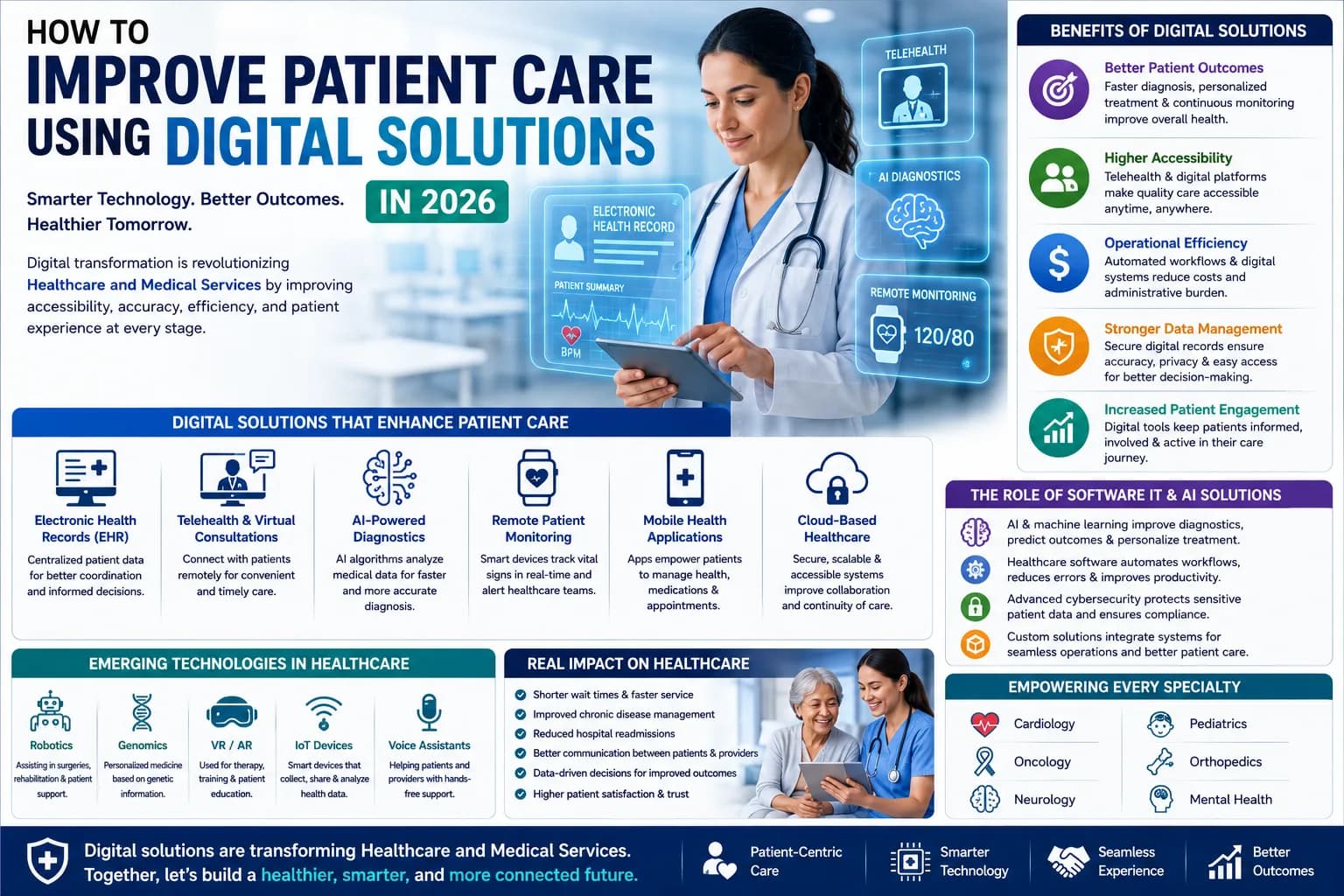
The healthcare industry is rapidly evolving in 2026 as digital technologies continue transforming the way medical care is delivered. Hospitals, clinics, and healthcare organizations are increasingly adopting advanced digital systems to improve patient outcomes, operational efficiency, and healthcare accessibility.
Modern patients expect faster services, accurate diagnoses, personalized treatments, and convenient healthcare experiences. To meet these expectations, organizations offering Healthcare and Medical Services are investing heavily in advanced digital infrastructure and innovative medical healthcare solutions.
Technologies such as artificial intelligence, cloud computing, telehealth systems, electronic health records, and smart medical devices are helping healthcare providers deliver better care while reducing operational challenges.
Additionally, the growing role of Software IT and AI Solutions is enabling healthcare organizations to automate workflows, improve diagnostics, strengthen data security, and optimize patient management systems.
This guide explains how digital solutions are improving patient care, healthcare efficiency, and the future of medical services in 2026.
What Are Digital Healthcare Solutions?
Digital healthcare solutions refer to technology-driven systems designed to improve healthcare delivery, patient management, and medical operations.
Common Digital Healthcare Technologies Include:
Electronic Health Records (EHR)
Telehealth platforms
AI-powered diagnostics
Remote patient monitoring systems
Cloud-based healthcare software
Mobile healthcare applications
These technologies improve communication, efficiency, and patient experiences.
Why Digital Transformation Matters in Healthcare
Healthcare organizations face growing challenges such as:
Increasing patient demand
Rising operational costs
Staff shortages
Data management complexity
Need for faster diagnostics
Digital transformation helps healthcare providers improve care quality while increasing operational efficiency.
Benefits of Digital Solutions in Healthcare
Faster and More Accurate Diagnoses
AI-powered diagnostic systems help doctors analyze medical data more efficiently.
Benefits Include:
Early disease detection
Reduced diagnostic errors
Faster treatment planning
Improved patient outcomes
Advanced analytics improve clinical decision-making significantly.
Improved Patient Accessibility
Digital healthcare systems allow patients to access services remotely through:
Telehealth consultations
Online appointment scheduling
Mobile healthcare apps
This improves healthcare accessibility for patients in remote and underserved areas.
Better Patient Data Management
Electronic Health Records (EHR) centralize patient information securely.
Advantages Include:
Faster access to medical history
Improved care coordination
Reduced paperwork
Better treatment accuracy
Digital records improve communication between healthcare professionals.
Enhanced Patient Engagement
Healthcare providers use digital platforms to:
Send appointment reminders
Share treatment updates
Monitor patient progress
Provide healthcare education
Better communication improves patient satisfaction and treatment adherence.
Reduced Healthcare Costs
Automation and digital systems reduce:
Administrative expenses
Manual paperwork
Hospital readmissions
Operational inefficiencies
Technology improves cost management across healthcare operations.
Role of Healthcare and Medical Services in Digital Transformation
Organizations providing Healthcare and Medical Services are integrating digital technologies to modernize patient care and operational workflows.
Key Areas of Digital Healthcare Adoption:
Telemedicine services
AI-assisted diagnostics
Digital patient portals
Smart healthcare devices
Cloud-based healthcare management systems
Healthcare providers are focusing on patient-centered digital experiences.
Importance of Medical Healthcare Solutions
Modern medical healthcare solutions help healthcare providers improve:
Clinical efficiency
Patient monitoring
Data analytics
Treatment personalization
Healthcare accessibility
Technology-driven healthcare systems improve both patient outcomes and operational performance.
Telehealth and Virtual Healthcare Services
Telehealth has become one of the most important digital healthcare innovations.
Telehealth Benefits:
Remote consultations
Reduced travel requirements
Faster medical support
Better access for rural patients
Virtual healthcare improves convenience and expands medical accessibility.
Artificial Intelligence in Patient Care
AI is revolutionizing healthcare through advanced data analysis and automation.
AI Applications in Healthcare
AI Supports:
Medical imaging analysis
Predictive healthcare analytics
Automated administrative tasks
Personalized treatment recommendations
Disease risk assessment
AI improves both efficiency and diagnostic accuracy.
Remote Patient Monitoring Systems
Connected healthcare devices allow doctors to monitor patients in real time.
Common Monitoring Devices:
Heart rate monitors
Blood glucose trackers
Oxygen saturation sensors
Blood pressure monitoring systems
Remote monitoring improves chronic disease management and preventive healthcare.
Cloud Computing in Healthcare
Cloud-based healthcare platforms improve:
Data accessibility
Collaboration between healthcare providers
Patient record management
System scalability
Cloud infrastructure supports secure and efficient healthcare operations.
Cybersecurity in Digital Healthcare
Healthcare organizations manage highly sensitive patient information.
Important Security Measures Include:
Data encryption
Multi-factor authentication
Secure cloud storage
Access control systems
Strong cybersecurity is essential for maintaining patient trust and regulatory compliance.
Role of Software IT and AI Solutions in Healthcare
Modern Software IT and AI Solutions are transforming healthcare operations through intelligent automation and digital innovation.
Technology Solutions Include:
Healthcare management software
AI-powered analytics systems
Automated workflow platforms
Cloud-based patient management systems
Secure healthcare applications
Technology integration improves operational efficiency and patient experiences.
Digital Healthcare Trends in 2026
Personalized Healthcare
AI and analytics enable customized treatment plans based on patient data.
Smart Wearable Devices
Wearables help monitor:
Physical activity
Heart health
Sleep quality
Chronic conditions
These devices support preventive healthcare strategies.
Predictive Healthcare Analytics
Predictive systems identify potential health risks before conditions worsen.
Voice-Enabled Healthcare Systems
Voice assistants improve healthcare accessibility and operational efficiency.
Robotic Process Automation (RPA)
Automation reduces repetitive administrative tasks and improves productivity.
Challenges in Healthcare Digital Transformation
Despite its advantages, digital healthcare adoption also faces challenges.
Common Challenges Include:
High implementation costs
Data privacy concerns
Technology integration complexity
Staff training requirements
Regulatory compliance issues
Healthcare organizations must develop strategic implementation plans for successful transformation.
Best Practices for Improving Patient Care with Digital Solutions
Invest in Secure Technology Infrastructure
Reliable and secure systems improve patient trust and operational stability.
Prioritize User-Friendly Platforms
Simple digital systems improve both patient and staff adoption.
Focus on Staff Training
Healthcare professionals must understand how to use digital tools effectively.
Leverage AI and Automation
AI improves diagnostics, operational efficiency, and patient personalization.
Continuously Monitor System Performance
Regular optimization ensures long-term digital healthcare success.
Future of Digital Healthcare
The future of healthcare will focus on:
AI-powered diagnostics
Smart healthcare ecosystems
Predictive treatment systems
Real-time patient monitoring
Integrated digital healthcare platforms
Healthcare organizations investing in digital innovation today will lead the future healthcare industry.
FAQs
Q1: What are digital healthcare solutions?
Digital healthcare solutions are technology-based systems used to improve healthcare delivery and patient management.
Q2: How do medical healthcare solutions improve patient care?
They improve diagnostics, communication, patient monitoring, and operational efficiency.
Q3: Why are Software IT and AI Solutions important in healthcare?
They automate processes, improve analytics, strengthen security, and enhance healthcare operations.
Q4: What is telehealth?
Telehealth allows healthcare providers to deliver medical services remotely through digital communication platforms.
Conclusion
Digital transformation is reshaping the future of patient care in 2026. Organizations providing Healthcare and Medical Services are leveraging advanced technologies and innovative medical healthcare solutions to improve healthcare accessibility, efficiency, and patient outcomes.
The growing adoption of Software IT and AI Solutions is helping healthcare providers modernize operations, improve diagnostics, strengthen cybersecurity, and deliver personalized healthcare experiences.
👉 DoddapaneniGroup.net provides advanced healthcare technology, AI, software development, and digital transformation solutions designed to support modern healthcare innovation and operational excellence.
Disclaimer: This content is for informational purposes only and should not replace professional medical advice.