Introduction
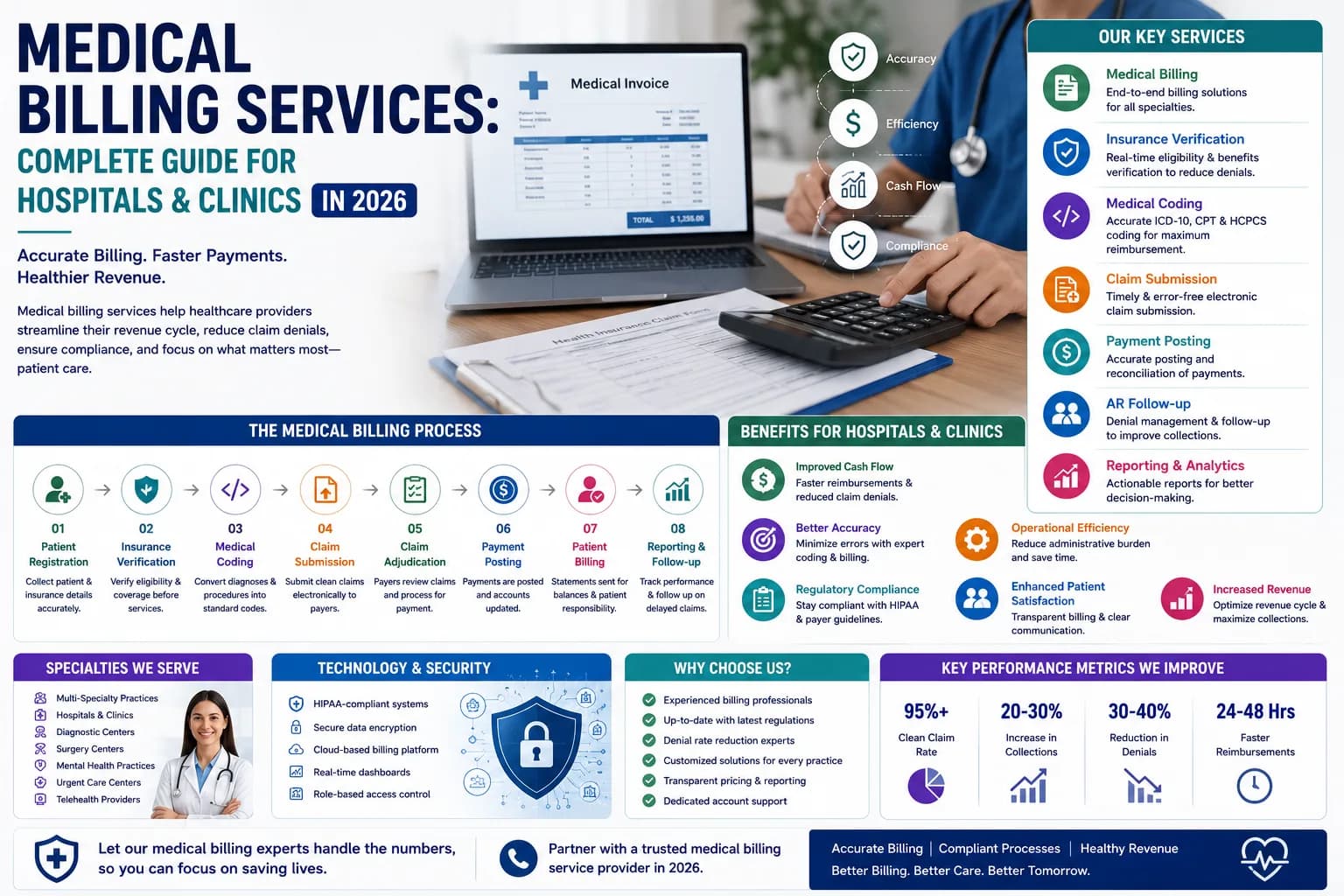
Medical billing services have become one of the most important operational functions in the healthcare industry in 2026. Hospitals, clinics, diagnostic centers, and healthcare organizations now rely heavily on efficient billing systems to maintain financial stability, reduce claim denials, and improve patient satisfaction.
As healthcare regulations become more complex and patient expectations continue to rise, every modern healthcare services provider must adopt streamlined billing processes and intelligent administrative systems. Manual billing methods often lead to coding errors, delayed reimbursements, compliance issues, and revenue loss.
To overcome these challenges, healthcare organizations are increasingly investing in advanced medical support services, automation technologies, cloud-based billing platforms, and AI-powered healthcare management systems.
Additionally, modern IT consulting services are helping healthcare institutions optimize digital infrastructure, improve cybersecurity, integrate healthcare software systems, and automate billing workflows.
This complete guide explains medical billing services, how they work, their benefits, challenges, latest trends, and best practices for hospitals and clinics in 2026.
What Are Medical Billing Services?
Medical billing services involve managing healthcare claims, invoices, patient billing, insurance processing, and reimbursement procedures for medical organizations.
Medical billing professionals ensure healthcare providers receive accurate payments for services rendered.
How Medical Billing Works
The medical billing process includes several important stages.
Patient Registration
Healthcare facilities collect:
Patient information
Insurance details
Medical history
Billing authorization
Accurate registration reduces billing errors later in the process.
Medical Coding
Medical coders convert diagnoses and treatments into standardized billing codes.
Common Coding Systems:
ICD-10
CPT codes
HCPCS codes
Correct coding ensures proper claim processing and reimbursement.
Claim Submission
Healthcare claims are submitted electronically to insurance companies for payment approval.
Efficient claim submission improves reimbursement speed.
Insurance Verification
Billing teams verify:
Insurance eligibility
Coverage limitations
Policy validity
Verification reduces claim rejection risks.
Payment Processing
Insurance companies review claims and issue reimbursements based on coverage terms.
Patient Billing
Patients receive invoices for:
Co-payments
Deductibles
Non-covered services
Transparent billing improves patient satisfaction.
Importance of Medical Billing Services in 2026
Medical billing directly impacts healthcare revenue management.
Why Medical Billing Matters:
Improves cash flow
Reduces claim denials
Enhances compliance
Minimizes administrative burden
Improves operational efficiency
Efficient billing systems help healthcare organizations remain financially stable.
Role of Healthcare Services Provider Organizations
Every healthcare services provider depends on accurate billing systems to maintain smooth healthcare operations.
Healthcare Organizations That Use Medical Billing:
Hospitals
Clinics
Diagnostic laboratories
Specialty healthcare centers
Telehealth providers
Strong billing infrastructure supports patient care and organizational growth.
Importance of Medical Support Services
Professional medical support services help healthcare organizations improve operational performance and patient experiences.
Medical Support Services Include:
Medical billing
Revenue cycle management
Insurance coordination
Healthcare administration
Patient support systems
Integrated healthcare support services improve efficiency and reduce administrative complexity.
Benefits of Medical Billing Services
Faster Claim Processing
Automated billing systems reduce delays and improve reimbursement timelines.
Reduced Billing Errors
Professional billing systems minimize:
Coding mistakes
Duplicate claims
Missing information
Accurate claims improve approval rates.
Improved Revenue Management
Efficient billing systems help healthcare providers:
Track payments
Monitor outstanding claims
Improve financial forecasting
Revenue optimization strengthens healthcare operations.
Better Compliance Management
Medical billing services support compliance with:
HIPAA regulations
Insurance requirements
Healthcare documentation standards
Compliance reduces legal and financial risks.
Enhanced Patient Experience
Transparent billing systems improve communication and reduce patient confusion regarding medical expenses.
Challenges in Medical Billing
Despite its importance, medical billing also presents challenges.
Complex Insurance Policies
Different insurance providers have varying rules and reimbursement structures.
Frequent Regulatory Changes
Healthcare regulations evolve regularly, requiring continuous updates and training.
Coding Errors
Incorrect coding can result in:
Claim denials
Payment delays
Compliance issues
Delayed Reimbursements
Slow insurance processing can affect healthcare cash flow.
Data Security Risks
Medical billing systems store sensitive patient and financial data that require strong cybersecurity protection.
AI and Automation in Medical Billing
Artificial intelligence is transforming healthcare billing operations in 2026.
AI Applications in Medical Billing
AI Helps:
Automate claim processing
Detect billing errors
Predict claim approval outcomes
Reduce administrative workload
AI improves accuracy and operational efficiency.
Cloud-Based Medical Billing Systems
Cloud healthcare platforms improve:
Remote accessibility
Data storage scalability
Billing automation
Real-time reporting
Cloud systems support modern healthcare infrastructure.
Role of IT Consulting Services in Healthcare Billing
Modern IT consulting services help healthcare organizations implement secure and scalable billing technologies.
IT Consulting Services Include:
Healthcare software integration
Cloud migration support
Cybersecurity planning
Billing system optimization
Infrastructure modernization
Technology consulting improves healthcare digital transformation.
Cybersecurity in Medical Billing
Healthcare billing systems are major cyberattack targets because they contain:
Patient records
Insurance data
Financial information
Important Security Measures:
Data encryption
Multi-factor authentication
Secure cloud infrastructure
Regular system monitoring
Strong cybersecurity protects patient trust and compliance.
Revenue Cycle Management (RCM)
Revenue Cycle Management helps healthcare providers manage financial processes from patient registration to final payment collection.
RCM Benefits:
Improved cash flow
Faster reimbursements
Better claim tracking
Reduced revenue leakage
Efficient RCM improves overall financial performance.
Telehealth and Medical Billing
Telehealth growth has increased the need for digital billing systems.
Telehealth Billing Challenges Include:
Insurance policy variations
Virtual consultation coding
Cross-state compliance requirements
Modern billing systems help manage remote healthcare reimbursements effectively.
Emerging Trends in Medical Billing Services
AI-Powered Billing Automation
AI systems are improving billing speed and accuracy.
Predictive Analytics
Predictive systems help identify:
Claim risks
Revenue trends
Payment delays
Blockchain for Healthcare Payments
Blockchain technology improves:
Payment transparency
Data security
Fraud prevention
Real-Time Eligibility Verification
Automated systems verify insurance coverage instantly.
Integrated Healthcare Platforms
Hospitals are adopting unified systems for:
Billing
Patient management
Clinical operations
Revenue tracking
Best Practices for Hospitals and Clinics
Invest in Billing Automation
Automation reduces manual errors and administrative workload.
Train Billing Staff Regularly
Updated training improves coding accuracy and compliance.
Monitor Claims Continuously
Real-time monitoring helps identify billing issues early.
Strengthen Cybersecurity Systems
Protecting healthcare data is essential for operational stability.
Partner with Experienced Technology Providers
Professional support improves billing system implementation and optimization.
Future of Medical Billing Services
The future of medical billing will focus on:
AI-driven automation
Cloud-based healthcare systems
Predictive revenue analytics
Real-time claim processing
Intelligent healthcare ecosystems
Technology will continue improving healthcare financial management and operational efficiency.
FAQs
Q1: What are medical billing services?
Medical billing services manage healthcare claims, insurance processing, and patient billing operations.
Q2: Why are medical support services important?
They improve healthcare administration, operational efficiency, and patient experiences.
Q3: How do IT consulting services help healthcare billing?
IT consulting improves billing infrastructure, cybersecurity, software integration, and automation systems.
Q4: Why is cybersecurity important in medical billing?
Medical billing systems store sensitive patient and financial information that must be protected from cyber threats.
Conclusion
Medical billing services are essential for modern hospitals and clinics in 2026. Every successful healthcare services provider depends on accurate billing systems, streamlined operations, and advanced medical support services to maintain financial performance and patient satisfaction.
At the same time, modern IT consulting services are helping healthcare organizations adopt secure, scalable, and automated billing technologies that improve operational efficiency and revenue management.
DoddapaneniGroup.net provides advanced healthcare technology, AI, software development, cybersecurity, and digital transformation solutions designed to support hospitals, clinics, and healthcare organizations in the evolving digital healthcare ecosystem.
Disclaimer: This content is for informational purposes only and should not replace professional financial, legal, or medical advice.