Introduction
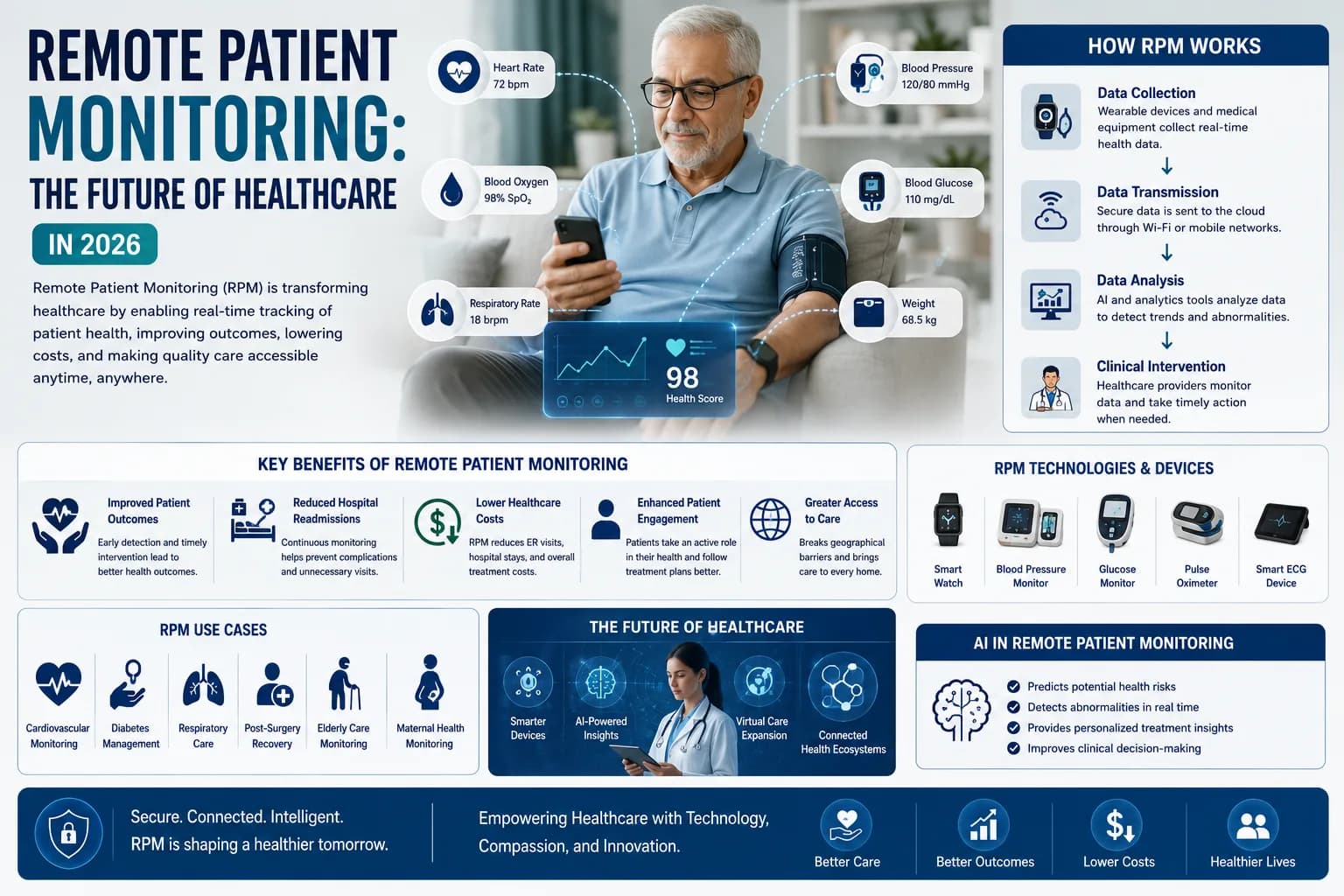
Healthcare is becoming increasingly connected, intelligent, and patient-centered. One of the most significant advancements driving this transformation is Remote Patient Monitoring (RPM). In 2026, RPM is helping healthcare providers deliver continuous care outside traditional hospital settings by leveraging connected devices, digital platforms, and real-time health data.
Remote Patient Monitoring enables doctors and healthcare professionals to track patients' health conditions from their homes, reducing unnecessary hospital visits while improving treatment outcomes. Modern medical equipment solutions and expert healthcare consulting services are making RPM more accessible, efficient, and reliable than ever before.
As healthcare systems strive to improve patient care and reduce costs, RPM is emerging as a key component of future healthcare strategies. Even industries outside healthcare, such as Construction and Real Estate Services, are contributing by developing smart healthcare facilities and technology-enabled environments that support modern medical innovations.
This guide explores the benefits, technologies, applications, and future trends of Remote Patient Monitoring in 2026.
What Is Remote Patient Monitoring?
Remote Patient Monitoring is a healthcare technology that allows medical professionals to monitor patients' health data remotely using connected devices and digital platforms.
RPM systems collect and transmit important health information such as:
Blood pressure
Heart rate
Blood glucose levels
Oxygen saturation
Body temperature
Respiratory rate
Weight changes
This data is securely shared with healthcare providers, enabling continuous observation and timely intervention when needed.
Why Remote Patient Monitoring Is Growing Rapidly
Several factors are accelerating the adoption of RPM technologies worldwide.
Key Drivers
Increasing chronic disease cases
Growing elderly population
Rising healthcare costs
Expansion of telehealth services
Advances in wearable technology
Demand for personalized healthcare
Healthcare organizations are increasingly recognizing RPM as an effective solution for improving care delivery and operational efficiency.
How Remote Patient Monitoring Works
RPM involves several interconnected technologies and processes.
Patient Monitoring Devices
Patients use connected devices that collect health data in real time.
Examples include:
Blood pressure monitors
Glucose monitoring systems
Smartwatches
ECG monitors
Pulse oximeters
Digital thermometers
Data Transmission
Collected data is transmitted securely through cloud-based systems or mobile applications.
Healthcare Provider Access
Healthcare professionals access patient information through centralized dashboards and monitoring platforms.
Clinical Intervention
When abnormal readings are detected, providers can respond quickly with treatment adjustments or medical guidance.
Role of Medical Equipment Solutions in RPM
Modern medical equipment solutions are the foundation of successful Remote Patient Monitoring programs.
Common RPM Devices
Blood Pressure Monitors
Enable continuous cardiovascular monitoring.
Glucose Monitoring Systems
Help diabetes patients manage blood sugar levels effectively.
Wearable Health Trackers
Monitor daily activity, heart rate, and overall wellness.
Pulse Oximeters
Track oxygen levels for respiratory health management.
Smart ECG Devices
Provide real-time cardiac monitoring and early detection of abnormalities.
These technologies enable healthcare providers to gather accurate patient data without requiring frequent clinic visits.
Benefits of Remote Patient Monitoring
Improved Patient Outcomes
Continuous monitoring helps identify health concerns before they become severe.
Benefits Include
Early disease detection
Faster medical intervention
Better treatment adherence
Reduced complications
Patients receive more proactive and personalized care.
Reduced Hospital Readmissions
RPM helps healthcare providers monitor patients after discharge.
Results
Fewer emergency visits
Lower readmission rates
Reduced healthcare costs
Improved recovery outcomes
This benefits both patients and healthcare systems.
Enhanced Patient Engagement
Patients become active participants in their healthcare journey.
RPM encourages patients to:
Track health metrics
Follow treatment plans
Maintain healthier lifestyles
Communicate regularly with providers
Greater engagement often leads to improved outcomes.
Increased Accessibility to Care
RPM makes healthcare accessible to patients in remote or underserved areas.
Advantages
Reduced travel requirements
Greater convenience
Faster access to healthcare professionals
Expanded healthcare coverage
This helps improve healthcare equity and access.
Healthcare Consulting Services Supporting RPM Adoption
Implementing Remote Patient Monitoring successfully requires careful planning and strategic execution.
Professional healthcare consulting services help healthcare organizations:
Assess Technology Requirements
Determine the most suitable RPM solutions.
Develop Implementation Strategies
Create structured deployment plans.
Improve Clinical Workflows
Integrate RPM seamlessly into daily operations.
Ensure Regulatory Compliance
Meet healthcare privacy and security standards.
Train Medical Staff
Prepare healthcare teams to maximize RPM effectiveness.
Consulting expertise helps organizations achieve better outcomes and faster adoption.
RPM and Chronic Disease Management
Remote Patient Monitoring is particularly valuable for managing chronic conditions.
Diabetes Management
Continuous glucose monitoring improves treatment effectiveness and patient compliance.
Cardiovascular Disease
Heart monitoring devices help detect abnormalities before serious events occur.
Hypertension
Regular blood pressure monitoring supports long-term health management.
Respiratory Conditions
RPM assists patients with asthma, COPD, and other respiratory illnesses.
Continuous monitoring enables more personalized and effective care.
Wearable Technology Transforming Healthcare
Wearable devices are driving the rapid growth of RPM.
Popular Wearable Technologies
Smartwatches
Fitness trackers
Smart patches
Biosensors
ECG wearables
Benefits
Continuous monitoring
Improved patient compliance
Real-time health insights
Better preventive care
Wearables are helping shift healthcare from reactive treatment to proactive prevention.
Artificial Intelligence in Remote Patient Monitoring
Artificial Intelligence is enhancing RPM systems by analyzing vast amounts of health data.
AI Applications
Predictive Analytics
AI identifies potential health risks before symptoms worsen.
Automated Alerts
Healthcare providers receive notifications when abnormal readings occur.
Personalized Care Plans
AI helps tailor treatment recommendations to individual patients.
Trend Analysis
Machine learning identifies long-term health patterns.
AI-powered RPM improves both efficiency and patient outcomes.
Cloud Technology and Data Management
Cloud computing enables secure storage and management of patient health information.
Benefits
Real-time access to data
Scalability
Improved collaboration
Enhanced security
Centralized healthcare records
Cloud platforms are essential for modern RPM systems.
Security and Privacy Considerations
Healthcare organizations must protect sensitive patient information.
Key Security Measures
Data encryption
Multi-factor authentication
Secure cloud infrastructure
Access controls
Continuous monitoring
Strong cybersecurity practices help maintain patient trust and regulatory compliance.
Role of Smart Infrastructure in Healthcare
As healthcare facilities modernize, infrastructure plays an increasingly important role in supporting digital health technologies.
Companies involved in Construction and Real Estate Services contribute by developing:
Smart hospitals
Connected healthcare facilities
Technology-enabled medical centers
Sustainable healthcare infrastructure
Modern facilities help healthcare providers deploy RPM technologies more effectively.
Challenges of Remote Patient Monitoring
Despite its advantages, RPM adoption presents certain challenges.
Technology Adoption
Patients and healthcare staff may require training.
Data Overload
Large volumes of health information require effective management.
Device Compatibility
Different systems must integrate seamlessly.
Regulatory Compliance
Healthcare providers must adhere to strict privacy regulations.
Careful planning helps address these challenges successfully.
Future Trends in Remote Patient Monitoring
AI-Powered Diagnostics
Artificial intelligence will continue improving predictive healthcare capabilities.
Advanced Wearables
Future devices will collect even more detailed health metrics.
Personalized Healthcare
RPM systems will provide increasingly customized treatment recommendations.
Expanded Home Healthcare
More healthcare services will shift from hospitals to patients' homes.
Smart Healthcare Ecosystems
Connected technologies will create fully integrated patient care environments.
These innovations will continue transforming healthcare delivery.
Best Practices for RPM Success
Choose Reliable Medical Equipment
Invest in accurate and proven medical equipment solutions.
Prioritize Data Security
Implement robust cybersecurity measures.
Train Healthcare Teams
Ensure staff understand RPM workflows and technologies.
Focus on Patient Education
Help patients use monitoring devices effectively.
Partner with Healthcare Consultants
Leverage professional healthcare consulting services for implementation guidance.
Conclusion
Remote Patient Monitoring is revolutionizing healthcare in 2026 by enabling continuous care, improving patient outcomes, and reducing healthcare costs. Through advanced medical equipment solutions, healthcare providers can monitor patients in real time and deliver more proactive, personalized care.
Organizations utilizing expert healthcare consulting services are successfully implementing RPM programs that improve efficiency, enhance patient satisfaction, and support long-term healthcare innovation.
As digital health technologies continue to evolve, even sectors such as Construction and Real Estate Services will play an important role in creating the infrastructure needed to support future healthcare ecosystems.
DoddapaneniGroup.net provides innovative technology, consulting, healthcare, construction, and digital transformation solutions designed to help organizations thrive in an increasingly connected world.
Disclaimer: This content is for informational purposes only and should not be considered medical, legal, or professional healthcare advice.