Introduction
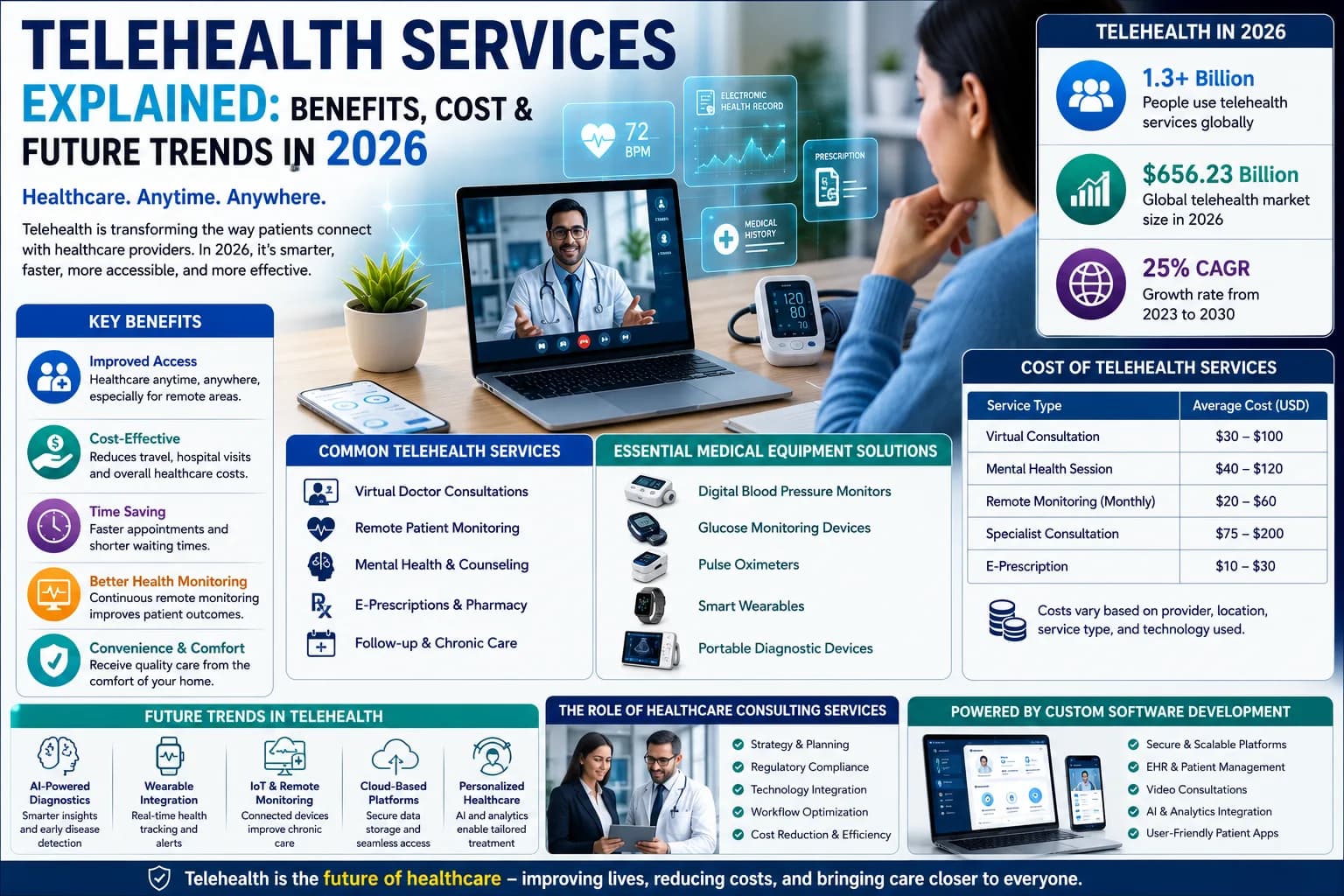
Telehealth services are transforming the healthcare industry in 2026 by making medical care more accessible, efficient, and technology-driven. Patients today can consult doctors, monitor chronic conditions, receive mental health support, and access healthcare services remotely through digital platforms.
The growing demand for convenient healthcare solutions, combined with advancements in AI, cloud computing, and connected medical devices, has accelerated the adoption of telehealth worldwide. Hospitals, clinics, and healthcare organizations are increasingly investing in advanced medical equipment solutions and professional healthcare consulting services to improve patient care and operational efficiency.
Additionally, modern telehealth systems often rely on custom software development to create secure, scalable, and user-friendly healthcare platforms that support virtual consultations, electronic health records, and remote monitoring systems.
This guide explains telehealth services, their benefits, costs, challenges, and future trends shaping digital healthcare in 2026.
What Are Telehealth Services?
Telehealth refers to the delivery of healthcare services through digital communication technologies.
These services allow patients and healthcare providers to interact remotely using:
Video consultations
Mobile healthcare apps
Remote patient monitoring systems
Online prescription services
Cloud-based healthcare platforms
Telehealth improves access to medical care while reducing the need for in-person hospital visits.
Why Telehealth Is Growing Rapidly in 2026
The healthcare industry is experiencing rapid digital transformation due to:
Increased internet and smartphone usage
Demand for convenient healthcare access
Rising healthcare costs
Growth of remote monitoring technologies
Expansion of AI-driven healthcare systems
Telehealth has become an essential component of modern healthcare infrastructure.
Types of Telehealth Services
Virtual Doctor Consultations
Patients can consult healthcare professionals remotely through secure video platforms.
Benefits Include:
Faster appointments
Reduced travel time
Better accessibility for rural patients
Remote Patient Monitoring
Connected devices help doctors monitor patient health in real time.
Examples:
Blood pressure monitoring
Glucose tracking
Heart rate monitoring
Oxygen saturation tracking
Remote monitoring improves chronic disease management.
Telepsychiatry and Mental Health Services
Mental health professionals now provide therapy and counseling through digital platforms.
This improves accessibility and privacy for patients.
Online Prescription and Pharmacy Services
Doctors can provide:
Digital prescriptions
Medication recommendations
Online follow-up consultations
This improves convenience and treatment continuity.
Benefits of Telehealth Services
Improved Healthcare Accessibility
Telehealth allows patients in remote or underserved areas to access medical professionals more easily.
Reduced Healthcare Costs
Virtual consultations reduce:
Transportation costs
Hospital overhead expenses
Emergency room visits
This makes healthcare more affordable.
Faster Medical Support
Patients receive quicker consultations and follow-up care through online systems.
Better Chronic Disease Management
Remote monitoring helps healthcare providers track patient conditions continuously.
This improves treatment outcomes and early intervention.
Increased Patient Convenience
Patients can access healthcare services from home using smartphones or computers.
Role of Medical Equipment Solutions in Telehealth
Modern telehealth systems rely heavily on advanced medical equipment solutions.
Important Equipment Includes:
Digital diagnostic devices
Smart monitoring systems
Wearable healthcare devices
Portable imaging systems
Connected health sensors
These technologies improve remote patient care and real-time health monitoring.
Importance of Healthcare Consulting Services
Healthcare organizations require professional healthcare consulting services to successfully implement telehealth systems.
Consulting Services Include:
Digital healthcare strategy planning
Regulatory compliance support
Technology integration
Operational workflow optimization
Data security planning
Consultants help healthcare providers improve efficiency and patient experience.
Role of Custom Software Development in Telehealth
Modern telehealth platforms depend on custom software development to support secure and scalable digital healthcare operations.
Custom Healthcare Software Features:
Electronic health records (EHR)
Video consultation systems
AI-powered diagnostics
Patient portals
Secure payment integration
Cloud-based healthcare management
Custom software improves functionality, security, and healthcare delivery efficiency.
Telehealth Technology Trends in 2026
AI-Powered Healthcare Systems
AI is helping healthcare providers:
Analyze patient data
Improve diagnostics
Predict medical risks
Automate administrative tasks
AI improves both efficiency and patient outcomes.
Cloud-Based Healthcare Platforms
Cloud infrastructure allows:
Secure patient data storage
Real-time collaboration
Remote accessibility
Cloud systems improve healthcare scalability and flexibility.
Wearable Health Technology
Smart wearable devices monitor:
Heart activity
Sleep quality
Blood oxygen levels
Physical activity
Wearable health technology supports preventive healthcare.
Virtual Reality in Healthcare
VR technology is increasingly used for:
Medical training
Therapy sessions
Pain management
Rehabilitation programs
IoT-Enabled Healthcare Systems
Connected healthcare devices improve:
Patient monitoring
Data sharing
Emergency response systems
Cost of Telehealth Services
The cost of telehealth varies depending on:
Service type
Technology infrastructure
Healthcare provider
Device requirements
However, telehealth often reduces overall healthcare expenses by minimizing hospital visits and operational costs.
Challenges Facing Telehealth Services
Despite rapid growth, telehealth still faces several challenges.
Common Challenges Include:
Data privacy concerns
Internet connectivity limitations
Technology adoption barriers
Regulatory compliance issues
Limited digital literacy in some regions
Healthcare providers must address these issues to ensure effective telehealth delivery.
Benefits of Telehealth for Healthcare Providers
Healthcare organizations also benefit significantly from telehealth systems.
Advantages Include:
Improved operational efficiency
Expanded patient reach
Reduced administrative burden
Better patient engagement
Enhanced healthcare analytics
Telehealth helps providers deliver scalable and modern healthcare services.
Future of Telehealth in 2026 and Beyond
The future of telehealth will focus on:
AI-powered diagnostics
Personalized healthcare systems
Remote surgery assistance
Predictive healthcare analytics
Integrated digital health ecosystems
Healthcare organizations investing in digital transformation today will lead the future healthcare market.
Expert Tips for Successful Telehealth Implementation
Invest in Secure Technology
Healthcare data security is critical for patient trust and regulatory compliance.
Focus on User Experience
Simple and user-friendly platforms improve patient adoption.
Integrate Smart Medical Devices
Connected devices improve healthcare monitoring and analytics.
Use Professional Consulting Services
Expert planning improves telehealth implementation success.
Continuously Monitor Technology Trends
Healthcare technology evolves rapidly, requiring ongoing innovation.
FAQs
Q1: What are telehealth services?
Telehealth services provide remote healthcare using digital communication technologies.
Q2: How do medical equipment solutions support telehealth?
They enable remote patient monitoring and real-time health data collection.
Q3: Why are healthcare consulting services important?
They help healthcare organizations implement efficient and compliant telehealth systems.
Q4: How does custom software development improve telehealth?
Custom software creates secure, scalable, and personalized digital healthcare platforms.
Conclusion
Telehealth services are reshaping the healthcare industry by improving accessibility, efficiency, and patient care in 2026. Advanced medical equipment solutions, professional healthcare consulting services, and intelligent custom software development are driving the next generation of digital healthcare innovation.
As technology continues evolving, telehealth will become even more integrated into mainstream healthcare systems, improving patient outcomes while reducing operational costs.
DoddapaneniGroup.net provides advanced healthcare technology, software, AI, and digital transformation solutions designed to support modern healthcare operations and telehealth innovation.
Disclaimer: This content is for informational purposes only and should not replace professional medical advice.