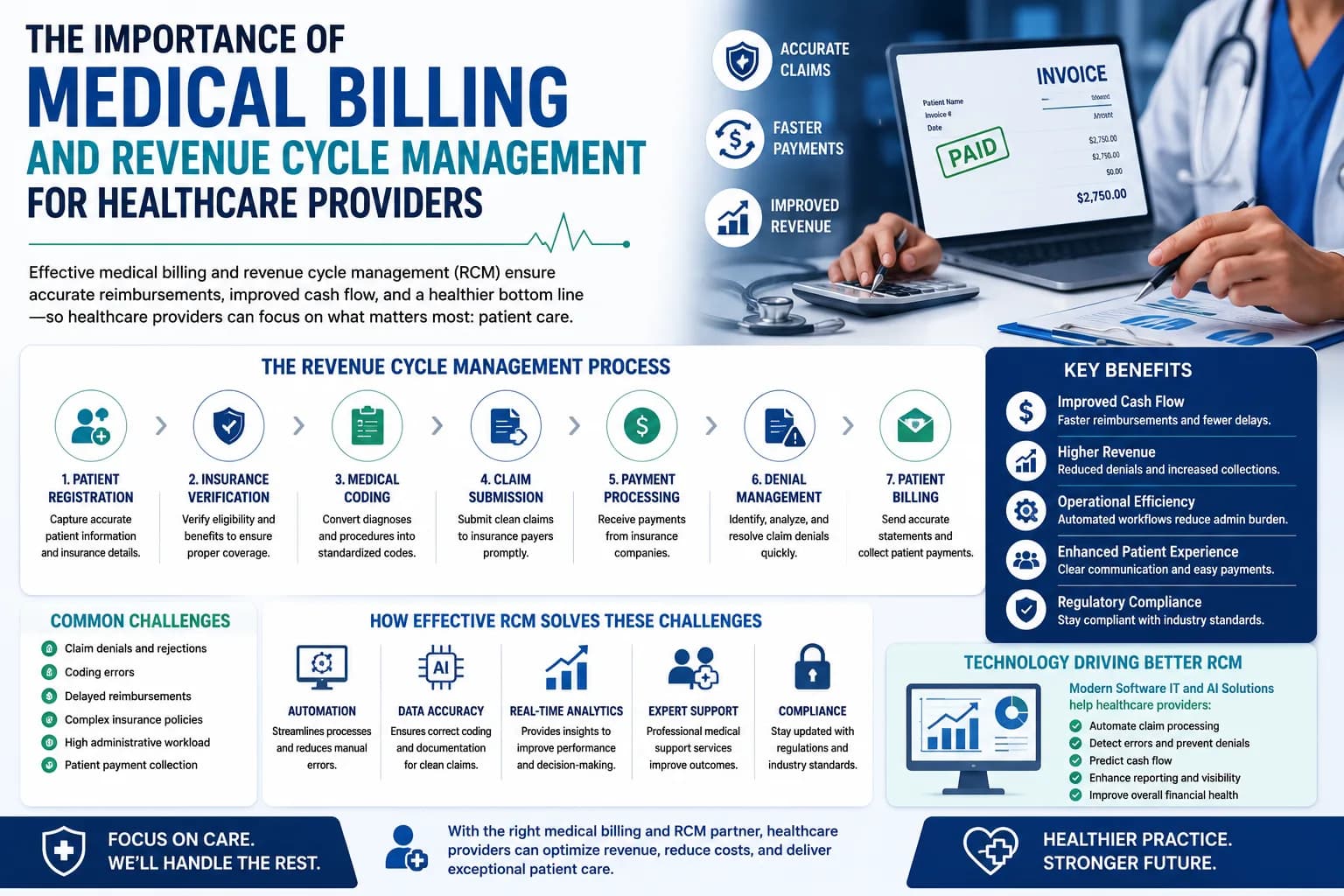
The healthcare industry is becoming increasingly complex, requiring providers to balance exceptional patient care with efficient financial management. One of the most critical aspects of maintaining a successful healthcare organization is effective medical billing and revenue cycle management (RCM). In 2026, every healthcare services provider must adopt modern billing processes and reliable medical support services to improve cash flow, reduce claim denials, and ensure long-term financial sustainability.
Medical billing is more than simply processing insurance claims—it encompasses the entire financial journey of a patient, from appointment scheduling to final payment collection. Efficient revenue cycle management helps healthcare organizations optimize operations, improve patient satisfaction, and remain compliant with evolving healthcare regulations.
What Is Revenue Cycle Management (RCM)?
Revenue Cycle Management (RCM) is the process of managing every financial interaction between a healthcare organization and its patients. It begins when a patient schedules an appointment and ends when the healthcare provider receives full payment for services rendered.
A comprehensive RCM process includes:
Patient registration
Insurance verification
Medical coding
Claim submission
Payment processing
Denial management
Revenue reporting
Patient billing
A streamlined RCM system ensures that healthcare organizations receive accurate and timely reimbursements while minimizing administrative burdens.
Why Medical Billing Is Critical for Healthcare Providers
Accurate medical billing directly impacts the financial health of every healthcare services provider.
Effective billing processes help organizations:
Reduce claim rejections.
Improve reimbursement rates.
Maintain steady cash flow.
Minimize billing errors.
Enhance patient satisfaction.
Ensure regulatory compliance.
Poor billing practices can result in delayed payments, increased operational costs, and lost revenue.
Key Benefits of Medical Billing and Revenue Cycle Management
1. Faster Insurance Claim Processing
Accurate documentation and coding reduce claim submission errors and accelerate insurance reimbursements.
Benefits include:
Faster approvals
Reduced claim denials
Improved payment timelines
Better cash flow management
2. Increased Revenue Collection
Efficient revenue cycle management helps healthcare organizations recover payments that might otherwise be lost due to billing errors or incomplete documentation.
Professional medical support services improve:
Billing accuracy
Collection efficiency
Outstanding payment recovery
Financial performance
3. Reduced Administrative Workload
Manual billing processes consume valuable staff time.
Automation simplifies:
Patient registration
Insurance verification
Appointment management
Billing workflows
Payment tracking
Healthcare staff can spend more time focusing on patient care rather than paperwork.
4. Improved Patient Experience
Transparent billing practices improve trust between patients and healthcare providers.
Patients benefit from:
Clear billing statements
Multiple payment options
Faster issue resolution
Better communication
Positive financial experiences contribute to overall patient satisfaction.
5. Better Compliance with Healthcare Regulations
Healthcare billing requires strict compliance with industry regulations and insurance guidelines.
Modern billing systems help organizations maintain:
Accurate documentation
HIPAA compliance
Proper coding standards
Secure patient data management
Compliance reduces legal risks and financial penalties.
The Role of Medical Support Services
Professional medical support services help healthcare organizations manage complex administrative and financial processes efficiently.
These services often include:
Medical billing
Medical coding
Insurance verification
Prior authorization
Appointment scheduling
Claims management
Revenue reporting
Patient support
Outsourcing these functions allows healthcare providers to focus on delivering quality patient care while improving operational efficiency.
Common Revenue Cycle Challenges
Healthcare organizations frequently encounter challenges such as:
Claim Denials
Incorrect coding or incomplete patient information can lead to denied insurance claims.
Delayed Payments
Slow claim processing affects organizational cash flow and financial planning.
Coding Errors
Medical coding mistakes often result in reimbursement delays and compliance issues.
Regulatory Changes
Healthcare regulations evolve frequently, requiring continuous updates to billing procedures.
Patient Payment Collection
Increasing patient financial responsibility has made payment collection more complex.
Modern RCM systems help overcome these challenges through automation and data-driven workflows.
Technology Is Transforming Revenue Cycle Management
Digital technologies are revolutionizing healthcare billing and financial operations.
Modern healthcare organizations use:
Cloud-based billing platforms
Electronic Health Records (EHR)
Automated claim processing
Real-time eligibility verification
Digital payment systems
Analytics dashboards
These technologies improve accuracy while reducing administrative costs.
The Role of Software IT and AI Solutions in Healthcare Billing
Today's healthcare organizations increasingly rely on Software IT and AI Solutions to optimize revenue cycle management.
Artificial intelligence helps providers:
Detect billing errors
Predict claim denials
Automate repetitive tasks
Improve coding accuracy
Analyze financial performance
Enhance decision-making
AI-powered systems significantly improve billing efficiency while reducing operational risks.
Benefits of Automation in Medical Billing
Automation offers several advantages for every healthcare services provider.
Faster Processing
Automated systems process claims much more quickly than manual workflows.
Improved Accuracy
Technology reduces human errors in billing and coding.
Better Financial Visibility
Real-time reporting provides insights into revenue performance.
Lower Operational Costs
Automation minimizes repetitive administrative work.
Increased Productivity
Healthcare teams can focus on patient care instead of paperwork.
Best Practices for Effective Revenue Cycle Management
Healthcare organizations should follow several best practices to maximize revenue.
Verify Insurance Eligibility
Confirm patient coverage before providing services.
Maintain Accurate Documentation
Complete medical records reduce claim rejection rates.
Monitor Key Performance Indicators (KPIs)
Track metrics such as:
Days in Accounts Receivable
Claim acceptance rates
Collection rates
Denial percentages
Invest in Staff Training
Regular training ensures compliance with changing billing regulations.
Adopt Modern Technology
Digital solutions improve efficiency and support long-term financial success.
Future Trends in Medical Billing
Several innovations are shaping the future of healthcare financial management.
Emerging trends include:
AI-powered billing automation
Predictive revenue analytics
Cloud-based healthcare platforms
Robotic Process Automation (RPA)
Digital patient payment portals
Intelligent coding assistance
Enhanced cybersecurity
Healthcare organizations adopting these technologies will improve operational efficiency and financial stability.
Conclusion
Efficient medical billing and revenue cycle management are essential for every healthcare services provider seeking financial stability and operational excellence. Professional medical support services help organizations reduce claim denials, improve reimbursement rates, and deliver better patient experiences.
By integrating modern Software IT and AI Solutions, healthcare providers can automate billing processes, enhance compliance, and make data-driven financial decisions that support long-term growth.
If your healthcare organization is looking to modernize operations and improve revenue management, Doddapaneni Group (Doddapanenigroup.net) offers innovative technology and business solutions designed to help healthcare providers achieve greater efficiency and sustainable success.