Introduction
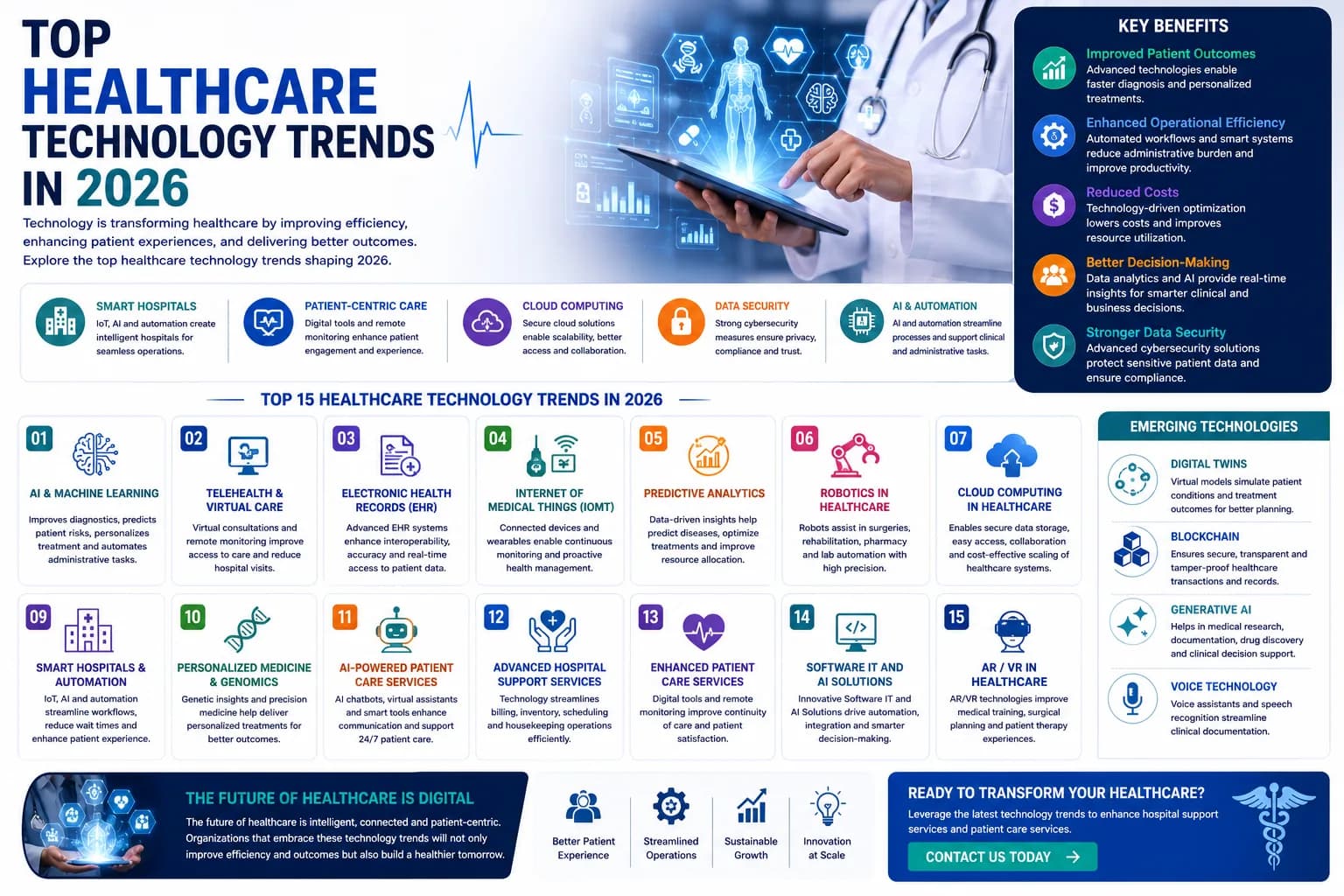
The healthcare industry is experiencing a remarkable digital transformation in 2026. Emerging technologies such as Artificial Intelligence (AI), cloud computing, predictive analytics, telemedicine, and smart medical devices are reshaping how healthcare providers deliver services and manage operations.
Healthcare organizations are increasingly investing in advanced technologies to improve efficiency, enhance patient outcomes, reduce operational costs, and provide better healthcare experiences. Modern hospital support services and innovative patient care services are now heavily dependent on technology-driven solutions that enable healthcare providers to deliver faster, safer, and more personalized care.
At the same time, advancements in Software IT and AI Solutions are helping hospitals, clinics, diagnostic centers, and healthcare organizations streamline workflows, automate administrative tasks, and improve decision-making.
This comprehensive guide explores the top healthcare technology trends expected to shape the future of healthcare in 2026 and beyond.
Why Healthcare Technology Is Evolving Rapidly
Several factors are driving healthcare innovation:
Growing patient expectations
Rising healthcare costs
Increasing demand for remote care
Expansion of digital health records
Workforce shortages
Advances in artificial intelligence
Healthcare organizations must continuously adopt new technologies to remain competitive and improve healthcare delivery.
Artificial Intelligence in Healthcare
Artificial Intelligence remains one of the most transformative healthcare technologies in 2026.
AI-powered systems help healthcare providers:
Analyze medical data
Detect diseases earlier
Improve diagnostics
Automate administrative tasks
Personalize treatment plans
Benefits of AI in Healthcare
Faster diagnosis
Improved treatment accuracy
Reduced human errors
Better patient outcomes
Enhanced operational efficiency
AI is becoming a critical component of modern healthcare infrastructure.
Telehealth and Virtual Care Expansion
Telehealth continues to grow as patients increasingly prefer convenient access to healthcare services.
Popular Telehealth Applications
Virtual consultations
Follow-up appointments
Remote monitoring
Mental health services
Specialist consultations
Telehealth improves accessibility while reducing travel and waiting times.
Impact on Patient Care Services
Advanced telehealth platforms are significantly improving patient care services by making healthcare available anytime and anywhere.
Electronic Health Records (EHR) Evolution
Modern Electronic Health Record systems are becoming smarter and more integrated.
Key Improvements
Real-time patient information
Better interoperability
Automated documentation
AI-assisted data analysis
Enhanced data security
Healthcare professionals can access comprehensive patient records more efficiently than ever before.
Internet of Medical Things (IoMT)
The Internet of Medical Things connects healthcare devices through the internet to collect and share health data.
Examples Include
Smart monitors
Wearable fitness devices
Connected medical equipment
Remote patient monitoring systems
Benefits
Continuous health monitoring
Faster intervention
Better chronic disease management
Improved healthcare efficiency
IoMT is transforming healthcare delivery and patient engagement.
Predictive Analytics for Better Healthcare Decisions
Healthcare organizations are increasingly using predictive analytics to anticipate patient needs and improve outcomes.
Predictive Analytics Helps With
Disease prevention
Resource planning
Patient risk assessment
Treatment optimization
Operational forecasting
Data-driven healthcare decisions improve both clinical and operational performance.
Robotics in Healthcare
Medical robotics continue to revolutionize healthcare delivery.
Common Applications
Robotic surgery
Rehabilitation support
Automated medication dispensing
Laboratory automation
Benefits
Increased precision
Reduced recovery times
Improved patient safety
Enhanced workflow efficiency
Robotics are becoming an essential part of modern healthcare facilities.
Cloud Computing in Healthcare
Cloud-based healthcare systems are enabling organizations to store, manage, and access data securely.
Advantages of Cloud Technology
Scalability
Cost efficiency
Remote accessibility
Data backup and recovery
Improved collaboration
Cloud platforms support modern healthcare innovation and digital transformation.
Advanced Cybersecurity Solutions
Healthcare organizations remain prime targets for cyberattacks due to sensitive patient information.
Important Cybersecurity Measures
Multi-factor authentication
Data encryption
Threat monitoring
Secure cloud environments
Employee cybersecurity training
Protecting patient data remains a top priority for healthcare institutions.
Smart Hospital Technologies
Smart hospitals use connected technologies to improve efficiency and patient experiences.
Smart Hospital Features
Automated patient check-in
Smart room monitoring
Digital wayfinding systems
Intelligent scheduling
Asset tracking systems
These innovations improve operational efficiency and service quality.
Role of Hospital Support Services in Digital Healthcare
Modern hospital support services play a critical role in ensuring smooth healthcare operations.
Technology Enhancements Include
Automated billing systems
Digital patient management
AI-powered scheduling
Inventory management software
Workforce optimization tools
Technology enables support teams to focus more on patient-centered care.
Wearable Healthcare Technology
Wearable devices continue to gain popularity among patients and healthcare providers.
Popular Devices Include
Smartwatches
Heart monitors
Blood glucose monitors
Fitness trackers
Benefits
Real-time health tracking
Early disease detection
Improved patient engagement
Better preventive care
Wearable technology supports proactive healthcare management.
Personalized Medicine and Genomics
Healthcare providers are increasingly using genetic data to customize treatments.
Personalized Medicine Benefits
More effective therapies
Reduced side effects
Improved patient outcomes
Better disease prevention strategies
Precision healthcare is becoming a major trend in 2026.
AI-Powered Patient Care Services
Artificial intelligence is enhancing patient care services by improving communication, monitoring, and treatment planning.
AI Applications Include
Virtual health assistants
Automated patient reminders
Treatment recommendations
Predictive patient monitoring
These innovations improve patient satisfaction and healthcare quality.
Software IT and AI Solutions Driving Healthcare Innovation
Modern Software IT and AI Solutions are the foundation of healthcare digital transformation.
Key Technologies Include
Artificial intelligence platforms
Healthcare management software
Cloud-based systems
Analytics dashboards
Automation solutions
These technologies help healthcare organizations improve efficiency, accuracy, and patient outcomes.
Emerging Healthcare Technology Trends
Digital Twins in Healthcare
Virtual patient models are helping doctors simulate treatments and predict outcomes.
Benefits
Better treatment planning
Improved diagnosis accuracy
Enhanced patient care
Augmented Reality and Virtual Reality
AR and VR technologies are being used for:
Medical training
Surgical planning
Pain management
Rehabilitation programs
Blockchain for Healthcare Data Security
Blockchain improves:
Data integrity
Security
Patient privacy
Healthcare transparency
Generative AI in Healthcare
Generative AI is assisting healthcare professionals with:
Documentation
Clinical decision support
Patient communication
Medical research
Benefits of Healthcare Technology Adoption
Healthcare organizations adopting advanced technologies experience:
Improved operational efficiency
Better patient experiences
Reduced administrative costs
Faster decision-making
Enhanced healthcare outcomes
Technology-driven healthcare is becoming the industry standard.
Challenges Healthcare Organizations Must Address
Despite its advantages, healthcare technology adoption also presents challenges.
Common Challenges
Data privacy concerns
Regulatory compliance requirements
Technology integration complexity
Staff training needs
Cybersecurity risks
Strategic planning is essential for successful implementation.
Future of Healthcare Technology
The future of healthcare technology will focus on:
AI-powered healthcare ecosystems
Personalized medicine
Predictive healthcare analytics
Smart hospitals
Remote patient monitoring
Fully connected healthcare platforms
Organizations that embrace innovation today will be better prepared for the future of healthcare.
Conclusion
Healthcare technology is transforming the industry at an unprecedented pace. From AI-powered diagnostics and telehealth platforms to smart hospitals and predictive analytics, these innovations are improving healthcare delivery, operational efficiency, and patient outcomes.
Modern hospital support services and advanced patient care services are increasingly powered by intelligent technologies that enable healthcare organizations to provide safer, faster, and more personalized care.
With the continued advancement of Software IT and AI Solutions, healthcare providers can unlock new opportunities for growth, innovation, and excellence in patient care.
DoddapaneniGroup.net delivers advanced healthcare technology, AI development, software solutions, cloud computing, and digital transformation services designed to help healthcare organizations thrive in the digital era.
Disclaimer: This content is for informational purposes only and should not be considered medical, legal, or professional healthcare advice.