Introduction
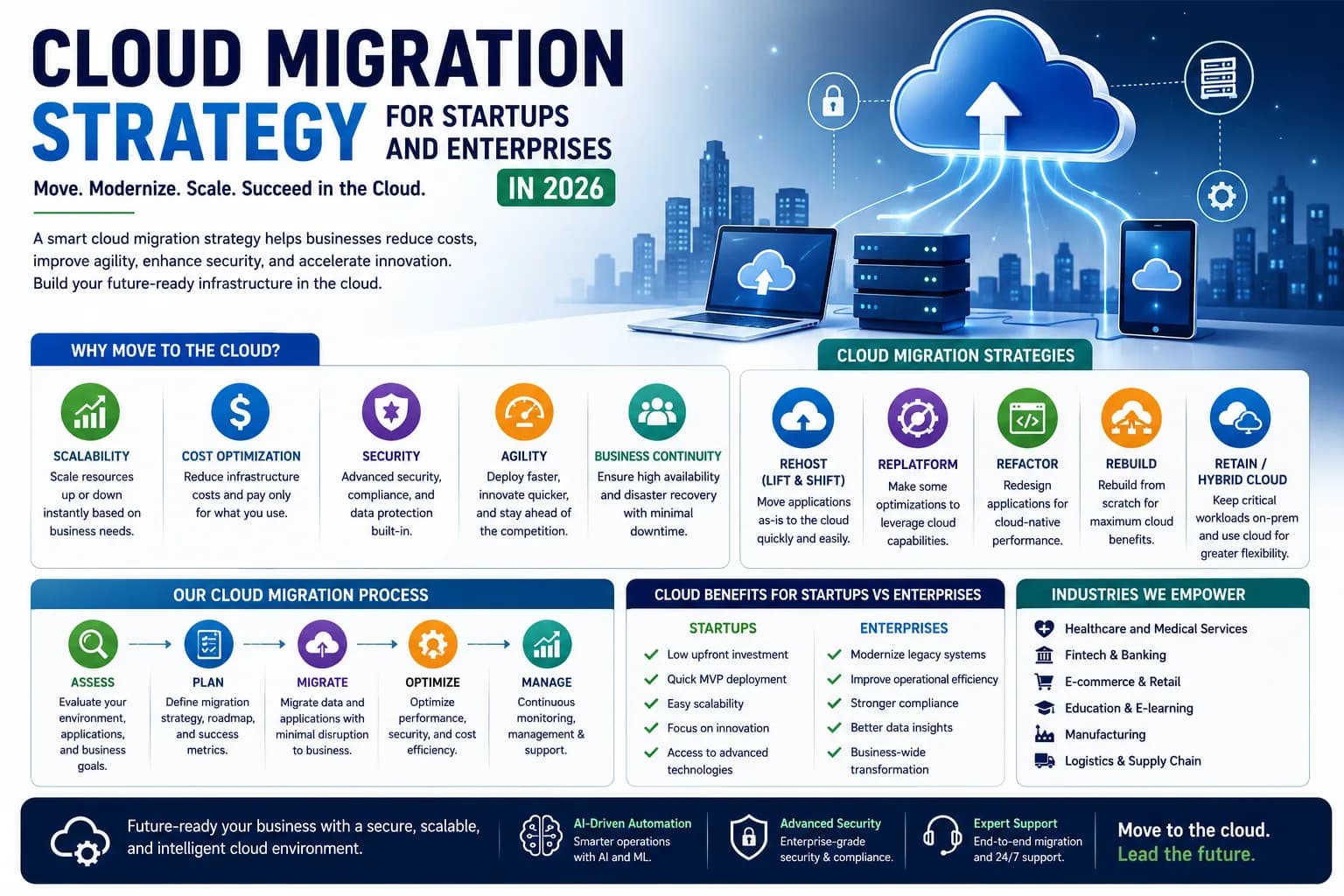
Cloud computing has become the foundation of digital transformation in 2026. Businesses of all sizes, from startups to large enterprises, are moving their operations, applications, and data to the cloud to improve scalability, security, and operational efficiency.
Traditional on-premise systems are no longer sufficient for modern business needs. Organizations now require flexible infrastructure, real-time collaboration, advanced analytics, and AI-powered automation to stay competitive in rapidly evolving markets.
Modern companies are increasingly adopting professional AI development services and scalable enterprise software solutions to streamline cloud migration and accelerate digital transformation. Industries such as finance, retail, logistics, and even Healthcare and Medical Services are leveraging cloud technologies to improve operational performance and customer experiences.
This guide explains cloud migration strategies, benefits, challenges, and best practices for startups and enterprises in 2026.
What Is Cloud Migration?
Cloud migration is the process of moving digital assets, applications, databases, and IT resources from traditional infrastructure to cloud-based environments.
Common Cloud Migration Components:
Applications
Databases
File storage systems
Business software
IT infrastructure
Customer data systems
Cloud migration helps businesses modernize operations and improve scalability.
Why Businesses Are Migrating to the Cloud
Organizations are rapidly adopting cloud technologies because of:
Increasing remote work requirements
Demand for scalable infrastructure
Rising cybersecurity concerns
Need for faster application deployment
Growth of AI and data analytics
Cloud infrastructure provides businesses with flexibility and operational efficiency.
Benefits of Cloud Migration
Improved Scalability
Cloud platforms allow businesses to scale resources based on demand.
Benefits Include:
Flexible storage
On-demand computing power
Easy application scaling
This is especially beneficial for startups experiencing rapid growth.
Reduced Operational Costs
Cloud systems reduce:
Hardware expenses
Infrastructure maintenance costs
IT management overhead
Businesses only pay for the resources they use.
Enhanced Security
Modern cloud providers offer:
Advanced encryption
Multi-factor authentication
Automated security updates
Backup and disaster recovery systems
Cloud security is often stronger than traditional on-premise systems.
Faster Collaboration and Accessibility
Cloud platforms enable teams to:
Work remotely
Access systems from anywhere
Collaborate in real time
This improves productivity and operational flexibility.
Business Continuity and Disaster Recovery
Cloud environments improve data backup and recovery capabilities, reducing downtime during emergencies.
Types of Cloud Migration Strategies
Rehosting (Lift and Shift)
Applications are moved to the cloud with minimal modifications.
Advantages:
Faster migration
Lower upfront costs
Minimal disruption
This is a common approach for enterprises starting their cloud journey.
Refactoring
Applications are redesigned to fully utilize cloud-native features.
Benefits:
Better scalability
Improved performance
Enhanced automation
Refactoring supports long-term digital transformation goals.
Replatforming
Businesses make moderate optimizations while migrating applications to the cloud.
This approach balances speed and modernization.
Hybrid Cloud Migration
Organizations combine:
Public cloud infrastructure
Private cloud systems
On-premise environments
Hybrid cloud strategies provide flexibility and security.
Cloud Migration for Startups
Startups benefit significantly from cloud adoption because it reduces infrastructure complexity and accelerates innovation.
Startup Advantages:
Lower operational costs
Faster product deployment
Easy scalability
Improved collaboration
Access to AI-powered tools
Cloud systems allow startups to focus on growth rather than infrastructure management.
Cloud Migration for Enterprises
Large enterprises often require more complex migration strategies.
Enterprise Challenges Include:
Legacy system integration
Data security compliance
Large-scale infrastructure migration
Operational continuity requirements
Professional planning and enterprise-grade tools are essential for successful migration.
Role of AI Development Services in Cloud Migration
Modern AI development services are transforming cloud migration and infrastructure management.
AI Applications Include:
Predictive system monitoring
Automated workload optimization
AI-powered cybersecurity
Intelligent resource allocation
Data analytics and forecasting
AI improves cloud efficiency, performance, and automation.
Importance of Enterprise Software Solutions
Scalable enterprise software solutions help businesses manage complex cloud environments more efficiently.
Enterprise Solutions Include:
ERP systems
CRM platforms
Cloud-based analytics tools
Workflow automation systems
Collaboration platforms
Enterprise software improves operational efficiency and business scalability.
Cloud Migration in Healthcare and Medical Services
The healthcare industry is rapidly adopting cloud technologies to improve patient care and operational efficiency.
Organizations involved in Healthcare and Medical Services use cloud systems for:
Electronic health records (EHR)
Telehealth platforms
Medical data storage
AI-driven diagnostics
Patient management systems
Cloud computing improves accessibility, security, and healthcare collaboration.
Key Steps in a Successful Cloud Migration Strategy
Assess Current Infrastructure
Businesses should evaluate:
Existing systems
Data storage requirements
Security needs
Application dependencies
Assessment helps identify migration priorities.
Define Business Goals
Organizations must identify:
Scalability objectives
Cost reduction targets
Security requirements
Operational improvements
Clear goals improve migration planning.
Choose the Right Cloud Model
Businesses can select:
Public cloud
Private cloud
Hybrid cloud
Multi-cloud environments
The ideal model depends on business needs and compliance requirements.
Prioritize Security and Compliance
Data protection and regulatory compliance are critical during cloud migration.
Important Security Measures:
Encryption
Access control systems
Backup solutions
Compliance monitoring
Test and Optimize
Businesses should continuously test cloud systems for:
Performance
Security
Reliability
Scalability
Ongoing optimization improves long-term efficiency.
Common Cloud Migration Challenges
Legacy System Compatibility
Older applications may require modernization before migration.
Data Security Concerns
Protecting sensitive data during migration is essential.
Downtime Risks
Poor planning can disrupt business operations during migration.
Cost Management Issues
Without optimization, cloud expenses can increase unexpectedly.
Skills and Expertise Gaps
Businesses often require experienced cloud consultants and developers.
Emerging Cloud Computing Trends in 2026
AI-Powered Cloud Infrastructure
AI automates resource management and infrastructure optimization.
Multi-Cloud Strategies
Businesses increasingly use multiple cloud providers to improve flexibility and resilience.
Edge Computing Integration
Edge computing improves:
Real-time processing
Data latency reduction
IoT performance
Serverless Computing
Serverless architectures reduce infrastructure management complexity.
Cloud-Native Application Development
Modern applications are being built specifically for cloud environments.
Expert Tips for Successful Cloud Migration
Start with a Clear Strategy
Planning reduces risks and improves migration efficiency.
Prioritize Data Security
Strong security systems protect sensitive business information.
Use AI and Automation
AI-powered systems improve performance monitoring and operational efficiency.
Work with Experienced Technology Partners
Professional guidance improves migration success rates.
Continuously Optimize Cloud Resources
Monitoring cloud usage reduces unnecessary expenses.
Future of Cloud Migration
The future of cloud computing will focus on:
AI-driven automation
Intelligent infrastructure management
Real-time analytics
Advanced cybersecurity systems
Industry-specific cloud solutions
Businesses investing in cloud transformation today will gain significant competitive advantages in the future digital economy.
FAQs
Q1: What is cloud migration?
Cloud migration involves moving applications, data, and infrastructure to cloud-based systems.
Q2: Why are AI development services important for cloud migration?
AI improves automation, resource optimization, and cloud security management.
Q3: What are enterprise software solutions?
They are scalable business software systems designed to improve operational efficiency and digital transformation.
Q4: How does cloud computing benefit healthcare organizations?
Cloud systems improve patient data management, telehealth services, and healthcare collaboration.
Conclusion
Cloud migration is no longer optional for businesses seeking growth, scalability, and operational efficiency in 2026. Startups and enterprises are increasingly adopting cloud technologies to improve flexibility, security, and digital innovation.
By leveraging advanced AI development services and scalable enterprise software solutions, organizations can streamline migration processes and build future-ready digital infrastructures.
Industries such as Healthcare and Medical Services are also benefiting significantly from cloud-based systems that improve patient care, collaboration, and operational performance.
DoddapaneniGroup.net provides advanced cloud computing, AI, software development, and digital transformation solutions designed to help businesses succeed in the modern digital economy.
Disclaimer: This content is for informational purposes only.