Introduction
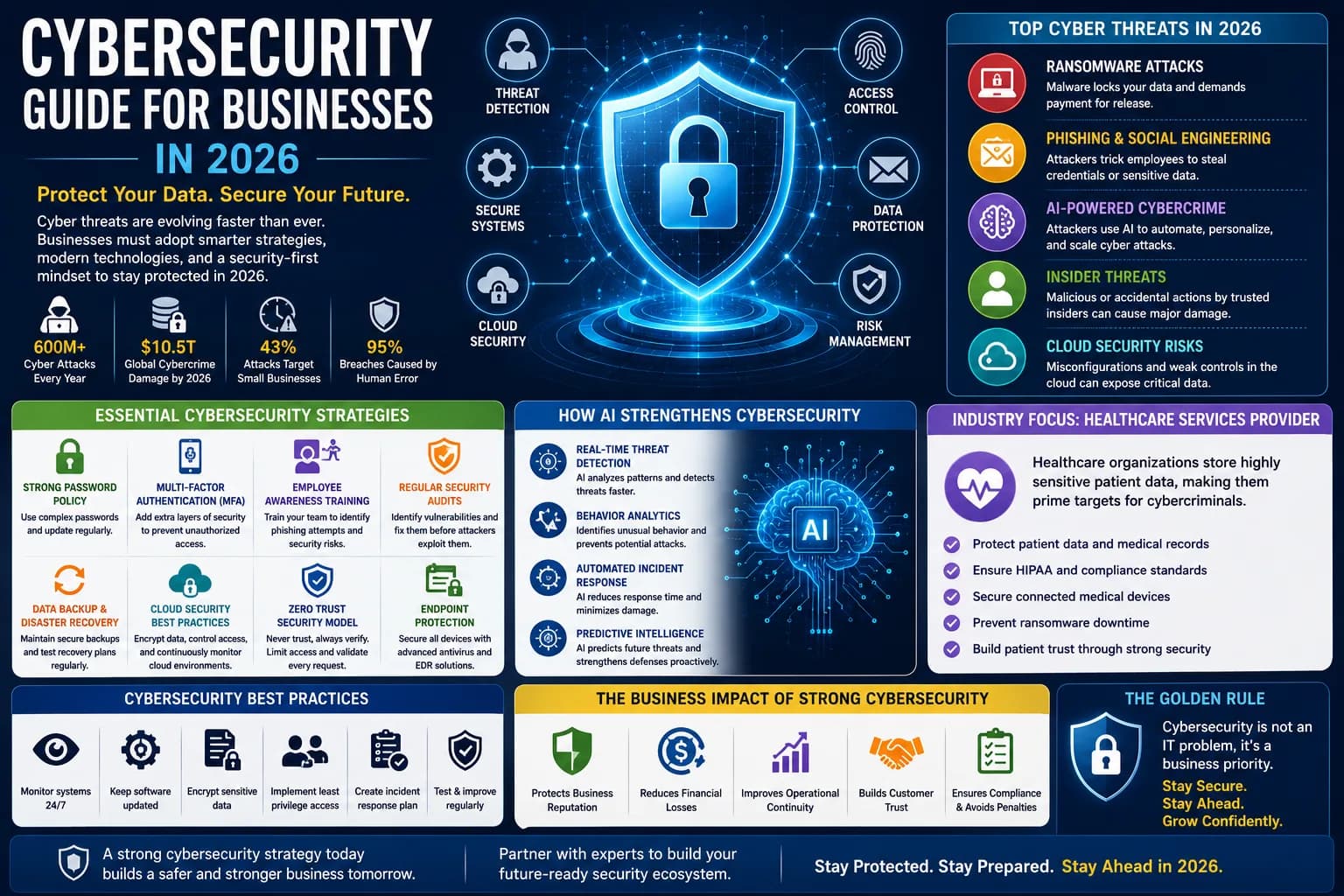
Cybersecurity has become one of the biggest business priorities in 2026. As companies continue adopting cloud computing, remote work systems, AI-powered technologies, and digital operations, cyber threats are becoming more advanced and dangerous.
Businesses today face increasing risks from ransomware attacks, phishing scams, data breaches, AI-powered cybercrime, and insider threats. A single cyberattack can result in financial losses, operational disruption, legal issues, and damage to brand reputation.
To stay protected in the modern digital economy, organizations are investing heavily in professional IT consulting services and advanced artificial intelligence solutions to strengthen cybersecurity infrastructure and improve threat detection.
Industries such as banking, retail, manufacturing, education, and even every healthcare services provider are prioritizing cybersecurity to safeguard sensitive customer and business data.
This complete cybersecurity guide explains modern threats, protection strategies, AI-driven security systems, and best practices businesses should follow in 2026.
What Is Cybersecurity?
Cybersecurity refers to the technologies, processes, and strategies used to protect systems, networks, applications, and data from cyber threats and unauthorized access.
Main Areas of Cybersecurity Include:
Network security
Cloud security
Application security
Data protection
Endpoint security
Identity and access management
Cybersecurity helps businesses maintain operational stability and customer trust.
Why Cybersecurity Matters in 2026
Businesses are more digitally connected than ever before.
Major Reasons Cybersecurity Is Critical:
Increasing cybercrime activities
Growth of remote work
Cloud infrastructure expansion
AI-powered cyberattacks
Strict data privacy regulations
Without strong cybersecurity systems, businesses become vulnerable to severe operational and financial risks.
Common Cybersecurity Threats in 2026
Ransomware Attacks
Ransomware encrypts company data and demands payment for recovery.
Common Targets:
Hospitals
Financial institutions
Government organizations
Small businesses
Ransomware remains one of the most damaging cyber threats globally.
Phishing Attacks
Cybercriminals use fake emails, messages, or websites to steal:
Passwords
Banking information
Customer data
Business credentials
Employee awareness is critical for phishing prevention.
AI-Powered Cybercrime
Hackers are increasingly using AI tools to:
Automate attacks
Create realistic phishing scams
Bypass traditional security systems
This makes cyber threats more sophisticated and difficult to detect.
Insider Threats
Employees or internal users may accidentally or intentionally compromise company security.
Cloud Security Risks
Cloud systems improve flexibility but also introduce security challenges such as:
Misconfigured servers
Weak access controls
Data exposure risks
Cloud security strategies are essential for modern businesses.
Role of IT Consulting Services in Cybersecurity
Professional IT consulting services help businesses build secure digital infrastructures and improve cybersecurity readiness.
IT Consulting Services Include:
Cybersecurity risk assessments
Security infrastructure planning
Compliance management
Cloud security consulting
Disaster recovery planning
Expert IT guidance helps businesses reduce cybersecurity vulnerabilities effectively.
Artificial Intelligence Solutions in Cybersecurity
Modern artificial intelligence solutions are transforming cybersecurity by improving threat detection and automated response systems.
AI Cybersecurity Applications
AI Helps Businesses:
Detect suspicious activity in real time
Automate threat monitoring
Predict cyber risks
Identify abnormal user behavior
Strengthen fraud detection systems
AI improves cybersecurity speed, accuracy, and operational efficiency.
Importance of Cybersecurity for Healthcare Services Provider Organizations
Every healthcare services provider manages highly sensitive patient information and medical records.
Healthcare organizations are common cyberattack targets because they store:
Personal health information
Insurance records
Financial data
Medical histories
Strong cybersecurity systems help healthcare organizations maintain compliance, protect patient trust, and ensure operational continuity.
Essential Cybersecurity Strategies for Businesses
Implement Multi-Factor Authentication (MFA)
MFA adds additional verification layers for user access.
Benefits Include:
Reduced unauthorized access
Better account protection
Improved login security
MFA significantly strengthens business cybersecurity.
Use Strong Password Policies
Businesses should enforce:
Complex passwords
Password expiration policies
Password managers
Weak passwords remain a major security vulnerability.
Conduct Regular Security Audits
Security audits help identify:
Vulnerabilities
Outdated systems
Weak access controls
Compliance gaps
Regular testing improves security readiness.
Train Employees on Cybersecurity Awareness
Employees should understand:
Phishing risks
Safe browsing practices
Password security
Social engineering tactics
Human error is one of the leading causes of cyber incidents.
Secure Cloud Infrastructure
Cloud environments should use:
Encryption systems
Access controls
Backup solutions
Continuous monitoring
Cloud security is essential for digital businesses.
Importance of Endpoint Security
Modern businesses use multiple connected devices such as:
Laptops
Smartphones
Tablets
IoT devices
Endpoint security systems help protect devices from malware and unauthorized access.
Data Backup and Disaster Recovery
Businesses should maintain:
Automated backups
Secure backup storage
Disaster recovery plans
Emergency response procedures
Backup systems reduce downtime during cyber incidents.
Zero Trust Security Model
The Zero Trust model assumes no user or device should be automatically trusted.
Zero Trust Principles Include:
Continuous verification
Restricted access permissions
Identity validation
Network segmentation
Zero Trust is becoming a major cybersecurity standard in 2026.
Cloud Security Best Practices
Encrypt Sensitive Data
Encryption protects confidential information from unauthorized access.
Monitor User Access
Access management systems track and control system permissions.
Use Secure APIs
Secure application integrations reduce cybersecurity vulnerabilities.
Update Systems Regularly
Software updates help patch security weaknesses and reduce attack risks.
Emerging Cybersecurity Trends in 2026
AI-Driven Threat Detection
AI systems detect and respond to threats faster than traditional security tools.
Biometric Authentication
Businesses increasingly use:
Facial recognition
Fingerprint scanning
Voice authentication
Biometric security improves identity verification.
Cybersecurity Automation
Automation improves:
Threat response times
Security monitoring
Compliance management
Quantum-Resistant Encryption
Businesses are preparing for future quantum computing security challenges.
Extended Detection and Response (XDR)
XDR platforms provide integrated security monitoring across multiple systems.
Common Cybersecurity Mistakes Businesses Should Avoid
Ignoring Employee Training
Untrained employees increase security risks significantly.
Weak Access Controls
Excessive user permissions create vulnerabilities.
Delaying Software Updates
Outdated systems are easier targets for cyberattacks.
Poor Backup Strategies
Lack of backups can result in severe operational disruptions.
Underestimating Small Threats
Minor security issues can quickly escalate into major incidents.
Best Practices for Building a Strong Cybersecurity Culture
Create Clear Security Policies
Employees should understand cybersecurity expectations and procedures.
Monitor Systems Continuously
Real-time monitoring improves threat detection and response.
Invest in AI and Automation
AI-powered systems strengthen modern cybersecurity defenses.
Work with Experienced IT Consultants
Professional support improves cybersecurity planning and implementation.
Test Incident Response Plans Regularly
Prepared organizations recover faster from cyber incidents.
Future of Cybersecurity in Business
The future of cybersecurity will focus on:
AI-driven security automation
Predictive threat intelligence
Advanced identity verification
Zero Trust architectures
Intelligent cloud security systems
Businesses that invest in proactive cybersecurity today will achieve stronger operational resilience and digital trust tomorrow.
FAQs
Q1: What is cybersecurity?
Cybersecurity involves protecting digital systems, networks, and data from cyber threats and unauthorized access.
Q2: Why are IT consulting services important for cybersecurity?
IT consulting helps businesses assess risks, implement secure infrastructure, and improve cybersecurity strategies.
Q3: How do artificial intelligence solutions improve cybersecurity?
AI systems automate threat detection, monitor suspicious activity, and improve security response times.
Q4: Why is cybersecurity critical for healthcare services provider organizations?
Healthcare organizations manage sensitive patient data and require strong cybersecurity to maintain privacy and compliance.
Conclusion
Cybersecurity is essential for business survival and digital growth in 2026. Organizations investing in advanced IT consulting services and intelligent artificial intelligence solutions are improving security, reducing risks, and protecting critical business operations.
Industries such as finance, retail, manufacturing, and every healthcare services provider are increasingly prioritizing cybersecurity to maintain customer trust and operational continuity.
DoddapaneniGroup.net provides advanced cybersecurity, AI, software development, cloud computing, and digital transformation solutions designed to help businesses stay secure and future-ready in the evolving digital economy.
Disclaimer: This content is for informational purposes only.