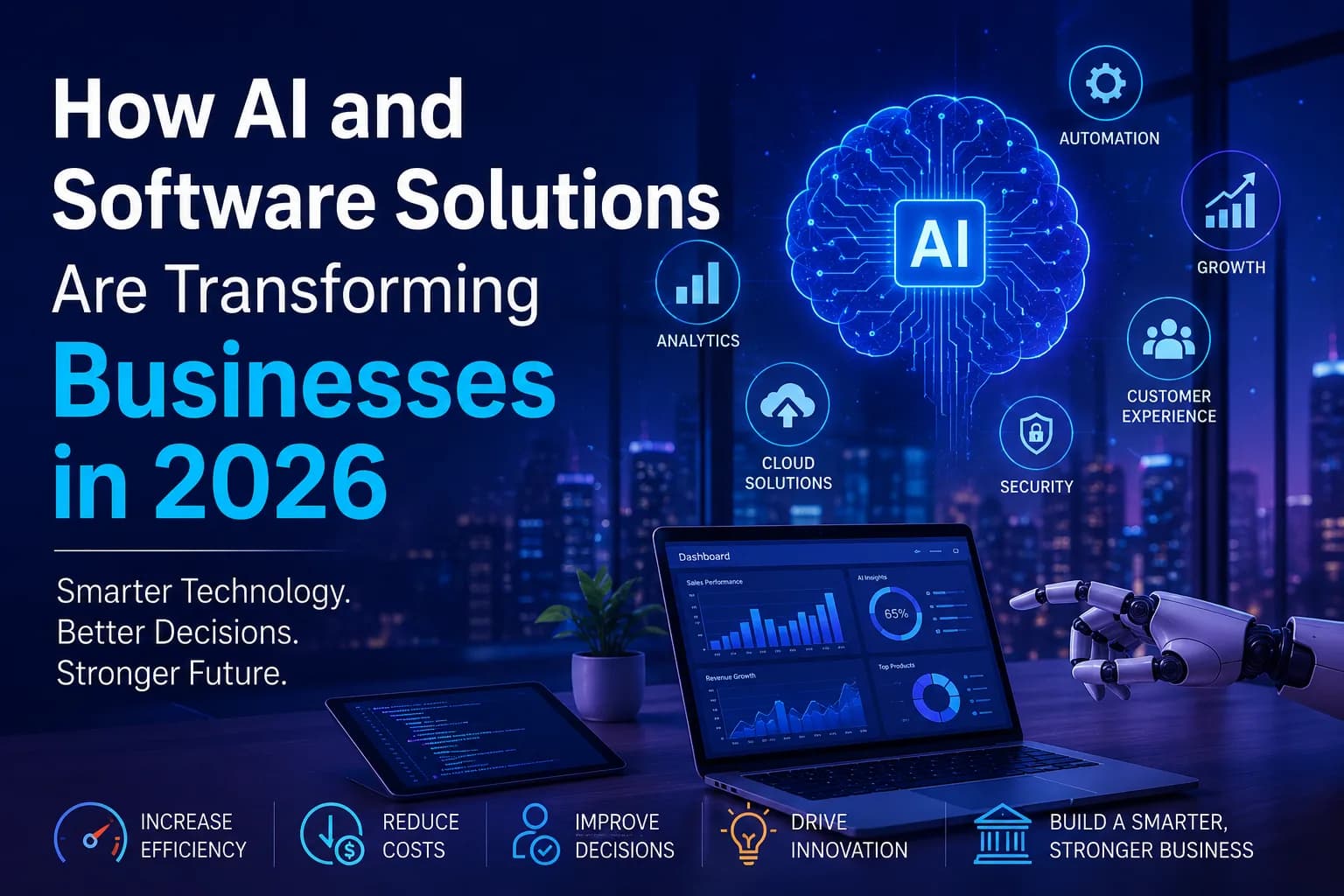
In 2026, businesses are experiencing a new wave of digital transformation powered by artificial intelligence and modern software technologies. Companies across industries are embracing Software IT and AI Solutions to streamline operations, improve customer experiences, and gain a competitive advantage.
From startups to large enterprises, organizations are investing heavily in software development services to create scalable, intelligent, and future-ready systems. AI is no longer a luxury—it's a necessity for businesses aiming to thrive in an increasingly digital world. Industry reports show that enterprises are moving from AI experimentation to full-scale implementation and workflow redesign.
The Rise of AI-Driven Business Transformation
Artificial intelligence has evolved from simple automation tools to intelligent systems capable of analyzing data, predicting trends, and supporting decision-making.
Modern Software IT and AI Solutions enable businesses to:
Automate repetitive tasks
Improve operational efficiency
Reduce costs
Enhance customer support
Increase productivity
Generate valuable insights from data
Organizations that successfully integrate AI into their operations are experiencing significant improvements in performance and scalability. Experts predict that AI-native workflows will become a key differentiator for businesses by the end of 2026.
Why Businesses Are Investing in Software Development Services
Technology requirements are constantly evolving. Off-the-shelf software often fails to meet unique business needs, making customized software development services more important than ever.
Professional software development helps organizations:
1. Build Tailored Solutions
Every company operates differently. Custom software ensures that applications align with specific workflows and business objectives.
2. Improve Scalability
As businesses grow, their software must adapt. Scalable systems allow companies to expand without operational disruptions.
3. Enhance Security
Cybersecurity threats continue to increase. Modern software solutions incorporate advanced security measures to protect sensitive information.
4. Integrate AI Capabilities
AI-powered features such as chatbots, predictive analytics, and intelligent automation can be seamlessly integrated into business systems.
5. Increase Customer Satisfaction
User-friendly platforms improve customer engagement and strengthen brand loyalty.
Key Areas Where AI Is Transforming Businesses
Intelligent Automation
AI automates repetitive processes, allowing employees to focus on strategic activities. Businesses are using automation for:
Invoice processing
Data entry
Customer service
Workflow management
Supply chain optimization
According to industry forecasts, AI orchestration and automation are becoming core components of enterprise growth strategies.
Data Analytics and Business Intelligence
Companies generate enormous amounts of data every day. AI-driven analytics tools convert this data into actionable insights.
Benefits include:
Better forecasting
Improved decision-making
Enhanced operational efficiency
Personalized customer experiences
Customer Support Enhancement
AI chatbots and virtual assistants provide:
24/7 customer support
Faster response times
Reduced support costs
Higher customer satisfaction
Predictive Maintenance
Manufacturing and industrial businesses use AI to predict equipment failures before they occur, reducing downtime and maintenance expenses.
Personalized Marketing
AI enables businesses to deliver customized recommendations, targeted campaigns, and personalized user experiences that drive conversions.
Software IT and AI Solutions Across Industries
Healthcare and Medical Services
One sector undergoing rapid digital transformation is Healthcare and Medical Services.
AI and software technologies are helping healthcare providers:
Manage patient records efficiently
Improve diagnostics
Support telemedicine platforms
Enhance patient engagement
Optimize hospital operations
AI-assisted healthcare solutions are closing gaps in medical care and improving treatment outcomes. Experts highlight healthcare as one of the industries experiencing significant AI-driven innovation in 2026.
Finance
Financial institutions are using AI for:
Fraud detection
Risk analysis
Automated customer support
Personalized banking experiences
Recent investments by major banks demonstrate the growing importance of AI in the financial sector.
Retail and E-Commerce
Retail businesses use AI to:
Predict customer preferences
Optimize inventory management
Improve recommendation engines
Deliver personalized shopping experiences
Manufacturing
Smart manufacturing technologies leverage AI for:
Process optimization
Predictive maintenance
Quality control
Supply chain management
Research indicates that AI is significantly improving industrial efficiency and sustainability.
Logistics and Transportation
AI helps logistics companies:
Optimize routes
Reduce fuel consumption
Improve delivery accuracy
Enhance warehouse management
Emerging AI Trends in 2026
Agentic AI
AI systems are evolving from assistants into autonomous agents capable of handling complex workflows with minimal human intervention. Industry experts identify this as one of the most significant trends shaping 2026.
Human-AI Collaboration
Businesses are increasingly focusing on AI systems that complement human expertise rather than replace it. This approach improves productivity while maintaining human oversight.
AI Governance and Compliance
As AI adoption grows, organizations are prioritizing:
Ethical AI practices
Data privacy
Regulatory compliance
Transparent decision-making
Scalable AI Infrastructure
Companies are investing in scalable AI platforms capable of supporting future growth and changing business requirements.
Workflow Redesign
Organizations are no longer simply adding AI to existing processes. Instead, they are redesigning workflows around AI capabilities to maximize value.
Benefits of Implementing Software IT and AI Solutions
Businesses adopting modern technologies enjoy numerous advantages:
Increased Efficiency
Automation eliminates repetitive tasks and accelerates operations.
Reduced Operational Costs
AI minimizes manual work and optimizes resource utilization.
Better Decision-Making
Advanced analytics provide accurate insights for strategic planning.
Enhanced Customer Experience
Personalized interactions improve customer satisfaction and loyalty.
Greater Competitive Advantage
Technology-driven companies can respond faster to market changes.
Improved Scalability
Modern software supports business expansion and long-term growth.
Challenges Businesses Must Address
Despite the benefits, implementing AI and software solutions comes with challenges:
Data security concerns
Integration complexities
Employee training requirements
Regulatory compliance
Initial investment costs
Successful organizations address these challenges through strategic planning and collaboration with experienced technology partners.
The Future of Business Technology
The future belongs to businesses that embrace digital innovation. AI is rapidly becoming an integral component of daily operations, enabling organizations to become smarter, faster, and more efficient.
As technology continues to evolve, demand for software development services will increase significantly. Companies that invest in advanced Software IT and AI Solutions today will be better positioned for tomorrow's opportunities.
Conclusion
The transformation occurring in 2026 is redefining how businesses operate across every industry. From automation and analytics to intelligent customer engagement, AI is delivering measurable results and creating new growth opportunities.
Organizations seeking sustainable success should partner with experienced technology providers that understand modern business challenges and emerging trends.
If you're looking for reliable Software IT and AI Solutions and professional software development services, consider Doddapaneni Group (Doddapanenigroup.net). Their expertise can help businesses accelerate digital transformation, improve efficiency, and stay ahead in the competitive marketplace.